Temperature23 – 30 °C
Natural range
- Amazon River Basin
- Peru area
- Brazil area
CatfishConservation status: Least concern LC
Other scientific names: Ancistrus gibbiceps, Glyptoperichthys gibbiceps, Liposarcus altipinnis
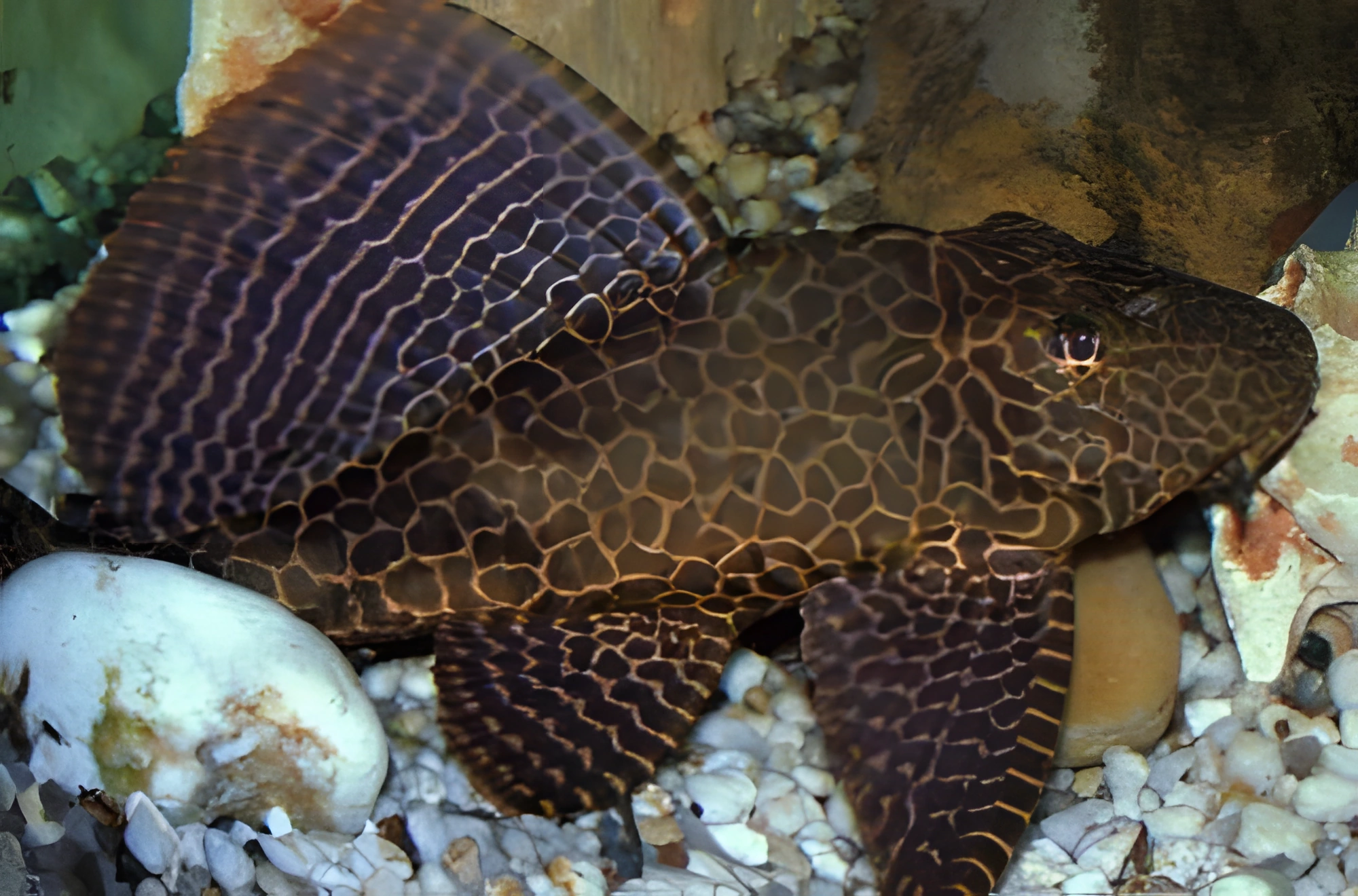
The Leopard or Brocade Catfish, often colloquially known as Pterygoplichthys, belongs to the Loricariidae family and is scientifically named Pterygoplichthys gibbiceps. This species has gained widespread popularity and consistent demand due to its remarkable ability to effectively clean aquariums of algae.
- Required aquarium volume
- 380 L
- Size in aquarium
- 35 cm
- Temperature
- 23 – 30 °C
- Temperament
- Territorial (often aggressive)
Parameters
Water pHNeutral (6.5) – Slightly alkaline (8)
Water dHSoft (4) – Very hard (18)
Water salinityno salt (freshwater)
Size in aquarium35 cm
Lifespan15 years
TemperamentTerritorial (often aggressive)
Toward small fishnot a predator
Required aquarium volume380 L
Lightingany
Substrateany (no restrictions)
Water flowmoderate
FeedingSinking (meat / protein)
CareSolitary
Description
Pterygoplichthys is a rather large fish, capable of reaching lengths of up to 50 cm. Its body is elongated and protected by strong bony plates. On its large head, small, high-set eyes are prominent. A characteristic feature is its high dorsal fin, which can rise more than 5 cm and has at least 10 rays. The pectoral fins are also impressive in size, resembling wings in shape. The fish's coloration consists of a dark brown background, scattered with numerous irregular spots, creating a pattern reminiscent of a leopard's skin.
Habitat
The first description of the Leopard (Brocade) Catfish dates back to 1854; it was simultaneously presented by two researchers, leading to two initial names. Today, the scientific community recognizes two equivalent names: Pterygoplichthys gibbiceps and Glyptoperichthys gibbiceps. The habitat of this catfish spans the river systems of South America, with the species being particularly common in Peru and the Brazilian part of the Amazon.
Behavior and Compatibility
The Leopard Catfish is valued for its peaceful nature and its ability to rid the aquarium of algae. Thanks to its herbivorous diet, this fish coexists perfectly in almost any community, even with smaller species. Aggressive behavior towards other inhabitants has not been observed. However, intraspecific competition for territory and food is possible, but this only applies to newly introduced fish; if individuals have lived together from the start, such problems typically do not arise.
Care and Maintenance
Although the chemical composition of the water is not critical for this catfish, its quality is of paramount importance. Good filtration and regular water changes (10–15% every two weeks) will be key to successful keeping. Due to the fish's significant size, a spacious aquarium of at least 380 liters is required. An important decorative element is driftwood, which the catfish periodically "chews" to obtain essential trace elements for normal digestion; additionally, algae colonies thrive well on it. Snags or roots also serve as hiding places for the fish during daylight hours. It is recommended to choose sturdy, large plants with well-developed root systems that can withstand the catfish's activity of digging in the substrate; delicate plants may be eaten.
Diet
Although the Leopard Catfish is an omnivorous fish, its diet should still be predominantly plant-based. It is important to include sinking foods with vegetable additives such as spinach, zucchini, lettuce, or peas in its menu; these should be secured at the bottom of the aquarium, for example, by weighing them down with a stone. Vegetable flakes should also not be neglected. Once a week, live food can be offered: brine shrimp, worms, small crustaceans, or insect larvae. Feeding is recommended in the evening, before turning off the lights. Known as a diligent algae consumer, the catfish can completely clean an aquarium in a short time without harming plants. Many aquarists acquire these catfish specifically for algae control, sometimes not realizing how large this fish will grow, as young specimens are usually sold in pet stores. As they grow, they may become too cramped in small aquariums.
Breeding and Reproduction
External differences between male and female Leopard Catfish are minimal, and only an experienced breeder can reliably determine them. In their natural habitat, these catfish spawn in deep muddy burrows dug along steep, silty banks. For this reason, they are extremely reluctant to breed in home aquariums. For commercial breeding, large fish ponds are used, which maximally simulate their natural conditions.
Diseases
The fish demonstrates high endurance and, under favorable conditions, is practically not susceptible to diseases. Nevertheless, with a weakened immune system, its body can be susceptible to the same diseases as other tropical fish. Detailed information on diseases can be found in the "Aquarium Fish Diseases" section.
How to choose
When purchasing, choose active specimens with clean skin free of visible damage, ulcers, or white film. A healthy catfish should have clear eyes and a quick reaction to external stimuli. Avoid fish with sunken bellies, which may indicate emaciation or internal parasites. Pterygoplichthys are often sold as fry in stores, so it is important to consider their future size, as within a year or two, the fish can grow significantly and require an aquarium of 300–400 liters or more.
Frequently asked questions
The essentials: size, tank volume, water parameters and care
How big does Brocade Catfish get?
An adult reaches 35 cm in length. Plan the tank around the maximum size: the fish quickly outgrows a cramped setup.
What size aquarium does Brocade Catfish need?
The minimum recommended volume is 380 L. A smaller tank speeds up nitrate build-up and raises stress levels.
What water parameters does Brocade Catfish need?
Temperature 23–30 °C, pH 6.5–8, hardness 4–18 dGH. Stability matters more than exact values: sudden swings are harder on the fish than a small deviation from the ideal.
How long does Brocade Catfish live?
Around 15 years when kept properly. Lifespan depends directly on tank volume, water quality and a varied diet.
Is Brocade Catfish aggressive?
Temperament: territorial (often aggressive). Keep this in mind when choosing tank mates.
How many Brocade Catfish should be kept together?
Recommended setup: solitary. Ignoring this is a common cause of stress and disease.
What does Brocade Catfish eat?
Diet type: sinking (meat / protein). Feed small portions that are finished within a couple of minutes — overfeeding does more harm than underfeeding.
What is the scientific name of Brocade Catfish?
The scientific name of the species is Pterygoplichthys gibbiceps, family Armored Catfishes (Loricariidae). It also appears in the literature as: Ancistrus gibbiceps, Glyptoperichthys gibbiceps, Liposarcus altipinnis.