Temperature18 – 24 °C
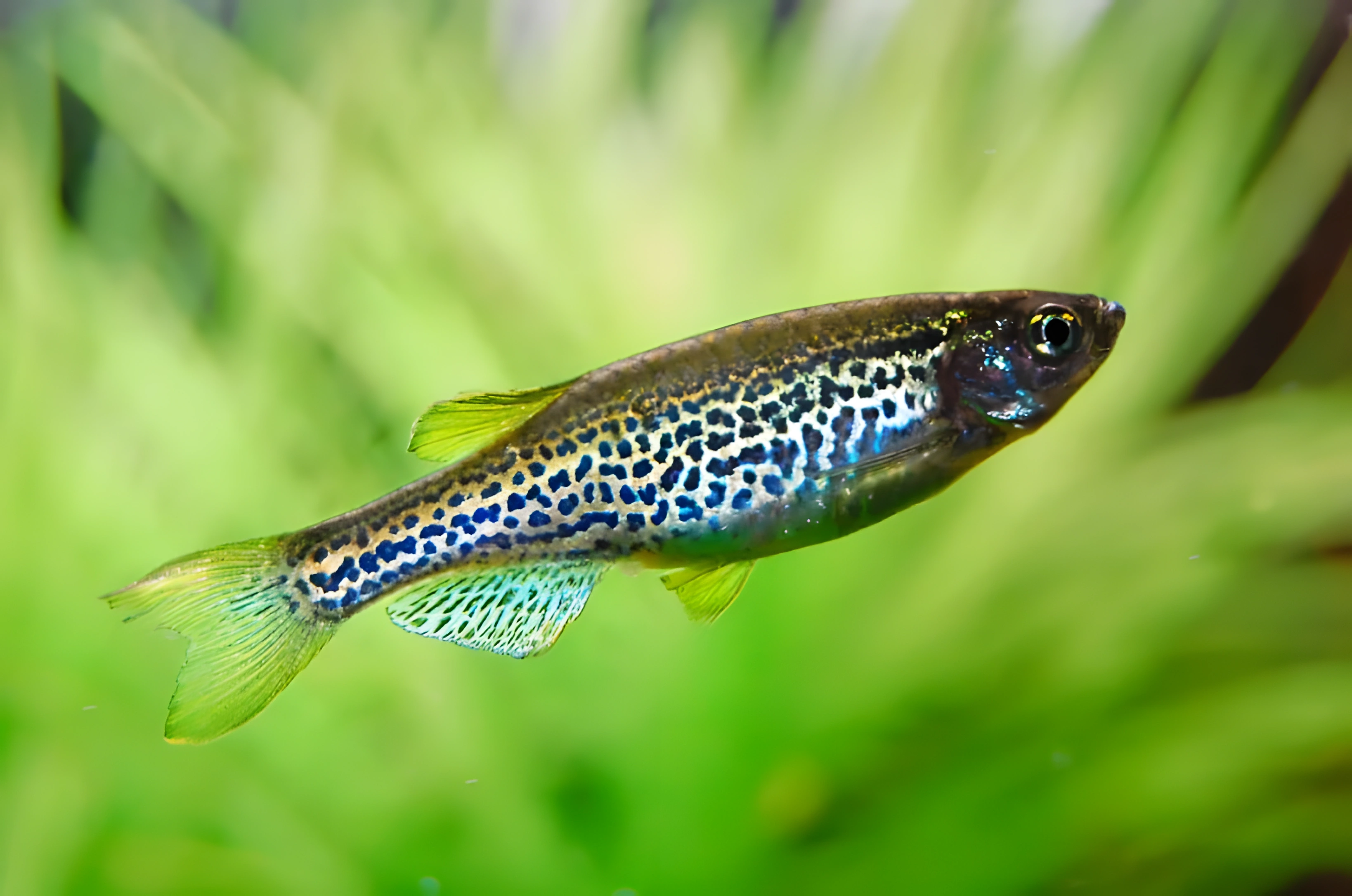
CyprinidsConservation status: Least concern LC
Other scientific names: Barilius rerio, Brachydanio frankei, Brachydanio rerio, Cyprinus chapalio, Cyprinus rerio, Danio frankei
The Leopard Danio, known scientifically as Danio rerio, belongs to the family Cyprinidae. This easily recognizable and vibrant fish is considered one of the most popular varieties of Danio rerio. It is not found in the wild, as it is the result of cross-breeding two closely related species. The exact location of the initial breeding of this morphological type remains a subject of discussion: there are versions pointing to India, Thailand, and even Czechoslovakia. The fish is highly resilient and undemanding, making it an excellent choice for beginner aquarists.
- Required aquarium volume
- 40 L
- Size in aquarium
- 6 cm
- Temperature
- 18 – 24 °C
- Temperament
- Peaceful, active/mobile
Parameters
Water pHSlightly acidic (6) – Slightly alkaline (8)
Water dHSoft (5) – Very hard (19)
Water salinityno salt (freshwater)
Size in aquarium6 cm
Lifespan4 years
TemperamentPeaceful, active/mobile
Toward small fishnot a predator
Required aquarium volume40 L
Lightingdimmed
Substraterocky (rock formations, boulders, etc.)
Water flowmoderate
FeedingFloating (any)
CareSchooling (usually from 5–6 individuals and more)
Description
This fish has a slender, small body, not exceeding 6 cm in length, flattened on the sides. Characteristic of most cyprinids, it has short barbels at the corners of its mouth. There is a separate subspecies distinguished by longer, flowing fins and an elongated caudal fin. Their coloration is golden or brown, covered with numerous blue spots that create a metallic shimmer effect at certain angles of light.
Habitat
The Leopard Danio is not found in natural conditions, as this species was artificially bred by crossing closely related forms. The following conditions are necessary for its keeping:
Aquarium volume: from 40 liters. Water temperature: 18–24 °C. pH value: 6.0–8.0. Water hardness: 5 to 19 dGH (soft to medium hard). Substrate type: preferably dark fine gravel or sand. Lighting: subdued. Brackish water: not required. Water movement: moderate. Adult size: up to 6 cm. Feeding: any surface-floating foods are preferred. Lifespan: 3 to 4 years.
Description
This fish has a slender body of small size (not more than 6 cm), compressed laterally. Like most members of the carp family, the Leopard Danio has short barbels located at the ends of both lips. There is also a subspecies distinguished by long, flowing fins and an elongated caudal fin. The fish's coloration varies from golden to brown, with many blue spots distributed over the entire body. Under certain lighting, these spots acquire a metallic sheen. Feeding This omnivorous species readily consumes various types of food: live, frozen, and dry commercial mixes. Leopard Danios are highly active, so their diet should be balanced and varied. It is recommended to alternate dry foods with live foods, such as bloodworms. It is important to remember that the food should be floating, as these fish prefer to feed from the water's surface.
Aqvium flake food for aquarium fish Meet our new product, which has become a bestseller on Ozon, receiving a 4.9 rating. Aqvium flake food is suitable for most aquarium fish. It is based on raw materials that comply with the new European Union standards (EU 2018/848). The composition is enriched with vitamins A, C, D3, E, and Omega 3-6. Buy on Ozon
Care and Maintenance Leopard Danios require clean water with moderate current. This can be achieved by installing a powerful filter that will provide both purification and water circulation. Lighting should not be too bright, as intense light can dull the fish's coloration. Weekly partial water changes with fresh water are mandatory. When decorating the aquarium, it is recommended to use fine gravel or sand as a substrate. It is also advisable to place a large number of aquatic plants, grouping them along the walls to leave enough free swimming space for the fish. Social Behavior Leopard Danios get along well with other active fish of similar size. However, slow-moving species may experience discomfort due to their high activity. Large and especially carnivorous fish should be avoided. It is recommended to keep these fish in groups of at least 5 individuals. If danios are kept in smaller numbers, they may try to involve other aquarium inhabitants in their games, which not everyone will appreciate. During such games, 'chasing' and harmless skirmishes are often observed, which, as a rule, do not lead to injuries. Breeding / Reproduction Like other members of their family, danios breed easily in captivity. Before spawning, the fish form a pair. This pair should be transferred to a separate tank. First, the female is introduced, easily distinguished by her larger size and rounded belly, then, a day later, the male is added to her. The minimum volume of a separate tank should be 20 liters. A layer of large pebbles or glass marbles 4–5 cm thick and about 1 cm in diameter will serve as substrate. A few potted plants will give the aquarium a more natural look. As for equipment, an air pump or a simple air-lift filter is sufficient, as a regular filter can suck in eggs and fry. After the pair is in the breeding tank, add a couple of glasses of cold water to it. This simulates the rainy season and serves as a stimulus for spawning. The female releases eggs into the open water, where the male fertilizes them. As they sink to the bottom, the eggs roll between the stones or marbles, which protects them from being eaten by the parents. After spawning is complete, the pair should be returned to the main aquarium. Fry will hatch in approximately 7 days. Diseases Despite artificial selection, this species has retained the high resilience of common Rerio, so under favorable keeping conditions, diseases are practically non-existent. In case of deteriorating conditions, the external body coverings are primarily affected, suffering from fungal and bacterial infections. More detailed information on symptoms and treatment methods is presented in the 'Aquarium Fish Diseases' section.
Behavior and Compatibility
The Leopard Danio is an excellent choice for cohabitation with other active fish of similar size. However, their high activity can cause discomfort to slower-moving species. Avoid housing them with very large or predatory fish. It is recommended to keep these fish in groups of at least 5 individuals. In smaller numbers, danios may try to involve other aquarium inhabitants in their games, which may not always be to their liking. During such interactions, 'chasing' and harmless skirmishes are often observed, which, nevertheless, never lead to injuries.
Care and Maintenance
These fish require clean water with moderate current, which can be provided by a powerful filter that not only cleans the water but also creates the necessary circulation. Lighting should not be excessively bright, as intense light can dull the fish's coloration. Weekly partial water changes with fresh water are mandatory. For aquarium decoration, it is recommended to use fine gravel or sand as substrate, along with a large number of aquatic plants, which should be placed in groups along the walls, while maintaining sufficient open swimming space.
Diet
Being an omnivorous species, these fish readily consume all varieties of live, frozen, and dry commercial foods. The active lifestyle of danios requires a balanced and varied diet. Dry foods should be alternated with live foods, such as bloodworms. An important condition is the use of floating food, as the fish feed exclusively from the water surface.
Breeding and Reproduction
Danios, like their relatives, breed quite easily in captivity. Before spawning, the fish form a pair, which should be transferred to a separate tank. First, the female is introduced, distinguished by her larger size and rounded belly; the male joins her a day later. The minimum volume for such a separate tank is 20 liters. For substrate, a layer of large pebbles or glass marbles about 1 cm in diameter and 4–5 cm thick is used. A few potted plants can diversify the decor. As for equipment, an aerator or a simple airlift filter is sufficient, as a regular filter can suck in eggs and fry. When the pair is in a separate tank, adding a couple of glasses of cold water mimics the rainy season and stimulates spawning. The female lays her eggs in open water, and the male fertilizes them. As they sink to the bottom, the eggs roll between the pebbles or marbles, which saves them from being eaten by the parents. After spawning is complete, the pair is returned to the main aquarium. Fry hatch in approximately 7 days.
Diseases
Despite artificial selection, this species has retained the hardiness of regular zebra danios, so diseases are extremely rare under favorable conditions. However, if maintenance conditions deteriorate, the external body coverings are primarily affected, suffering from fungal and bacterial infections. More detailed information on symptoms and treatment methods is presented in the section “Diseases of Aquarium Fish.”
How to choose
When choosing leopard danios, preference should be given to active individuals that are constantly moving and show interest in their surroundings. Healthy fish have clean skin without plaque, spots, ulcers, or signs of fin damage. It is important to avoid purchasing individuals that keep to themselves, appear emaciated, have sunken bellies, or make unnatural movements.
It is recommended to acquire a group of 5–7 individuals at once, as keeping them alone or in too small a group leads to stress and the development of behavioral problems, including aggression towards other tank inhabitants. When purchasing from a store, pay attention to the cleanliness of the water in the aquarium and the absence of dead fish, which indirectly indicates the quality of maintenance and the health of the entire batch.
Frequently asked questions
The essentials: size, tank volume, water parameters and care
How big does Leopard Danio get?
An adult reaches 6 cm in length. Plan the tank around the maximum size: the fish quickly outgrows a cramped setup.
What size aquarium does Leopard Danio need?
The minimum recommended volume is 40 L. A smaller tank speeds up nitrate build-up and raises stress levels.
What water parameters does Leopard Danio need?
Temperature 18–24 °C, pH 6–8, hardness 5–19 dGH. Stability matters more than exact values: sudden swings are harder on the fish than a small deviation from the ideal.
How long does Leopard Danio live?
Around 4 years when kept properly. Lifespan depends directly on tank volume, water quality and a varied diet.
Is Leopard Danio aggressive?
Temperament: peaceful, active/mobile. Keep this in mind when choosing tank mates.
How many Leopard Danio should be kept together?
Recommended setup: schooling (usually from 5–6 individuals and more). Ignoring this is a common cause of stress and disease.
What does Leopard Danio eat?
Diet type: floating (any). Feed small portions that are finished within a couple of minutes — overfeeding does more harm than underfeeding.
What is the scientific name of Leopard Danio?
The scientific name of the species is Danio rerio, family Cyprinids (Cyprinidae). It also appears in the literature as: Barilius rerio, Brachydanio frankei, Brachydanio rerio.