Temperature23 – 27 °C
Natural range
- Lake Tanganyika area
- Democratic Republic of the Congo area
- Tanzania area
- Burundi area
CichlidsConservation status: Least concern LC
Other scientific names: Julidochromis ocellatus, Lamprologus lestradei, Neolamprolagus ocellatus
Lamprologus ocellatus, known as the Lamprologus ocellatus, belongs to the Cichlidae family. This fish is a miniature and vibrant creature, distinguished by its ease of care and successful breeding. With sufficient aquarium space, it coexists well with many other species of similar size.
- Required aquarium volume
- 40 L
- Size in aquarium
- 3 – 6 cm
- Temperature
- 23 – 27 °C
- Temperament
- Semi-peaceful (including aggression during spawning / intraspecific conflicts)
Parameters
Water pHNeutral (7.5) – Alkaline (9)
Water dHMedium hardness (10) – Very hard (25)
Water salinityno salt (freshwater)
Size in aquarium3 – 6 cm
Lifespan8 years
TemperamentSemi-peaceful (including aggression during spawning / intraspecific conflicts)
Toward small fishnot a predator
Required aquarium volume40 L
Lightingmoderate (regular)
Substratesandy (regular, light)
Water flowweak or moderate
FeedingSinking (any)
CareHarem (1 male and several females)
Description
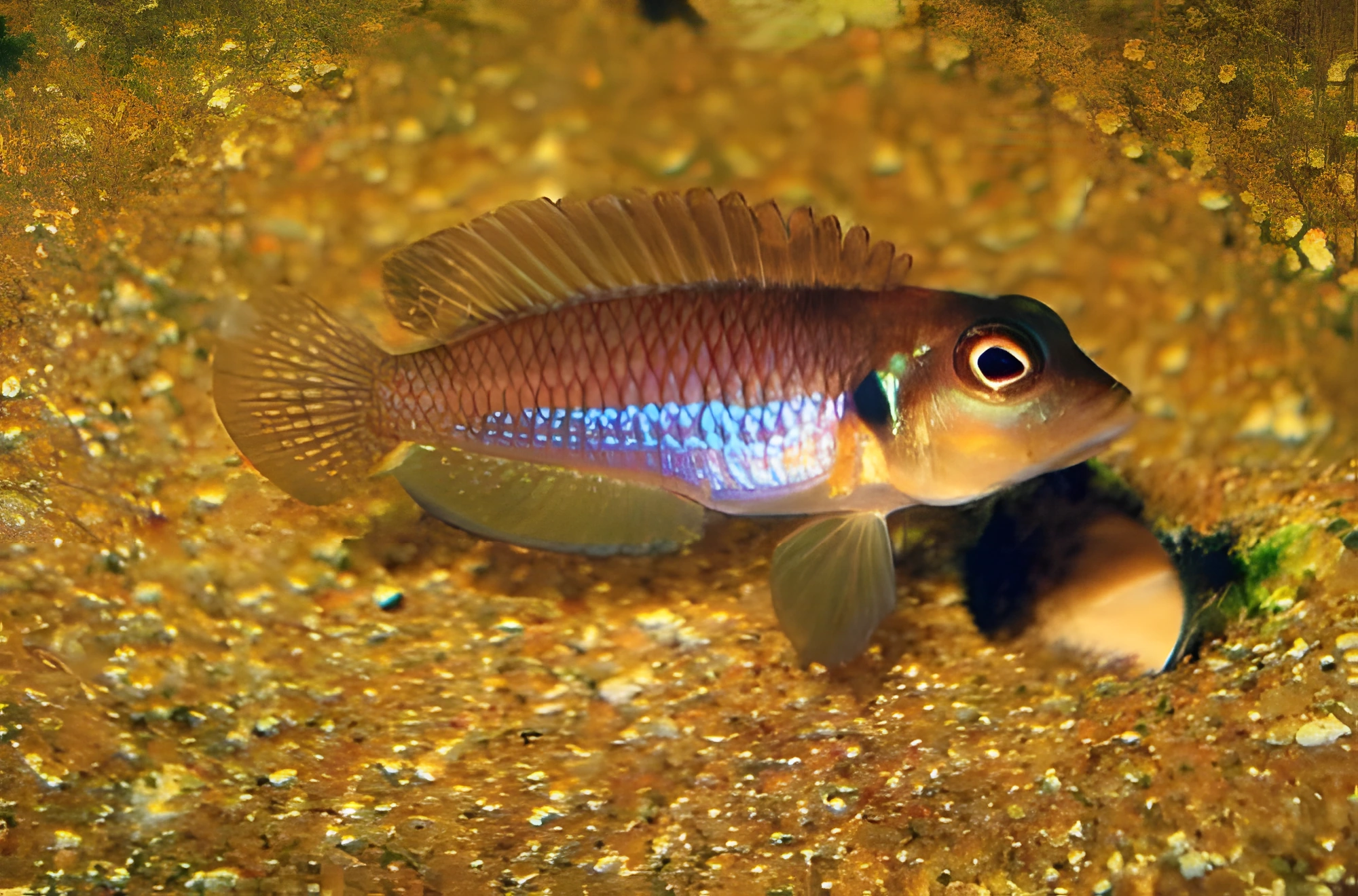
Adult males reach approximately 6 cm in length, while females are significantly smaller, about 3 cm. A distinctive feature of these fish is their large eyes and head, which appears large in proportion to their body. Due to this characteristic, their eyes seem to protrude above the head, which is why it is sometimes called the “Frog Fish”. The dorsal and anal fins are elongated, extending from the belly to the tail. Yellow hues dominate their coloration; males exhibit bluish iridescent scales on their flanks, and their fins are adorned with a golden trim.
Habitat
This species is endemic to Lake Tanganyika, the second largest lake in the world, located in Africa. It lies on the borders of the Democratic Republic of Congo, Tanzania, Burundi, and Zambia. Lamprologus ocellatus is widespread throughout the lake, preferring coastal areas with sandy substrates where there are many empty mollusk shells.
Behavior and Compatibility
This species is territorial, meaning it is ready to actively defend its small patch of seabed from conspecifics and other species. This behavior is particularly characteristic of males. In small aquariums, it is recommended to keep only one male with one or several females. Coexistence is possible with fish that inhabit the water column or surface, such as Cyprichromis leptosoma. If the aquarium is spacious enough, they can be kept with other territorial species, such as Julidochromis, provided that each dominant male has sufficient personal space.
Care and Maintenance
An optimal aquarium volume for keeping a single pair of these fish is considered to be a tank of 40 L or more. The decor must include open sandy areas with a substrate layer of at least 5 cm, as the fish enjoy digging in the sand, as well as plenty of hollow snail shells. Lamprologus ocellatus use shells as secure shelters, spawning sites, and the center of their territory. Other decorative elements can be chosen at the aquarist's discretion. The inclusion of plants is not mandatory, but if desired, preference should be given to unpretentious species capable of growing successfully in hard and alkaline water conditions. When keeping them, it is important to ensure stable water parameters: appropriate pH and dGH values, and to avoid fluctuations in nitrogen compounds (ammonia, nitrites, nitrates). An effective filtration system, regular removal of organic waste from the aquarium, and weekly water changes of 10–15% of the volume with fresh water play a key role.
Diet
In a home aquarium, these fish readily accept sinking dry foods rich in protein. To diversify their diet, it is recommended to regularly include live or frozen foods, such as Artemia or bloodworms.
Breeding and Reproduction
During the breeding process of Lamprologus ocellatus, shells are crucial, serving as spawning sites. It is recommended to breed them in a separate aquarium, without other species, which significantly increases the chances of fry survival. Unlike many other fish, females initiate breeding. When the mating season arrives, they lay their eggs, each in her own shell, and then invite the male. Fertilization occurs after the male accepts their courtship. Females remain by the shell to guard the clutch, while the male no longer participates in further parental care. The incubation period lasts about 3 days, after which the fry begin to swim freely approximately 10 days later, moving away from their shelter. Upon reaching a certain size, the fry are expelled from the shell by the female, and from this moment, she is ready for the next breeding cycle.
Diseases
The main cause of most diseases in Lake Tanganyika cichlids is unsuitable keeping conditions and poor-quality food, which often leads, for example, to African Bloat. At the first symptoms, it is necessary first to check the water parameters and ensure there are no high concentrations of dangerous substances such as ammonia, nitrites, and nitrates. If the readings deviate from the norm, they should be brought into order, and only then should treatment begin. More detailed information on symptoms and treatment methods is available in the “Aquarium Fish Diseases” section.
How to choose
When selecting individuals, attention should be paid to the activity of the fish and the cleanliness of their skin. Healthy specimens show curiosity, actively defend their shelters, and have no visible damage, ulcers, or growths. Avoid purchasing fish that appear lethargic, stay near the water surface, or have a sunken belly. It is advisable to acquire individuals from the same aquarium, as this reduces the risk of stress during adaptation to new conditions. Given the territorial nature of the species, it is recommended to ascertain the sex of the fish in advance if keeping a pair is planned, as males are larger than females and have characteristic dorsal fin coloration.
Frequently asked questions
The essentials: size, tank volume, water parameters and care
How big does Lamprologus ocellatus get?
An adult reaches 3–6 cm in length. Plan the tank around the maximum size: the fish quickly outgrows a cramped setup.
What size aquarium does Lamprologus ocellatus need?
The minimum recommended volume is 40 L. A smaller tank speeds up nitrate build-up and raises stress levels.
What water parameters does Lamprologus ocellatus need?
Temperature 23–27 °C, pH 7.5–9, hardness 10–25 dGH. Stability matters more than exact values: sudden swings are harder on the fish than a small deviation from the ideal.
How long does Lamprologus ocellatus live?
Around 8 years when kept properly. Lifespan depends directly on tank volume, water quality and a varied diet.
Is Lamprologus ocellatus aggressive?
Temperament: semi-peaceful (including aggression during spawning / intraspecific conflicts). Keep this in mind when choosing tank mates.
How many Lamprologus ocellatus should be kept together?
Recommended setup: harem (1 male and several females). Ignoring this is a common cause of stress and disease.
What does Lamprologus ocellatus eat?
Diet type: sinking (any). Feed small portions that are finished within a couple of minutes — overfeeding does more harm than underfeeding.
What is the scientific name of Lamprologus ocellatus?
The scientific name of the species is Lamprologus ocellatus, family Cichlids (Cichlidae). It also appears in the literature as: Julidochromis ocellatus, Lamprologus lestradei, Neolamprolagus ocellatus.