Temperature24 – 27 °C
Natural range
- Lake Tanganyika area
- Democratic Republic of the Congo area
- Tanzania area
CichlidsConservation status: Least concern LC
Other scientific names: Lamprologus multifasciatus
A member of the Cichlidae family, Neolamprologus multifasciatus, also known by its scientific name Neolamprologus multifasciatus, is a miniature fish with remarkable behavior. It is territorial: individuals actively defend their territory from incursions by conspecifics and other aquarium inhabitants. Keeping and breeding this species is not difficult. For aquarists, especially beginners, it is recommended to keep these fish in a species-specific tank.
- Required aquarium volume
- 40 L
- Size in aquarium
- 3 – 4 cm
- Temperature
- 24 – 27 °C
- Temperament
- Semi-peaceful (including aggression during spawning / intraspecific conflicts)
Parameters
Water pHNeutral (7.5) – Alkaline (9)
Water dHMedium hardness (10) – Very hard (25)
Water salinityno salt (freshwater)
Size in aquarium3 – 4 cm
Lifespan7 years
TemperamentSemi-peaceful (including aggression during spawning / intraspecific conflicts)
Toward small fishnot a predator
Required aquarium volume40 L
Lightingmoderate (regular)
Substratesandy (regular, light)
Water flowweak or moderate
FeedingMixed diet (meat + plant-based)
CareSchooling (usually from 5–6 individuals and more)
Description
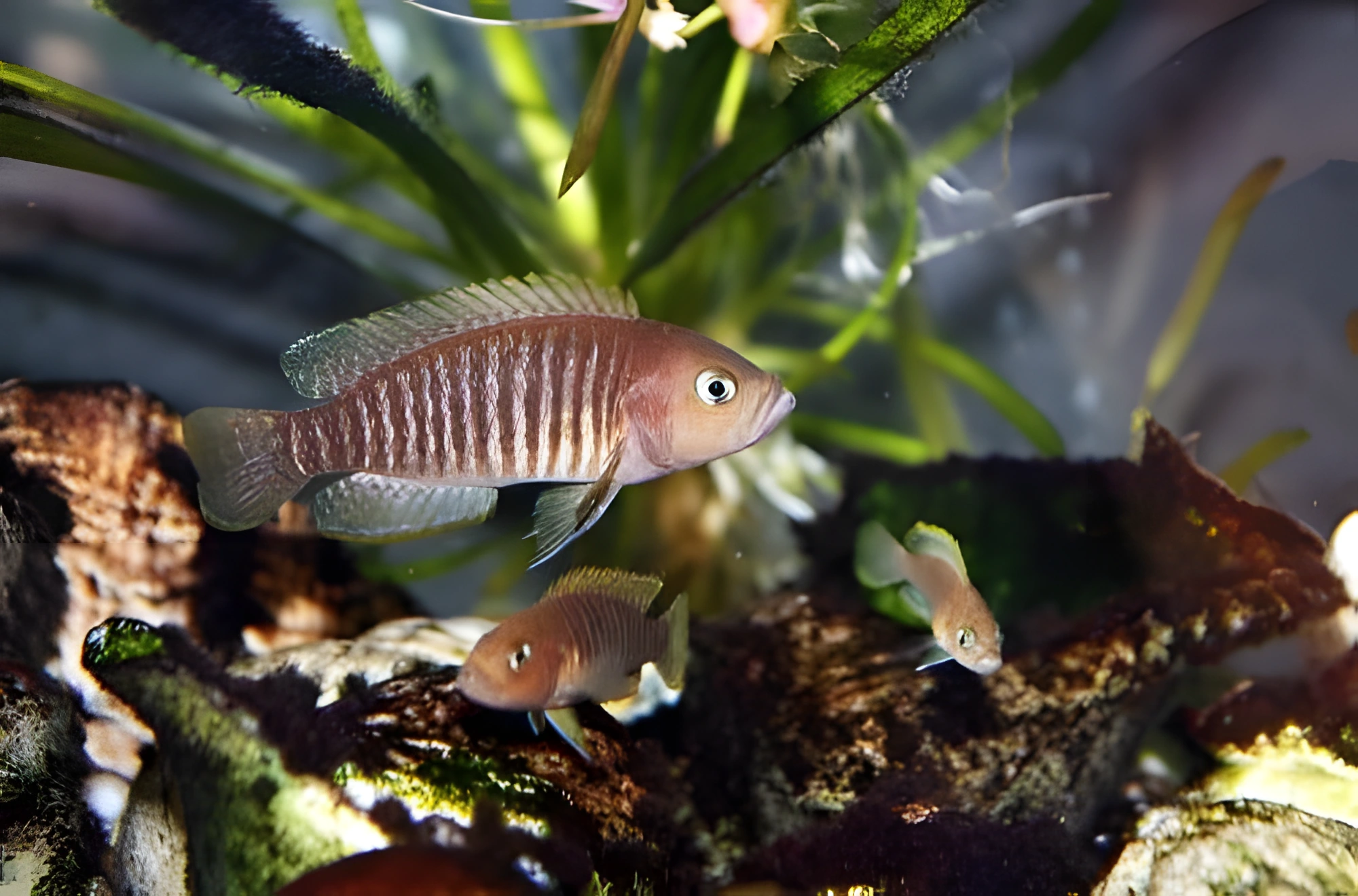
Males reach a length of about 4.5 cm, while females are slightly smaller — about 3.5 cm. Otherwise, obvious signs of sexual dimorphism are poorly expressed. The coloration can appear both light and dark, depending on the lighting. This effect is achieved thanks to vertical stripes of brown or gray color, arranged in rows. The fins of these fish have a slight bluish tint.
Habitat
This species is endemic to Lake Tanganyika, one of the largest bodies of water in the world, located in several African countries. It stretches longest along the Democratic Republic of Congo and Tanzania. The fish inhabit the bottom layers near the coast, preferring areas with sandy substrate abundant in scattered empty shells, which serve them as both shelter and spawning grounds.
Behavior and Compatibility
Since this is a territorial fish, each individual occupies its own area on the bottom, the size of which usually does not exceed 15 cm in diameter, with a shell in the center. Neolamprologus multifasciatus actively defends this territory from other fish and can even attack an aquarist's hand, for example, during substrate cleaning. Despite their noticeable aggression, these fish do not pose a serious danger to tank mates due to their modest size. Nevertheless, other aggressive species should not be introduced, especially in a small aquarium. Otherwise, they get along well with representatives of Lake Tanganyika of comparable size.
Care and Maintenance
For a small group of these fish, an aquarium of at least 40 liters is recommended. For decoration, fine sand at least 5 cm deep should be used, as well as several empty shells, the number of which should exceed the number of fish. For this species, this will be quite sufficient. Live plants are not an essential element, but if desired, some undemanding varieties such as Anubias or Vallisneria, as well as mosses and ferns, can be chosen. Plants should be placed in pots to avoid root damage when the lamprologus dig in the sand. Maintaining stable water parameters — appropriate hardness (dGH) and acidity (pH) values, as well as preventing an increase in the concentration of nitrogenous compounds (ammonia, nitrites, nitrates) — is crucial for their keeping. The aquarium must be equipped with an effective filtration and aeration system. It is important to regularly remove organic waste and perform weekly partial water changes (10–15% of the total volume) with fresh water.
Diet
The diet should be based on live or frozen food, such as bloodworms, daphnia, or Artemia. Dry sinking foods are intended to supplement the diet, providing the body with essential trace elements and vitamins.
Breeding and Reproduction
Under favorable conditions, breeding Neolamprologus proceeds without much difficulty. The optimal ratio is considered to be one male to several females; this helps reduce aggression between males and increases the chances of successful reproduction. During the breeding season, females lay eggs inside shells, and after fertilization, they remain near the clutch to protect it. Males do not participate in parental care. The incubation period lasts about 24 hours, after which the fry begin to swim freely after 6–7 days. From this point, it is advisable to transfer them to a separate aquarium, which helps increase their survival rate. They should be fed specialized micro-food or Artemia nauplii.
Diseases
The main cause of most diseases in Lake Tanganyika cichlids is unsuitable keeping conditions and poor-quality food, which often leads, for example, to African Bloat. At the first symptoms, it is necessary first to check the water parameters and ensure there are no high concentrations of dangerous substances such as ammonia, nitrites, and nitrates. If the readings deviate from the norm, they should be brought into order, and only then should treatment begin. More detailed information on symptoms and treatment methods is available in the “Aquarium Fish Diseases” section.
How to choose
When choosing Neolamprologus multifasciatus in a store, it is important to consider that this species is often confused with closely related shell dwellers, such as Neolamprologus similis or Neolamprologus brevis. Carefully examine the coloration: in multifasciatus, the stripes start behind the gill covers, while in similis, they extend onto the head. Healthy individuals should be active, show interest in the substrate and shells, and display bright, clear stripes without signs of fin damage, ulcers, or spots on the body. Avoid purchasing fish that appear lethargic, stay near the water surface, or have sunken bellies, as this may indicate emaciation or internal diseases. Since these fish are colonial, it is recommended to acquire a group of several individuals to observe their natural behavior.
Frequently asked questions
The essentials: size, tank volume, water parameters and care
How big does Neolamprologus multifasciatus get?
An adult reaches 3–4 cm in length. Plan the tank around the maximum size: the fish quickly outgrows a cramped setup.
What size aquarium does Neolamprologus multifasciatus need?
The minimum recommended volume is 40 L. A smaller tank speeds up nitrate build-up and raises stress levels.
What water parameters does Neolamprologus multifasciatus need?
Temperature 24–27 °C, pH 7.5–9, hardness 10–25 dGH. Stability matters more than exact values: sudden swings are harder on the fish than a small deviation from the ideal.
How long does Neolamprologus multifasciatus live?
Around 7 years when kept properly. Lifespan depends directly on tank volume, water quality and a varied diet.
Is Neolamprologus multifasciatus aggressive?
Temperament: semi-peaceful (including aggression during spawning / intraspecific conflicts). Keep this in mind when choosing tank mates.
How many Neolamprologus multifasciatus should be kept together?
Recommended setup: schooling (usually from 5–6 individuals and more). Ignoring this is a common cause of stress and disease.
What does Neolamprologus multifasciatus eat?
Diet type: mixed diet (meat + plant-based). Feed small portions that are finished within a couple of minutes — overfeeding does more harm than underfeeding.
What is the scientific name of Neolamprologus multifasciatus?
The scientific name of the species is Neolamprologus multifasciatus, family Cichlids (Cichlidae). It also appears in the literature as: Lamprologus multifasciatus.