Temperature23 – 27 °C
Natural range
- Amazon River Basin
- Rio Negro Basin
- Orinoco River Basin
- Brazil area
CharacinsConservation status: Least concern LC
Other scientific names: Curimata multilineata, Curimatorbis multilineatus, Curimatus multilineatus
Cyphocharax multilineatus, known as Curimata, belongs to the family Curimatidae, or toothless characins. This fish is native to South America, where it is found in the upper reaches of the Rio Negro and Orinoco rivers. Its range covers the territories of Brazil, Venezuela, and Colombia. Curimata prefers calm river sections with abundant hiding places, as well as flooded rainforest areas during the rainy season.
- Required aquarium volume
- 100 L
- Size in aquarium
- 10 – 11 cm
- Temperature
- 23 – 27 °C
- Temperament
- Peaceful (regular)
Parameters
Water pHSlightly acidic (5.5) – Neutral (7.5)
Water dHSoft (5) – Very hard (20)
Water salinityno salt (freshwater)
Size in aquarium10 – 11 cm
Lifespan7 years
TemperamentPeaceful (regular)
Toward small fishnot a predator
Required aquarium volume100 L
Lightingbright (preferred)
Substratesoft sandy (including silted)
Water flownone or stagnant (no flow)
FeedingPlant-based (algae, vegetables)
CareSmall group (3–4 individuals)
Description
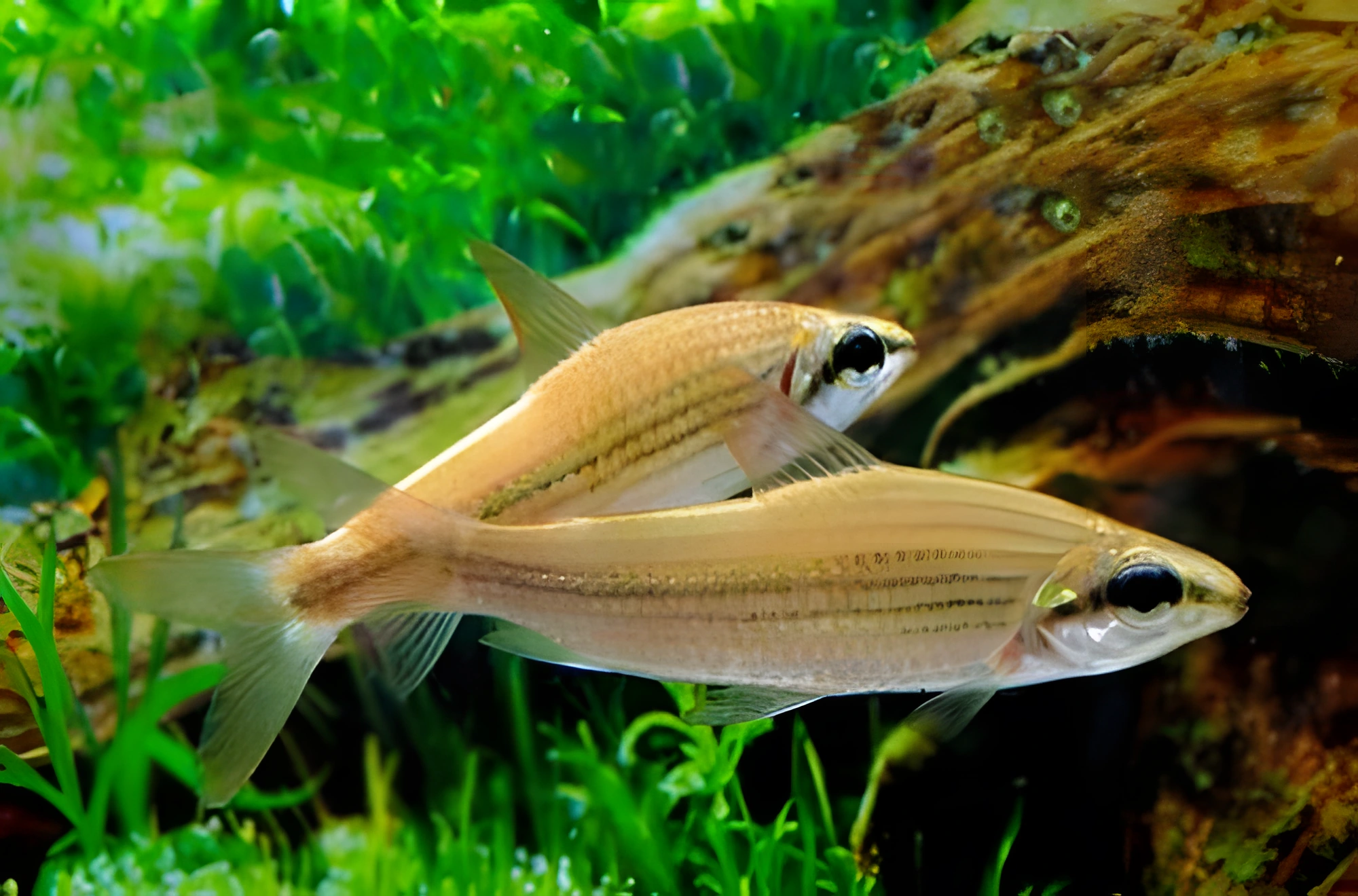
Adults of this fish reach a length of approximately 10–11 cm. It bears a noticeable resemblance to Chilodus, but is easily distinguished by a characteristic black stripe running through its eyes. Otherwise, its coloration and body pattern are similar: light yellow tones with dark pigment spots forming horizontal lines predominate.
Habitat
The species inhabits the Amazon, Rio Negro (Brazil, Venezuela), and Orinoco (Venezuela) river basins. In nature, it lives in slow-moving sections of water bodies, often found in flooded forests and areas with dense vegetation. It prefers to stay in the middle water layers or near the bottom, where there is an abundance of organic detritus, sand, and fallen leaves. Water parameters in its habitat correspond to a tropical climate: temperature 23–27 °C, pH 5.5–7.5.
Behavior and Compatibility
These fish are peaceful and quite active. Most of their day is dedicated to foraging, during which they thoroughly explore the spaces between rocks and snags. Curimata feels better in a group of conspecifics and coexists well with other non-aggressive species of similar size.
Care and Maintenance
For a group of 3–4 Curimata, the optimal aquarium volume starts from 100–150 liters. A simple setup is preferred. It is recommended to use a soft sandy substrate, on which natural snags and rock formations can be placed. The placement of bark and tree leaves is also permissible, which must be regularly replaced as they decompose. Plant thickets, including floating species, are welcome, but excessive overgrowth of the aquarium should be avoided. The ideal environment for these fish is warm, soft, and slightly acidic water, moderate or subdued lighting, and weak or no current. Aquarium care includes standard procedures: weekly partial water changes with fresh water, preventive equipment maintenance, and removal of organic waste. In its natural habitat, Curimata feeds on algae growing on rocks and snags, as well as various organisms living there. Accordingly, the daily diet in the aquarium should be rich in plant components. Common dry foods with the addition of fresh or frozen bloodworms, brine shrimp, daphnia, and other similar foods will be a good choice. Sources: fishbase.org, aquariumglaser.de
Diet
In natural conditions, these fish feed on algae that grow on rocks and snags, as well as various organisms living in these thickets. Consequently, the daily diet of Curimata in the aquarium should include a significant amount of plant components. Popular dry foods, supplemented with fresh or frozen bloodworms, brine shrimp, daphnia, and similar additions, can be an excellent option.
Breeding and Reproduction
Breeding in aquarium conditions is considered difficult and requires special skills. The fish are egg-layers, do not show parental care, and may eat their own eggs. To stimulate spawning, it is necessary to create specific conditions that mimic the rainy season, as well as using soft water. In a community tank, fry survival is practically zero, so for successful breeding, it is recommended to move the parents to a separate breeding tank.
Diseases
The species is quite robust, provided that water parameters and aquarium cleanliness are maintained. Like other members of the family, the fish are sensitive to water quality, so the accumulation of organic waste, nitrites, and nitrates can provoke a decrease in immunity and the development of bacterial infections. The main preventive measures are weekly water changes, maintaining stable pH and temperature, and quality filtration. If keeping conditions are violated, skin and fin lesions caused by opportunistic microflora are possible.
How to choose
When purchasing, choose active fish with clean fins and no visible damage to the body. It is important to ensure that the individuals do not show signs of emaciation or unusual spots on their scales. It is recommended to acquire a group of 5 or more individuals, as the fish experience significant stress when alone. Before purchasing, it is worth clarifying the keeping conditions in the store and the health status of other fish in the aquarium, as this species is sensitive to abrupt changes in environmental parameters.
Frequently asked questions
The essentials: size, tank volume, water parameters and care
How big does Curimata get?
An adult reaches 10–11 cm in length. Plan the tank around the maximum size: the fish quickly outgrows a cramped setup.
What size aquarium does Curimata need?
The minimum recommended volume is 100 L. A smaller tank speeds up nitrate build-up and raises stress levels.
What water parameters does Curimata need?
Temperature 23–27 °C, pH 5.5–7.5, hardness 5–20 dGH. Stability matters more than exact values: sudden swings are harder on the fish than a small deviation from the ideal.
How long does Curimata live?
Around 7 years when kept properly. Lifespan depends directly on tank volume, water quality and a varied diet.
Is Curimata aggressive?
Temperament: peaceful (regular). Keep this in mind when choosing tank mates.
How many Curimata should be kept together?
Recommended setup: small group (3–4 individuals). Ignoring this is a common cause of stress and disease.
What does Curimata eat?
Diet type: plant-based (algae, vegetables). Feed small portions that are finished within a couple of minutes — overfeeding does more harm than underfeeding.
What is the scientific name of Curimata?
The scientific name of the species is Cyphocharax multilineatus, family Toothless Characins (Curimatidae). It also appears in the literature as: Curimata multilineata, Curimatorbis multilineatus, Curimatus multilineatus.