Temperature23 – 28 °C
Natural range
- Cuba area
- Cuban Archipelago area
LivebearersConservation status: Least concern LC
Other scientific names: Limia cubensis, Limia pavonina, Poecilia vittata
Limia vittata, known as the mottled, striped, or Cuban limia, belongs to the family Poeciliidae. This aquarium fish is very popular; its care and breeding do not require special efforts, making it an excellent choice for beginner aquarists.
- Required aquarium volume
- 60 L
- Size in aquarium
- 5 – 10 cm
- Temperature
- 23 – 28 °C
- Temperament
- Peaceful (regular)
Parameters
Water pHNeutral (7) – Slightly alkaline (8)
Water dHVery hard (19) – Very hard (30)
Water salinitylow (3–5 g/L)
Size in aquarium5 – 10 cm
Lifespan3 years
TemperamentPeaceful (regular)
Toward small fishnot a predator
Required aquarium volume60 L
Lightingweak (low)
Substrateany (no restrictions)
Water flowweak or moderate
FeedingFloating (protein)
CareMixed (solitary / pair / group)
Description
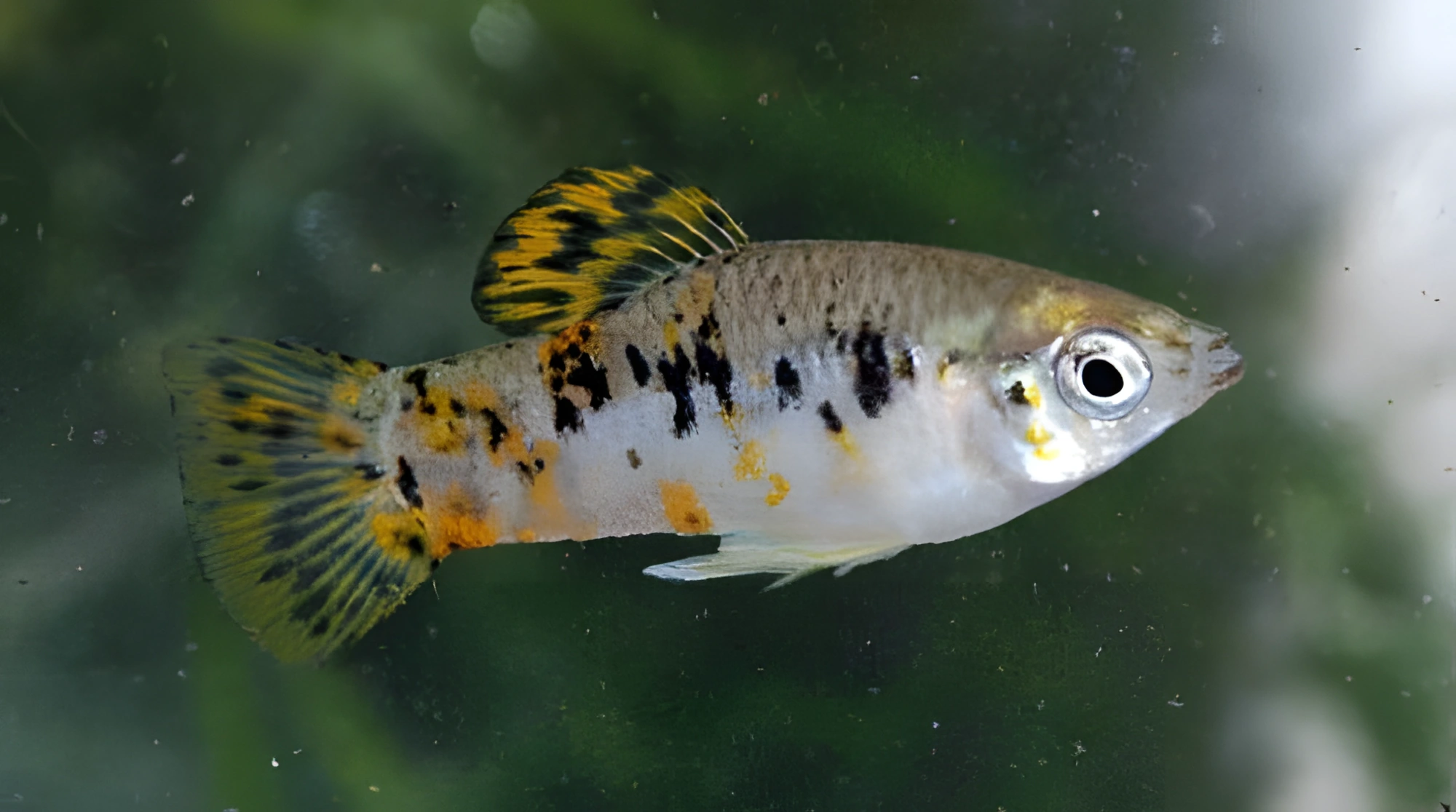
Among the varieties of mottled limia, several color forms stand out. In home aquariums, individuals with black and yellow speckles on a silvery-gray background are most commonly found, which differ significantly from wild populations in Cuba. On the island, solid brown-olive limias predominate. Mottled forms inhabit only limited regions in their natural environment, but it is precisely these that have gained popularity in aquaristics. Differences between sexes become noticeable by the size of adult individuals: females can reach 10 cm, while males rarely exceed 5 cm. If several males are kept in one aquarium, an alpha male with more intense yellow speckles usually emerges.
Habitat
The homeland of this fish is the island of Cuba. There it is widely distributed, inhabiting diverse biotopes: streams, lakes, estuaries, coastal lagoons, and mangrove swamps. It prefers shallow areas with abundant aquatic vegetation.
Behavior and Compatibility
This peaceful and friendly fish coexists perfectly with other non-aggressive species of comparable size. In its natural habitat, it is often found alongside mollies, gambusias, Girardinus, and other popular aquarium inhabitants. It is also compatible with some Central American cichlid species.
Care and Maintenance
For a group of 5–6 fish, an aquarium of at least 60 liters will be optimal. The setup should include shelters made of live or artificial plants, and also leave open areas of water for free swimming. When choosing plants, it is recommended to prefer species that can grow well in an alkaline environment. The Cuban limia feels comfortable in both fresh and brackish water, with the latter being considered more preferable. According to Ted Coletti, a columnist for Tropical Fish Hobbyist magazine, adding salt significantly improves the fish's condition, contributing to brighter coloration and increased lifespan. The recommended salt concentration is 7–10 grams per 5 liters of water. The main difficulties in keeping them lie in maintaining stable salinity and high hydrochemical parameters. Since the water in the aquarium gradually softens over time, a weekly 30–40% water change with fresh water is necessary to prevent a critical drop in pH and dGH values. This procedure can be conveniently combined with cleaning the substrate of organic debris using a siphon. The use of chemical filters with materials that increase water hardness is permissible.
Diet
The daily diet of these fish can be varied: dry flakes, granules, tablets, as well as freeze-dried, frozen, or live invertebrates (e.g., Artemia, bloodworms, daphnia). An important condition is the inclusion of plant-based additives in the food. If algae appear in the aquarium, they will become an additional food source. Check out our new product — Aqvium flake food for aquarium fish, which has become a bestseller on Ozon with a rating of 4.9. It is suitable for most aquarium inhabitants. The raw material is produced according to modern European standards (EU 2018/848) and is enriched with vitamins A, C, D3, E, and Omega 3-6. You can purchase it on Ozon.
Breeding and Reproduction
In aquarium conditions, the striped limia shows no pronounced seasonal breeding, with spawning occurring continuously throughout the year. If living conditions are favorable, a new generation can appear every 4–6 weeks. Adult females of this species are capable of giving birth to over a hundred fry at a time. As an example, a case recorded in the mid-20th century at the Shedd Aquarium in Chicago, USA, where one female striped limia gave birth to 242 fry. Parental instincts are not developed in these fish, so there is no care for the offspring. To ensure the safety of the young and protect them from predation by adult individuals, it is recommended to transfer the fry to a separate aquarium.
Diseases
Maintaining fish in a suitable habitat, providing balanced nutrition, and the absence of external threats, such as aggression from tank mates, are the best defense against disease. The appearance of signs of illness may indicate problems with husbandry. As a rule, normalizing environmental parameters promotes self-healing, but if the fish's condition has significantly worsened, medication will be required. Detailed information on symptoms and treatment methods can be found in the “Diseases of aquarium fish” section.
How to choose
When choosing a Cuban limia, prefer individuals with clean fins and no visible skin damage. Healthy fish should have clear coloration and active behavior, with a pronounced interest in their surroundings. Avoid purchasing fish that appear emaciated, stay at the water surface, or show signs of apathy, as this may indicate stress or hidden diseases. It is also recommended to clarify the keeping conditions at the store in advance to minimize risks during adaptation to a new aquarium.
Frequently asked questions
The essentials: size, tank volume, water parameters and care
How big does Cuban Limia get?
An adult reaches 5–10 cm in length. Plan the tank around the maximum size: the fish quickly outgrows a cramped setup.
What size aquarium does Cuban Limia need?
The minimum recommended volume is 60 L. A smaller tank speeds up nitrate build-up and raises stress levels.
What water parameters does Cuban Limia need?
Temperature 23–28 °C, pH 7–8, hardness 19–30 dGH. Stability matters more than exact values: sudden swings are harder on the fish than a small deviation from the ideal.
How long does Cuban Limia live?
Around 3 years when kept properly. Lifespan depends directly on tank volume, water quality and a varied diet.
Is Cuban Limia aggressive?
Temperament: peaceful (regular). Keep this in mind when choosing tank mates.
How many Cuban Limia should be kept together?
Recommended setup: mixed (solitary / pair / group). Ignoring this is a common cause of stress and disease.
What does Cuban Limia eat?
Diet type: floating (protein). Feed small portions that are finished within a couple of minutes — overfeeding does more harm than underfeeding.
What is the scientific name of Cuban Limia?
The scientific name of the species is Limia vittata, family Poeciliidae. It also appears in the literature as: Limia cubensis, Limia pavonina, Poecilia vittata.