Temperature24 – 28 °C
Natural range
- Congo River Basin
- Republic of the Congo area
- Democratic Republic of the Congo area
- Cameroon area
Labyrinth fishConservation status: Least concern LC
Other scientific names: Anabas fasciolatus, Ctenopoma fasciolatum
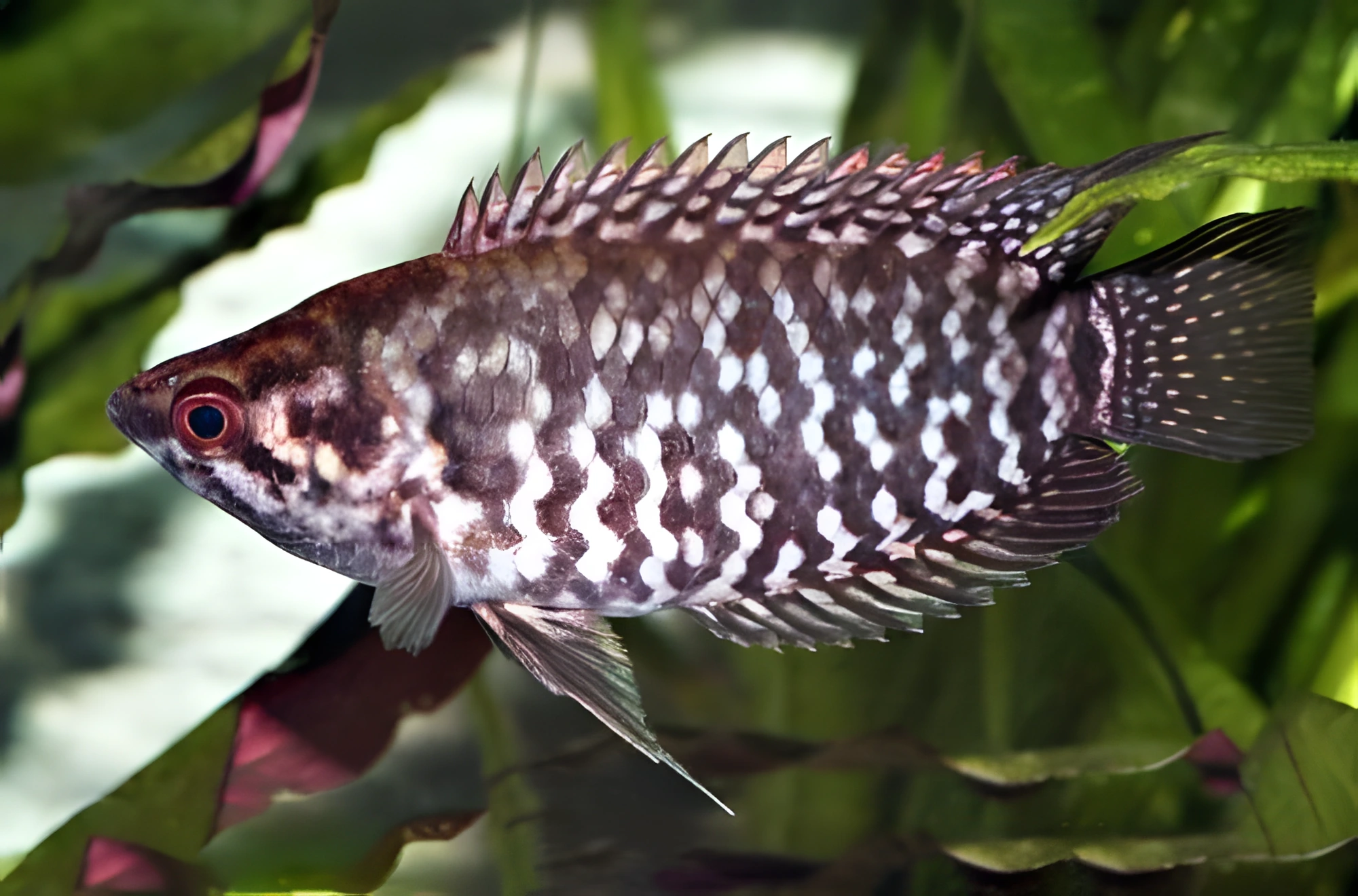
Microctenopoma fasciolatum, or the eight-banded ctenopoma, belongs to the family Anabantidae and is an African labyrinth fish. This species is easy to keep and breed. Thanks to its original coloration and good compatibility with most peaceful fish, it will be a great addition to a community tank.
- Required aquarium volume
- 70 L
- Size in aquarium
- 8 cm
- Temperature
- 24 – 28 °C
- Temperament
- Semi-peaceful (including aggression during spawning / intraspecific conflicts)
Parameters
Water pHNeutral (6.5) – Neutral (7.5)
Water dHSoft (4) – Very hard (20)
Water salinityno salt (freshwater)
Size in aquarium8 cm
Lifespan6 years
TemperamentSemi-peaceful (including aggression during spawning / intraspecific conflicts)
Toward small fishnot a predator
Required aquarium volume70 L
Lightingweak or moderate
Substrateany (no restrictions)
Water flownone or stagnant (no flow)
FeedingHigh protein (predominantly meat)
CarePair (male/female)
Description
Adult eight-banded ctenopoma reach a length of up to 8 cm. Their bodies are adorned with dark, irregularly shaped vertical stripes. The coloration can vary from gray to dark brown, and the fins often have a bluish tint. The fish's color palette depends on its geographical origin and age; young individuals appear less vibrant, with barely noticeable stripes.
Habitat
The natural habitat of this species extends across the African continent, covering the Congo River basin in the territories of the modern Republic of the Congo and the Democratic Republic of the Congo. Ctenopoma can also be found in some river systems in Cameroon.
Behavior and Compatibility
This species is characterized by a calm and peaceful disposition, coexisting well with many fish of similar size and temperament. However, it is advisable to avoid keeping them with overly active species, such as Sumatran barbs, which can cause stress for the ctenopoma. Intraspecific relationships are characterized by male dominance in a specific territory, especially during spawning, which can sometimes lead to skirmishes. It is recommended to keep fish in pairs (male/female) or in a harem-type group.
Care and Maintenance
For keeping a single pair of ctenopoma, an aquarium of at least 70 liters will be optimal. The aquarium setup can be arbitrary, but several important conditions must be considered: the presence of dense thickets of live plants, including floating species, subdued or moderate lighting, and a tight lid that insulates fixtures and electrical wires from water and splashes. The lid plays a dual role: it prevents fish from jumping out and helps maintain a warm and humid air layer above the water surface, which is critically important for the respiration of labyrinth fish. Otherwise, the eight-banded ctenopoma is undemanding. Its care includes regular cleaning of the substrate from organic waste and weekly water changes of 10–15% of the volume with fresh water, provided an efficiently working filtration system.
Diet
The diet of these fish should preferably include live or frozen meaty foods of suitable size, such as bloodworms, daphnia, and artemia. Dry foods can serve only as a supplement, rarely being the main food. Nevertheless, some aquarists successfully acclimate fish to dry foods, which significantly simplifies care. Therefore, before purchasing, it is worth clarifying this aspect with the seller.
Breeding and Reproduction
Fry can appear in the community tank at any time of the year. Spawning can be stimulated by a gradual change in pH to values of 5.5–6.0. At the beginning of the breeding period, the male builds a bubble nest among floating plants, where he subsequently invites the female to lay eggs. In total, several hundred eggs will be laid. The incubation period lasts about 24 hours, and 2–3 days later, the fry begin to swim freely. Parents do not exhibit predation towards the young, so the fry can remain with them. However, if there are other fish in the aquarium, it is recommended to transfer the fry to a separate tank with identical water conditions.
Diseases
The main cause of most diseases in Leaf Fish is unsuitable keeping conditions and poor-quality nutrition. If initial symptoms are observed, it is first necessary to check water parameters and the concentration of dangerous substances such as ammonia, nitrites, and nitrates. If the indicators deviate from the norm, they should be brought back into order, and only then should treatment begin. More detailed information on symptoms and treatment methods can be found in the "Aquarium Fish Diseases" section.
How to choose
When purchasing, choose active fish with clean fins and no visible damage or sores on their bodies. Avoid individuals with signs of emaciation, sunken bellies, or unnatural behavior, such as constantly staying near the water surface without other reasons. Since this species is a labyrinth fish, it is important to ensure that the fish do not show signs of labored breathing, which may indicate problems with the gill apparatus or infections. At the store, it is advisable to clarify what type of food the fish are accustomed to, as they may be selective and reluctant to switch to dry foods after live feeding.
Frequently asked questions
The essentials: size, tank volume, water parameters and care
How big does Eight-banded Ctenopoma get?
An adult reaches 8 cm in length. Plan the tank around the maximum size: the fish quickly outgrows a cramped setup.
What size aquarium does Eight-banded Ctenopoma need?
The minimum recommended volume is 70 L. A smaller tank speeds up nitrate build-up and raises stress levels.
What water parameters does Eight-banded Ctenopoma need?
Temperature 24–28 °C, pH 6.5–7.5, hardness 4–20 dGH. Stability matters more than exact values: sudden swings are harder on the fish than a small deviation from the ideal.
How long does Eight-banded Ctenopoma live?
Around 6 years when kept properly. Lifespan depends directly on tank volume, water quality and a varied diet.
Is Eight-banded Ctenopoma aggressive?
Temperament: semi-peaceful (including aggression during spawning / intraspecific conflicts). Keep this in mind when choosing tank mates.
How many Eight-banded Ctenopoma should be kept together?
Recommended setup: pair (male/female). Ignoring this is a common cause of stress and disease.
What does Eight-banded Ctenopoma eat?
Diet type: high protein (predominantly meat). Feed small portions that are finished within a couple of minutes — overfeeding does more harm than underfeeding.
What is the scientific name of Eight-banded Ctenopoma?
The scientific name of the species is Microctenopoma fasciolatum, family Anabantidae. It also appears in the literature as: Anabas fasciolatus, Ctenopoma fasciolatum.