Temperature24 – 27 °C
Natural range
- Brazil area
Predators CichlidsConservation status: Data deficient DD
Crenicichla, scientifically known as Crenicichla compressiceps, belongs to the family Cichlidae. This species originates from South America, specifically found in the lower Tocantins River basin, located in eastern Brazil.
- Required aquarium volume
- 150 L
- Size in aquarium
- 6 cm
- Temperature
- 24 – 27 °C
- Temperament
- Aggressive / incompatible / unfriendly
Parameters
Water pHSlightly acidic (5) – Neutral (6.8)
Water dHVery soft (2) – Medium hardness (8)
Water salinityno salt (freshwater)
Size in aquarium6 cm
Lifespan6 years
TemperamentAggressive / incompatible / unfriendly
Toward small fishpredator
Required aquarium volume150 L
Lightingany
Substratesoft sandy (including silted)
Water flowmoderate
FeedingHigh protein (predominantly meat)
CareBoth solitary and in group (flexible)
Description
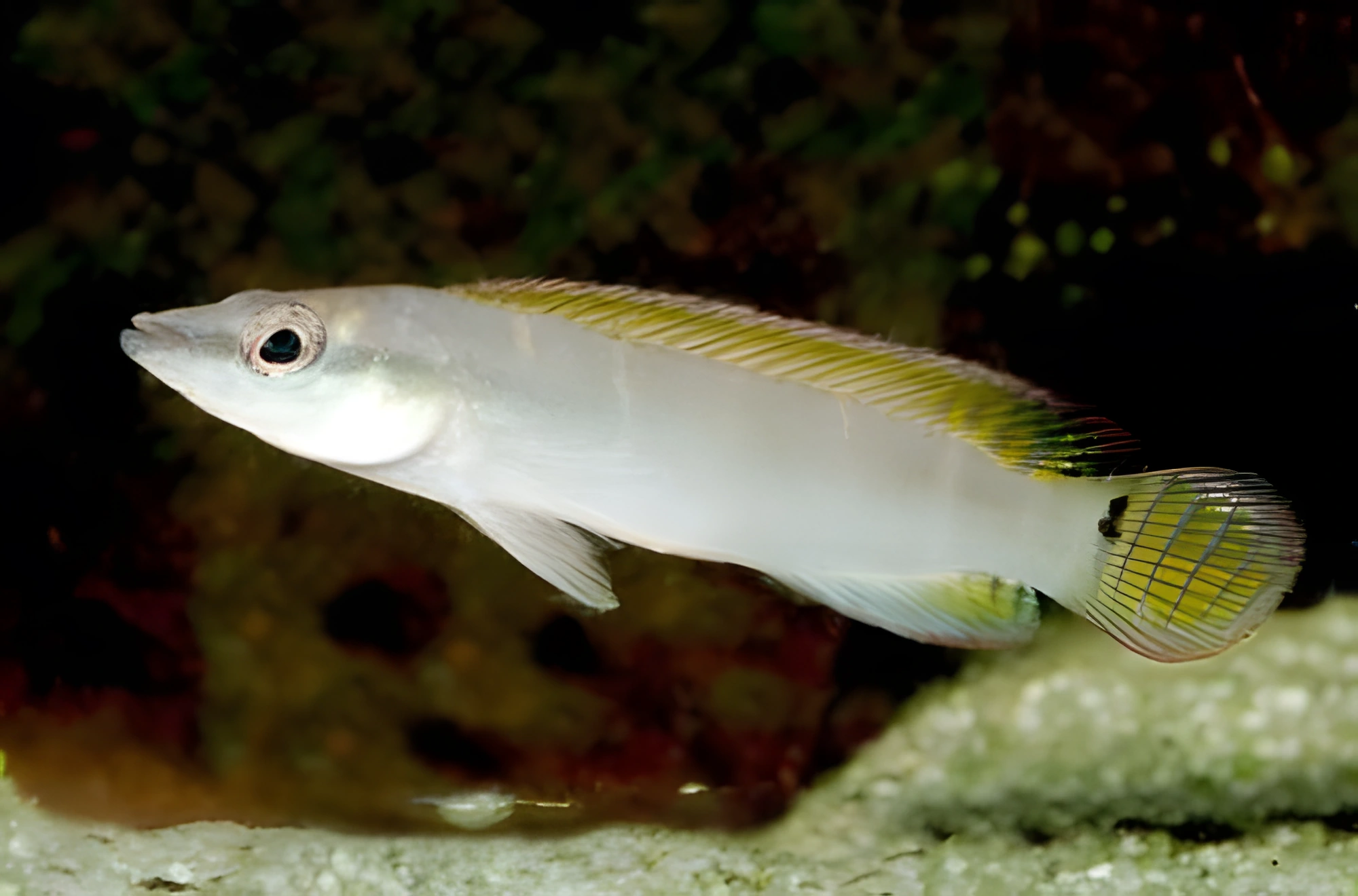
Adult Crenicichla can reach up to 6 cm in length. Their appearance resembles a miniature pike: the body is elongated, and the snout is wide with a noticeable, large mouth. A large dorsal fin extends from the head to the tail. The main body color is greenish-yellow, with 6–8 vertical yellow stripes. The dorsal, anal, and caudal fins are also yellow and adorned with four dark stripes. Males are generally more slender than females.
Habitat
These fish prefer to inhabit lakes, streams, and rivers, as well as the floodplains of many water bodies in the Tocantins basin. They choose areas with clean, flowing water, where sandy substrates prevail at the bottom, and there are also accumulations of stones and boulders.
Behavior and Compatibility
Crenicichla is an active and agile small predator. These fish are not known for their friendly disposition and can show aggression towards smaller tank mates. Any fish that can fit into their mouth will be considered potential prey. Therefore, only larger species should be chosen as tank mates for Crenicichla. They are noted for their tendency to quarrel, especially with conspecifics in their own territory. It is recommended to keep these fish either in pairs (male and female) or in large groups of 10 or more individuals with a predominance of females. Observations show that during the breeding period, if the number of males significantly exceeds the number of females, the latter may suffer from excessive attention, sometimes leading to death. In large groups, with sufficient space, intraspecific aggression is usually distributed throughout the population. However, with fewer individuals (2 to 10) in a limited volume, territorial skirmishes can occur, potentially leading to the death of weaker individuals.
Care and Maintenance
Despite the small size of these fish, their complex character requires a significant aquarium volume: a group of 10 individuals needs a tank of 450–500 liters. A pair of Crenicichla with a few other species will require an aquarium of 160 liters. For aquarium decoration, a soft sandy substrate is preferred, as well as numerous shelters created from driftwood or piles of stones and rock fragments. In their natural habitat, aquatic plants are rare. It is permissible to use plants that can attach to driftwood and stones, such as various mosses, ferns, or rooted Anubias. It is important to ensure good water movement, using an additional pump or a powerful filter for this purpose. Optimal keeping conditions include warm and soft water, enriched with oxygen, with minimal nitrate content. It is crucial to avoid the accumulation of organic waste; for long-term successful keeping, uninterrupted filtration and regular aquarium maintenance are necessary. In their natural environment, Crenicichla ambush small fish, aquatic insects, their larvae, and other invertebrates, and also actively search for prey among stones and driftwood. In a home aquarium, their diet should be rich in protein. Sinking foods with a high protein content are a good choice. Fresh or freeze-dried bloodworms will serve as an excellent addition to their diet.
Diet
In their natural environment, these fish hunt from cover for small fish, as well as aquatic insects, their larvae, and other invertebrates, or actively search for prey by swimming among stones and driftwood. For a home aquarium, it is important to provide a high-protein diet. Sinking foods with a high protein content will be an excellent choice. Additionally, fresh or freeze-dried bloodworms can be offered. Breeding Crenicichla is possible, although it involves several difficulties. The main problem lies in the significant increase in aggression during spawning. After laying eggs, the pair fiercely guards them, attacking anyone who approaches. In the period before spawning, steps must be taken to reduce aggression and strengthen pair bonds. Breeders often use a "target fish" — a kind of decoy onto which aggression is directed; this can be either a conspecific or a representative of another species. A single clutch can contain up to 50 eggs. The incubation period is 2–3 days, and after another 4 days, the fry begin to swim freely. Parents show prolonged care for their offspring, protecting them, and throughout this time, they pose a threat to other aquarium fish.
Breeding and Reproduction
Breeding this species is possible, but it comes with several challenges, the main one being the high aggression of the fish during the spawning period. Once a pair forms a clutch, they fiercely defend it, attacking anyone who approaches. To strengthen pair bonds and reduce aggression before spawning, breeders sometimes use a "target fish" — a decoy fish onto which aggression is directed. This target fish can be either a conspecific or a representative of another species. A single clutch can contain up to 50 eggs. The incubation period lasts 2–3 days, after which the fry begin to swim freely after another 4 days. Parents exhibit prolonged care for their offspring, constantly protecting them, and during this period, they pose a danger to other aquarium inhabitants. Information sources: fishbase.se, tfhmagazine.com
Diseases
Crenicichla are sensitive to water quality, so maintaining a high level of hygiene is the primary method of disease prevention. With poor filtration or accumulation of organic waste, the fish become vulnerable to bacterial infections and ectoparasites. One specific problem with improper or monotonous feeding is Hexamitosis, known as hole-in-the-head disease. Signs of ill health include refusal to eat, lethargy, skin or fin lesions, and changes in coloration. To prevent injuries arising from high levels of intraspecific aggression, it is recommended to provide a sufficient number of hiding places, and to use tissue regeneration aids for any wounds that appear.
How to choose
When selecting individuals, preference should be given to active fish with clean fins and no visible external damage or sores on the body. It is important to assess their behavior: healthy Crenicichla exhibit curiosity, stay in the water column or near the bottom, actively explore the territory, and should not appear emaciated or overly timid. Since the species is territorial and aggressive, it is recommended to purchase juveniles in a group to allow pairs to form later, or to select individuals appropriate for the available aquarium volume. When purchasing, it is worth clarifying the origin of the fish, as wild-caught specimens may be more demanding in terms of diet and keeping conditions than tank-bred individuals.
Frequently asked questions
The essentials: size, tank volume, water parameters and care
How big does Crenicichla get?
An adult reaches 6 cm in length. Plan the tank around the maximum size: the fish quickly outgrows a cramped setup.
What size aquarium does Crenicichla need?
The minimum recommended volume is 150 L. A smaller tank speeds up nitrate build-up and raises stress levels.
What water parameters does Crenicichla need?
Temperature 24–27 °C, pH 5–6.8, hardness 2–8 dGH. Stability matters more than exact values: sudden swings are harder on the fish than a small deviation from the ideal.
How long does Crenicichla live?
Around 6 years when kept properly. Lifespan depends directly on tank volume, water quality and a varied diet.
Is Crenicichla aggressive?
Temperament: aggressive / incompatible / unfriendly. This is a predatory species — any fish small enough to fit in its mouth will eventually be eaten.
How many Crenicichla should be kept together?
Recommended setup: both solitary and in group (flexible). Ignoring this is a common cause of stress and disease.
What does Crenicichla eat?
Diet type: high protein (predominantly meat). Feed small portions that are finished within a couple of minutes — overfeeding does more harm than underfeeding.
What is the scientific name of Crenicichla?
The scientific name of the species is Crenicichla compressiceps, family Cichlids (Cichlidae).