Temperature20 – 28 °C
Natural range
- Rio Negro area
- Amazonas area
CharacinsConservation status: Least concern LC
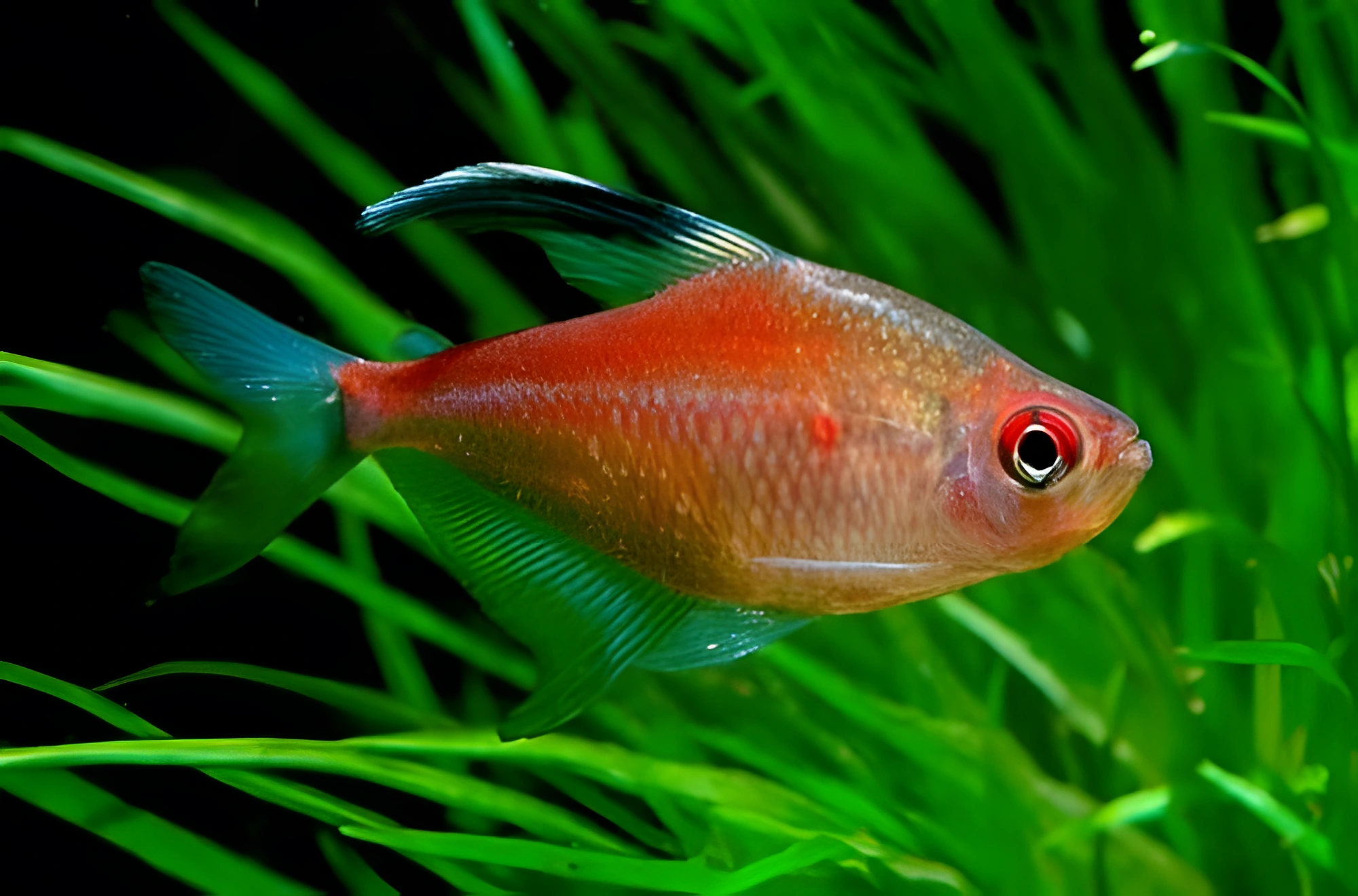
The Red Ornate Tetra, also known as the Long-finned Ornate Tetra or Red Rubrostigma Tetra (scientific name Hyphessobrycon pyrrhonotus), belongs to the Characidae family. This aquarium fish is popular, although due to its external resemblance to related species, it is sometimes confused with other names. Thanks to its easy adaptation to keeping and breeding conditions, as well as its compatibility with many species of freshwater fish, it will be a good choice for beginner aquarists.
- Required aquarium volume
- 60 L
- Size in aquarium
- 4 cm
- Temperature
- 20 – 28 °C
- Temperament
- Peaceful (regular)
Parameters
Water pHAcidic (4) – Neutral (7)
Water dHVery soft (1) – Medium hardness (8)
Water salinityno salt (freshwater)
Size in aquarium4 cm
Lifespan4 years
TemperamentPeaceful (regular)
Toward small fishnot a predator
Required aquarium volume60 L
Lightingdimmed
Substrateany (no restrictions)
Water flowweak
FeedingSmall / appropriate size / pieces
CareGroup (8–10 individuals)
Description
The species is a close relative of the Rubrostigma Tetra and the Sokolof's Tetra, which explains their similar appearance. Reaching about 4 cm in length, adult specimens are colored from pink to orange-red. Females are generally lighter and appear fuller, especially during the pre-spawning period. Males, on the other hand, are brighter, have elongated anal and dorsal fins, with the tip of the latter colored in dark tones. A red spot is noticeable on the body behind the gill cover — this is a characteristic sign of this group of fish.
Habitat
Its origin is associated with South America, particularly the Rio Negro basin (Amazonas state, Brazil), which is the largest left tributary of the Amazon. There are assumptions about a wider natural range of this species. The fish inhabit small river and stream systems flowing through dense tropical forests. A typical habitat is a shallow stream, the bottom of which is covered with various woody materials such as roots and branches; coastal vegetation overhangs, and aquatic plants are abundantly present. The bottom is usually sandy, covered with a layer of fallen leaves. The water acquires a rich brown hue, which is explained by the high content of organic matter.
Behavior and Compatibility
These active fish are peaceful and get along well with other species of comparable size. It is recommended to acquire a school consisting of at least 8–10 individuals. In such conditions, males, competing for the attention of females, will display their brightest colors.
Care and Maintenance
For the comfortable existence of a school of 8–10 Red Rubrostigma Tetras, an aquarium of at least 60 liters will be required. Although these fish are highly adaptable to various conditions, it is recommended to create a setup for them that closely resembles their natural environment. The Long-finned Ornate Tetra will look most advantageous in a space abundant with aquatic plants and driftwood; subdued lighting will also positively affect their well-being. Placing dried leaves of some trees on the bottom will be a useful addition: as they decompose, they will enrich the water with tannins, bringing its chemical composition closer to natural and imparting a characteristic brownish tint. In addition, such leaves serve as a substrate for the development of microorganism colonies, such as paramecia, which are an important food source for fry. A key aspect of successful keeping is maintaining high water quality. This implies preventing the accumulation of organic waste, strictly observing permissible hydrochemical parameters, and regularly performing partial water changes. The ecological balance in the aquarium is also closely linked to the efficient operation of the filtration system and other water purification equipment.
Diet
This unpretentious fish readily accepts most common foods intended for aquarium inhabitants in a home aquarium. It is important to remember that diet directly affects the intensity of coloration and the overall condition of the fish, so preference should be given to quality products from trusted manufacturers.
Breeding and Reproduction
In artificial environments, several generations of these fish have lost their seasonal breeding patterns, allowing them to reproduce year-round. In a large school numbering dozens of individuals, it is quite likely that several fish will enter spawning condition monthly. Reproduction occurs by scattering eggs over the substrate surface. This process is characterized by disorder; no localized clutch is formed, and fertilized eggs are randomly distributed across the entire bottom. Parental instincts are absent in these fish; adults do not care for their offspring and may even eat their own eggs and fry. To ensure the survival of the young, they should be transferred to a separate aquarium.
Diseases
No specific diseases have been noted among the characteristics of this fish species. When optimal keeping conditions are met, including maintaining high water quality, a balanced diet, and the absence of conflicting tank mates, health problems generally do not arise. The most common cause of diseases is a deterioration of conditions, which weakens the fish's immune system, making them vulnerable to infections constantly present in the environment. At the first signs of distress, such as lethargy, emaciation, refusal to feed, or clamped fins, it is necessary to immediately check the basic water parameters. Often, restoring acceptable living conditions promotes natural recovery. However, if the fish is excessively weakened or has visible damage, medication may be required. More detailed information on symptoms and treatment methods can be found in the "Aquarium Fish Diseases" section.
How to choose
When selecting individuals, attention should be paid to their activity and the integrity of their skin. Healthy fish stay in a school, have clean scales without visible spots, ulcers, or film, and have clear, undamaged fins. Avoid purchasing fish that appear emaciated, stay isolated near the surface or bottom, or show signs of rapid breathing.
- Check for visible parasites on the body and fins.
- Ensure that the fish show interest in food if feeding is taking place in your presence.
- Inspect the aquarium in the store: the presence of deceased individuals in the general tank is an unfavorable sign.
- Due to the external resemblance to related species, ensure correct identification of the fish by the characteristic red spot behind the gill cover and the shape of the fins.
Frequently asked questions
The essentials: size, tank volume, water parameters and care
How big does Red Ornate Tetra get?
An adult reaches 4 cm in length. Plan the tank around the maximum size: the fish quickly outgrows a cramped setup.
What size aquarium does Red Ornate Tetra need?
The minimum recommended volume is 60 L. A smaller tank speeds up nitrate build-up and raises stress levels.
What water parameters does Red Ornate Tetra need?
Temperature 20–28 °C, pH 4–7, hardness 1–8 dGH. Stability matters more than exact values: sudden swings are harder on the fish than a small deviation from the ideal.
How long does Red Ornate Tetra live?
Around 4 years when kept properly. Lifespan depends directly on tank volume, water quality and a varied diet.
Is Red Ornate Tetra aggressive?
Temperament: peaceful (regular). Keep this in mind when choosing tank mates.
How many Red Ornate Tetra should be kept together?
Recommended setup: group (8–10 individuals). Ignoring this is a common cause of stress and disease.
What does Red Ornate Tetra eat?
Diet type: small / appropriate size / pieces. Feed small portions that are finished within a couple of minutes — overfeeding does more harm than underfeeding.
What is the scientific name of Red Ornate Tetra?
The scientific name of the species is Hyphessobrycon pyrrhonotus, family Characidae.