Temperature15 – 25 °C
Natural range
- United States
- Northern Mexico area
CyprinidsConservation status: Least concern LC
Other scientific names: Cyprinella beckwithi, Cyprinella billingsiana, Cyprinella forbesi, Cyprinella forlonensis, Cyprinella gunnisoni, Cyprinella suavis
The Red Shiner, or Cyprinella lutrensis (until recently known as Notropis lutrensis), is a representative of the carp family (Cyprinidae). Its natural habitat is located in North America, where it is found in both swift mountain streams and marshy areas. Despite their origin, these fish, destined for the European market, are predominantly supplied from commercial hatcheries located in Southeast Asia.
- Required aquarium volume
- 250 L
- Size in aquarium
- 9 cm
- Temperature
- 15 – 25 °C
- Temperament
- Peaceful (regular)
Parameters
Water pHNeutral (7) – Neutral (7.5)
Water dHMedium hardness (10) – Very hard (20)
Water salinityno salt (freshwater)
Size in aquarium9 cm
Lifespan3 years
TemperamentPeaceful (regular)
Toward small fishnot a predator
Required aquarium volume250 L
Lightingmoderate or bright
Substrateany (no restrictions)
Water flowweak or moderate
FeedingAny (universal)
CareGroup (8–10 individuals)
Description
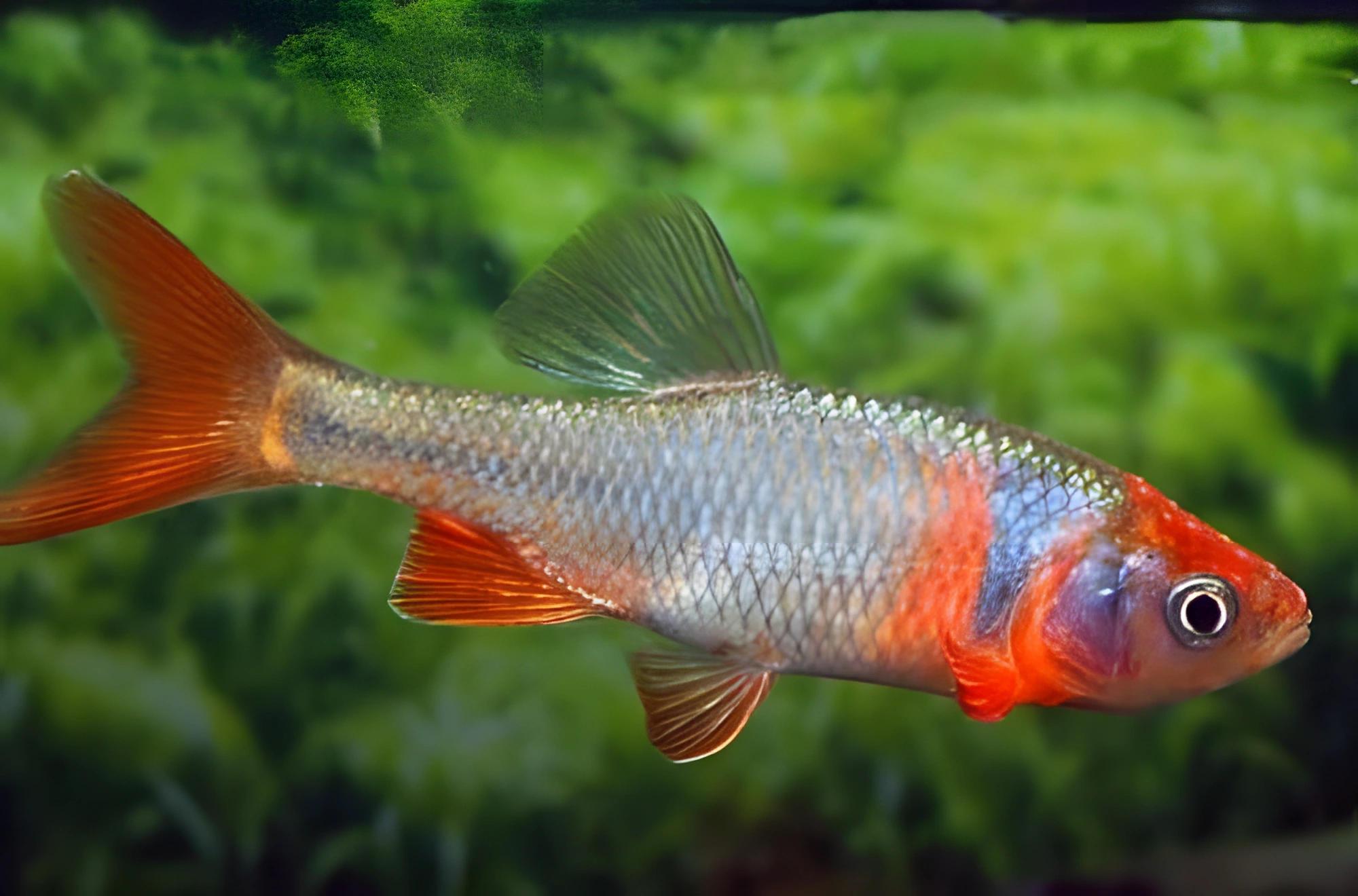
Adults of this fish reach a length of 7 to 9 cm. There are several regional variations that differ in coloration. The most recognizable form has a bright red belly and fins, while the main part of the body acquires a blue tint. During the breeding season, males develop characteristic white tubercles on their heads, which disappear after spawning. This phenomenon is observed in many carp species.
Habitat
The species is widespread in North America, inhabiting the Mississippi River basin and other bodies of water in the USA and northern Mexico. The fish are found in a wide variety of conditions: from small streams with fast currents to lakes, canals, and ponds. They prefer areas with sandy or silty bottoms, often live in turbid waters, and can adapt to unstable environments with seasonal fluctuations in flow and physicochemical water parameters.
Behavior and Compatibility
The Red Shiner is a schooling species, requiring maintenance in groups of at least 8–10 individuals. With fewer numbers or in solitary conditions, the fish become timid. They get along well with other peaceful coldwater fish.
Care and Maintenance
This is an unpretentious species regarding keeping conditions. The Red Shiner can live in outdoor ponds in southern regions during warm months, as well as in unheated home aquariums. Ideal conditions for them are considered to be slightly alkaline water of medium hardness, maintained in a temperature range of 15 to 25°C. For a school of 8–10 individuals, an aquarium of at least 250 liters is recommended. The aquarium setup can be anything, the main thing is to provide free swimming spaces and secluded spots, formed, for example, by driftwood or dense thickets of plants capable of growing in cool water. Standard aquarium care includes weekly partial water changes with fresh water, combined with cleaning the substrate from organic deposits.
Diet
This species is omnivorous. Although the Red Shiner can be successfully transitioned to dry foods, live or frozen foods such as Artemia, bloodworms, Daphnia, and others are most preferred for the daily diet.
Breeding and Reproduction
Spawning occurs from spring to autumn, peaking in mid-summer. The fish are egg-layers; males actively defend territories around crevices in rocks or substrate where the female lays her eggs. Eggs can also be laid on vegetation. Females can release many batches of eggs per season. Parental care for the offspring is absent; fry develop independently.
Diseases
The species is highly resilient in natural conditions, but in an aquarium, it is sensitive to water quality. High concentrations of nitrogenous compounds (ammonia, nitrites, nitrates) and phosphates are the main cause of diseases and fish mortality. Prevention includes regular water changes, maintaining effective aeration and filtration, and monitoring water parameters with tests.
How to choose
When purchasing, choose active, mobile individuals with clean fins and no damage to the body. It is recommended to avoid fish with signs of sluggishness or pale coloration, which may indicate poor keeping conditions or stress. Since the fish are prone to jumping, it is necessary to ensure a tight lid on the aquarium during transport and subsequent keeping.
Frequently asked questions
The essentials: size, tank volume, water parameters and care
How big does Red Shiner get?
An adult reaches 9 cm in length. Plan the tank around the maximum size: the fish quickly outgrows a cramped setup.
What size aquarium does Red Shiner need?
The minimum recommended volume is 250 L. A smaller tank speeds up nitrate build-up and raises stress levels.
What water parameters does Red Shiner need?
Temperature 15–25 °C, pH 7–7.5, hardness 10–20 dGH. Stability matters more than exact values: sudden swings are harder on the fish than a small deviation from the ideal.
How long does Red Shiner live?
Around 3 years when kept properly. Lifespan depends directly on tank volume, water quality and a varied diet.
Is Red Shiner aggressive?
Temperament: peaceful (regular). Keep this in mind when choosing tank mates.
How many Red Shiner should be kept together?
Recommended setup: group (8–10 individuals). Ignoring this is a common cause of stress and disease.
What does Red Shiner eat?
Diet type: any (universal). Feed small portions that are finished within a couple of minutes — overfeeding does more harm than underfeeding.
What is the scientific name of Red Shiner?
The scientific name of the species is Cyprinella lutrensis, family Cyprinids (Cyprinidae). It also appears in the literature as: Cyprinella beckwithi, Cyprinella billingsiana, Cyprinella forbesi.