Temperature26 – 28 °C
Natural range
- Lake Malawi area
- Malawi area
- Mozambique area
- Tanzania area
CichlidsConservation status: Least concern LC
Other scientific names: Cyrtocara borleyi, Haplochromis borleyi
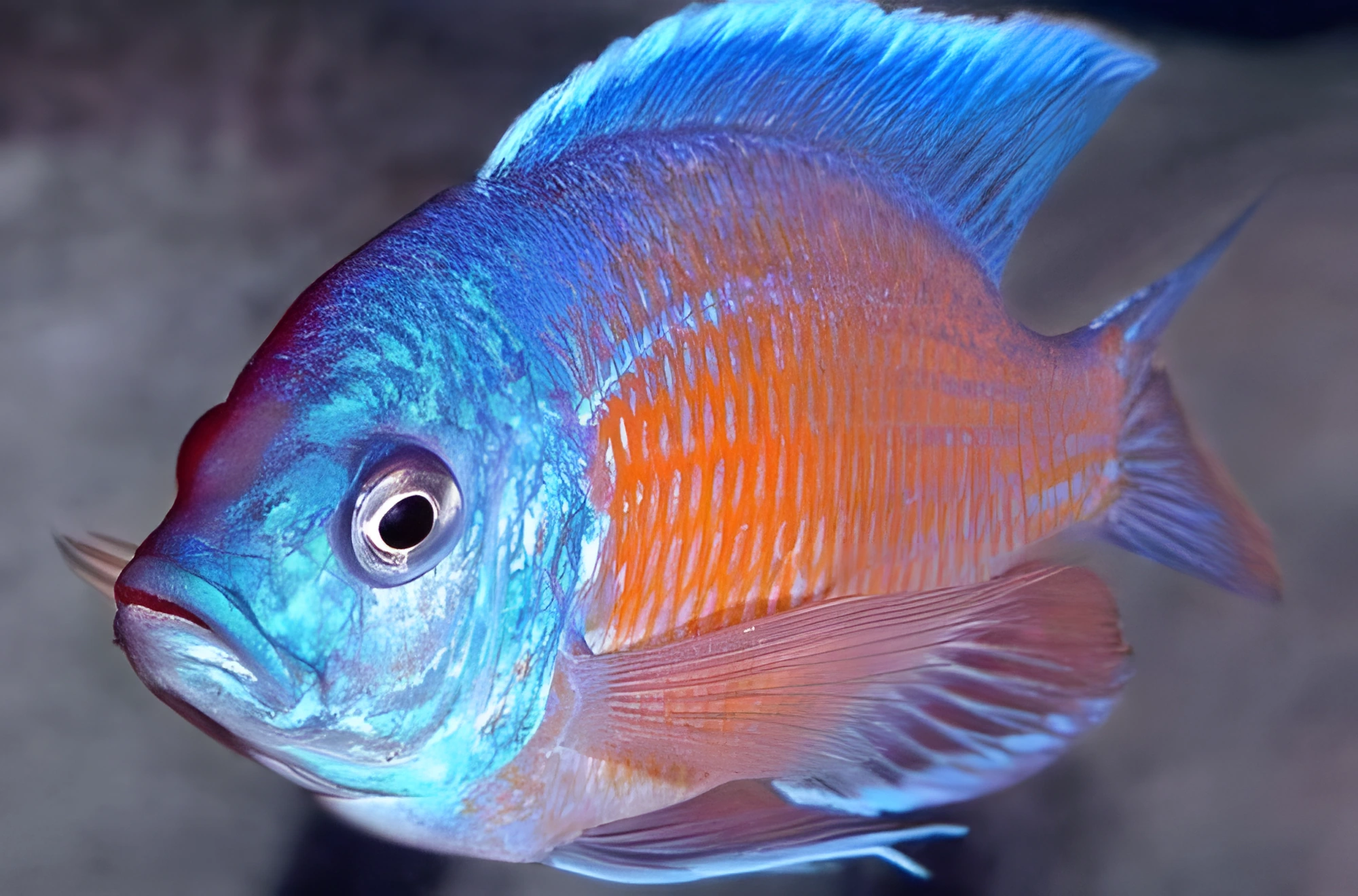
Copadichromis Kadango, also known as Red Kadango, or by its scientific name Copadichromis borleyi, belongs to the Cichlidae family. This fish can be considered relatively peaceful; aggression is characteristic only during spawning. Due to this, it can be kept in spacious community tanks with other peaceful cichlid species inhabiting the same region.
- Required aquarium volume
- 300 L
- Size in aquarium
- 15 – 17 cm
- Temperature
- 26 – 28 °C
- Temperament
- Semi-peaceful (including aggression during spawning / intraspecific conflicts)
Parameters
Water pHSlightly alkaline (7.6) – Slightly alkaline (8.5)
Water dHMedium hardness (10) – Very hard (25)
Water salinityno salt (freshwater)
Size in aquarium15 – 17 cm
Lifespan10 years
TemperamentSemi-peaceful (including aggression during spawning / intraspecific conflicts)
Toward small fishnot a predator
Required aquarium volume300 L
Lightingdimmed or moderate
Substratefine sand
Water flowweak or moderate
FeedingPlant-based (algae, vegetables)
CareHarem (1 male and several females)
Description
Adult fish can reach a length of 15–17 cm, and the largest specimens sometimes grow up to 20 cm. They are characterized by a large head with a voluminous mouth, adapted for efficiently engulfing significant portions of water along with the plankton contained within it. In nature, there are several subspecies, each inhabiting specific areas of the lake and distinguished by individual coloration. Among aquarists, varieties with a striking blue head and bodies colored in orange, golden, or red hues have become most widespread. The latter variety is particularly popular in aquaristics. Sometimes, three dark spots can be seen on the sides of the body. Females are typically smaller than males and have more subdued coloration, predominantly gray or silvery tones. During the first 3 weeks of life, at a young age, individuals of both sexes look identical, with a gray, dull coloration.
Habitat
This species is endemic to Lake Malawi (Nyasa), located in East Africa on the border of Malawi and neighboring states. Its representatives are found throughout the lake, preferring open waters near the shoreline at depths of 5 to 20 meters. The commercial name "Kadango" is due to the fact that this species was first discovered near the village of Kadango, located on the southern shore of the lake.
Behavior and Compatibility
This representative of Malawian cichlids is relatively peaceful, displaying aggression only during the spawning period. Due to this, it can be kept with other calm species of comparable size. It is important that the coloration of cohabiting fish differs, so that male Copadichromis Kadango do not perceive them as rivals. In aquariums of about 300 liters, it is recommended to form a harem-like group, with a predominance of females.
Care and Maintenance
Red Kadango requires sufficient swimming space. For a group of 3–4 fish, the minimum aquarium volume should be at least 300 liters. Sandy substrate, as well as piles of stones and rock fragments, are recommended as decorative elements. A voluminous artificial background imitating a rocky shore will perfectly complement the interior. Live plants are not an essential element, but if desired, several species capable of growing in an alkaline environment can be placed, such as Vallisneria, some Anubias, Sagittaria subulata, as well as various mosses and ferns. Lake Nyasa water is characterized by a stable hydrochemical composition with high pH and dGH values. It is extremely important to provide similar conditions for long-term keeping; keeping fish in soft, slightly acidic water is unacceptable. High water quality is maintained by weekly renewal of 10–20% of the total tank volume and simultaneous cleaning of the substrate from organic waste (food remnants, excrement, etc.). The installation of a productive filtration system also contributes to this goal. The higher the filtration efficiency, the less effort will be required from the aquarist for maintenance. Professional filters allow for less frequent partial water changes without harming the aquarium's ecosystem. The minimum necessary equipment, in addition to the filter, includes heating, lighting, and aeration systems.
Diet
In a home aquarium, these fish readily accept most types of food: dry, frozen, and live. Their daily diet can consist of flakes and pellets with the possible addition of Artemia, bloodworms, large Daphnia, and other small invertebrates. It is important to ensure the presence of vegetable components in the food to maintain a balanced diet.
Breeding and Reproduction
Breeding these fish in a home aquarium is not difficult. Optimal conditions for spawning are a temperature of 25–27°C and pH values in the range of 8.0–8.5. During the breeding period, the male chooses a spot on the bottom for the future clutch, usually at the base of a large stone, where he digs a small pit and thoroughly cleans it. After this, the male begins courtship. Each female lays up to 60 eggs, which are immediately placed in her mouth – this is a protective evolutionary mechanism characteristic of most cichlids from the rift lakes Nyasa and Tanganyika. A no less interesting technique is used for fertilization: the male's anal fin has a pattern of bright contrasting spots resembling eggs. The female mistakenly takes them for real, and when she tries to pick them up, the male releases milt, which leads to fertilization. Throughout the incubation period, which lasts 3–4 weeks, the eggs remain in the female's mouth. During this time, she does not eat and becomes quite vulnerable to other inhabitants of the aquarium. Experienced aquarists usually move the female to a separate tank during the second or third week of incubation. The female returns to the main aquarium when the fry become independent. It is important not to keep her separate for too long, as there is a risk of her losing her place in the internal hierarchy and being perceived as a stranger by her conspecifics.
Diseases
The main cause of diseases is unsuitable keeping conditions and an unbalanced diet, which can provoke "Malawi Bloat" – a common disease among many fish species from the eponymous lake. Under favorable keeping conditions, health problems are usually absent. More detailed information on symptoms and treatment methods can be found in the "Diseases of Aquarium Fish" section.
How to choose
When purchasing, choose active fish with clean fins, no spots, ulcers, or damage to the scales. Avoid individuals with sunken bellies or signs of emaciation, as this may indicate internal diseases. In the store, fish should show curiosity, not lie apathetically at the bottom or near the surface. Given the territorial nature of the species, it is advisable to acquire a group of one male and several females to minimize stress during adaptation in a new aquarium.
Frequently asked questions
The essentials: size, tank volume, water parameters and care
How big does Red Kadango get?
An adult reaches 15–17 cm in length. Plan the tank around the maximum size: the fish quickly outgrows a cramped setup.
What size aquarium does Red Kadango need?
The minimum recommended volume is 300 L. A smaller tank speeds up nitrate build-up and raises stress levels.
What water parameters does Red Kadango need?
Temperature 26–28 °C, pH 7.6–8.5, hardness 10–25 dGH. Stability matters more than exact values: sudden swings are harder on the fish than a small deviation from the ideal.
How long does Red Kadango live?
Around 10 years when kept properly. Lifespan depends directly on tank volume, water quality and a varied diet.
Is Red Kadango aggressive?
Temperament: semi-peaceful (including aggression during spawning / intraspecific conflicts). Keep this in mind when choosing tank mates.
How many Red Kadango should be kept together?
Recommended setup: harem (1 male and several females). Ignoring this is a common cause of stress and disease.
What does Red Kadango eat?
Diet type: plant-based (algae, vegetables). Feed small portions that are finished within a couple of minutes — overfeeding does more harm than underfeeding.
What is the scientific name of Red Kadango?
The scientific name of the species is Copadichromis borleyi, family Cichlids (Cichlidae). It also appears in the literature as: Cyrtocara borleyi, Haplochromis borleyi.