Temperature22 – 27 °C
Natural range
- Panama area
- Central America area
CichlidsConservation status: Vulnerable VU
Other scientific names: Amphilophus calobrense, Amphilophus calobrensis, Cichlasoma calobrense
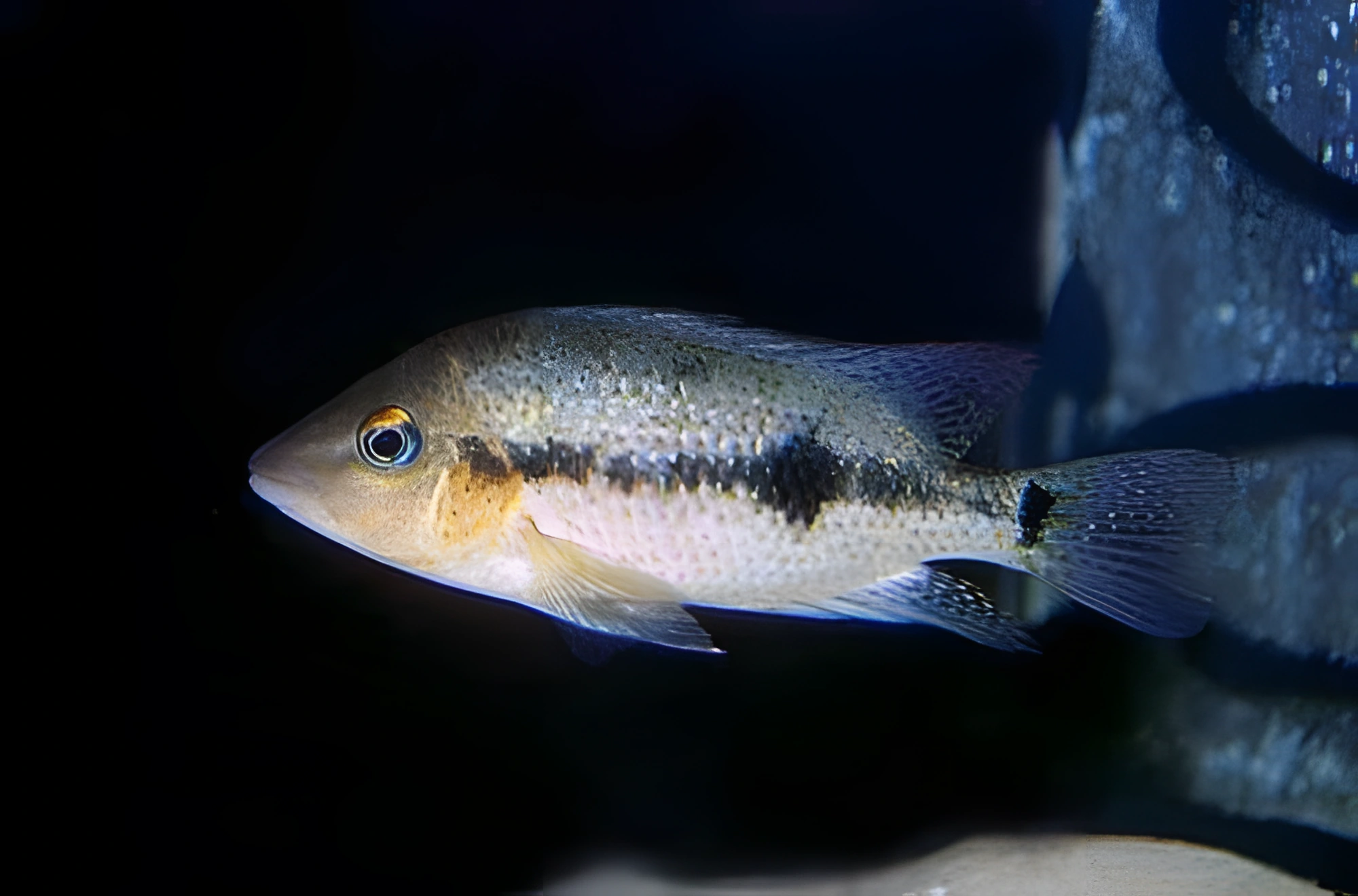
The Red-spotted Cichlid, also known by its scientific name Darienheros calobrensis, belongs to the family Cichlidae. It's interesting to note that in the past, this species was classified under a different genus and was then called Amphilophus calobrensis. Like many Central American cichlids, it exhibits aggressive behavior, which makes it undesirable to keep more than one adult in a home aquarium. It is also recommended to avoid introducing other fish species. Otherwise, this cichlid does not require special care, being undemanding and highly resilient.
- Required aquarium volume
- 250 L
- Size in aquarium
- 20 – 25 cm
- Temperature
- 22 – 27 °C
- Temperament
- Aggressive / incompatible / unfriendly
Parameters
Water pHNeutral (6.5) – Neutral (7.5)
Water dHVery soft (3) – Hard (15)
Water salinityno salt (freshwater)
Size in aquarium20 – 25 cm
Lifespan10 years
TemperamentAggressive / incompatible / unfriendly
Toward small fishnot a predator
Required aquarium volume250 L
Lightingany
Substraterocky (rock formations, boulders, etc.)
Water flowweak or moderate
FeedingAny (universal)
CareSolitary
Description
Adult Red-spotted Cichlids can reach a length of approximately 25 cm. Their coloration varies from pale yellow to reddish hues. Distinctive features of their body pattern include numerous red spots, as well as several large dark blotches that begin closer to the caudal fin. Sexual dimorphism in this species is not pronounced. Males sometimes develop a nuchal hump, and their fins may be slightly longer; in other aspects, females are practically indistinguishable, especially when young.
Habitat
The natural habitat of these fish covers the territory of Panama in Central America. They are found predominantly in water bodies with consistent water levels, such as lakes and ponds, as well as in rivers with moderate currents. They prefer to stay near the shoreline, where they actively move among rock formations and crevices.
Behavior and Compatibility
This species is characterized by very belligerent and pronounced territorial behavior, with aggression extending to all, including members of its own species. In large aquariums, with a volume of 1000 liters or more, cohabitation with other similarly sized fish, including other cichlids, is permissible. However, in smaller tanks, it is advisable to limit to a single adult specimen to avoid conflicts that can lead to the death of weaker fish.
Care and Maintenance
For comfortable keeping of a single Red-spotted Cichlid, an aquarium of at least 250 liters is required. For decoration, it is desirable to use many natural rock formations and stones, creating various crevices and grottoes. Gravel or a layer of small pebbles will serve as a suitable substrate. It is best to avoid live plants, as they will likely be uprooted, as will any other loosely secured decorative elements. There are no special requirements for lighting. Given the size of the fish, it produces a significant amount of organic waste, so maintaining high water quality becomes a top priority. For this, it is necessary to install a powerful filtration system and perform regular partial water changes (15–20% of the total volume) with fresh water, while siphoning out waste.
Diet
This fish is completely undemanding regarding its diet. It readily consumes all types of dry, frozen, and live foods. The key condition is that the diet must be varied, implying the inclusion of several types of products, including vegetable additives. Specialized foods developed for Central American cichlids can be an excellent choice.
Breeding and Reproduction
Cichlids are known for their developed parental instincts and care for their offspring. Nevertheless, breeding fry of this species is associated with certain difficulties. The problem lies in the specifics of the relationship between the sexes. Males that have been raised in isolation (which is quite common in home aquariums) show extreme hostility towards their conspecifics. For this reason, if a female is introduced to such a male, she will very likely be killed long before the breeding period. Commercial fish farms solve this problem as follows: several dozen young fish are placed in one large tank where they grow together. As they mature, some fish that cannot compete with stronger individuals are relocated. The remaining fish divide the aquarium space into territories, and among them, one or more male/female pairs naturally form, which can then produce offspring.
Diseases
The main cause of most diseases in Leaf Fish is unsuitable keeping conditions and poor-quality nutrition. If initial symptoms are observed, it is first necessary to check water parameters and the concentration of dangerous substances such as ammonia, nitrites, and nitrates. If the indicators deviate from the norm, they should be brought back into order, and only then should treatment begin. More detailed information on symptoms and treatment methods can be found in the "Aquarium Fish Diseases" section.
How to choose
When choosing this fish, it is important to consider its high intra-species and inter-species aggression. A healthy specimen should be active, have clean fins without signs of erosion, clear eyes, and normal breathing without rapid gill movements. Avoid specimens with sunken bellies, damaged scales, or unnatural behavior, such as constantly hovering near the surface or at the bottom in an apathetic state. Given the rarity of the species in retail, it is recommended to clarify the keeping conditions at the store and ensure that the fish has not been subjected to prolonged stress due to aquarium overcrowding.
Frequently asked questions
The essentials: size, tank volume, water parameters and care
How big does Red-spotted Cichlid get?
An adult reaches 20–25 cm in length. Plan the tank around the maximum size: the fish quickly outgrows a cramped setup.
What size aquarium does Red-spotted Cichlid need?
The minimum recommended volume is 250 L. A smaller tank speeds up nitrate build-up and raises stress levels.
What water parameters does Red-spotted Cichlid need?
Temperature 22–27 °C, pH 6.5–7.5, hardness 3–15 dGH. Stability matters more than exact values: sudden swings are harder on the fish than a small deviation from the ideal.
How long does Red-spotted Cichlid live?
Around 10 years when kept properly. Lifespan depends directly on tank volume, water quality and a varied diet.
Is Red-spotted Cichlid aggressive?
Temperament: aggressive / incompatible / unfriendly. Keep this in mind when choosing tank mates.
How many Red-spotted Cichlid should be kept together?
Recommended setup: solitary. Ignoring this is a common cause of stress and disease.
What does Red-spotted Cichlid eat?
Diet type: any (universal). Feed small portions that are finished within a couple of minutes — overfeeding does more harm than underfeeding.
What is the scientific name of Red-spotted Cichlid?
The scientific name of the species is Darienheros calobrensis, family Cichlids (Cichlidae). It also appears in the literature as: Amphilophus calobrense, Amphilophus calobrensis, Cichlasoma calobrense.