Temperature20 – 30 °C
Natural range
- Malaysia area
- Indonesia area
- Southeast Asia area
Labyrinth fishConservation status: Endangered EN
The Giant Red-tailed Gourami (scientific name Osphronemus laticlavius) belongs to the family Osphronemidae. This fish is one of the four giant Gourami species, distinguished perhaps by the most vibrant coloration. As an aquarium fish, it was introduced to the public at themed exhibitions relatively recently, only in 2004. Currently, acquiring it, especially in Eastern Europe, is still associated with certain difficulties.
- Required aquarium volume
- 600 L
- Size in aquarium
- 50 cm
- Temperature
- 20 – 30 °C
- Temperament
- Predator, but semi-peaceful (gets along with large ones)
Parameters
Water pHNeutral (6.5) – Slightly alkaline (8)
Water dHSoft (5) – Very hard (25)
Water salinitywide range (from ~1 to ~20 g/L)
Size in aquarium50 cm
Lifespan20 years
TemperamentPredator, but semi-peaceful (gets along with large ones)
Toward small fishpredator
Required aquarium volume600 L
Lightingmoderate (regular)
Substrateany, but dark
Water flownone or stagnant (no flow)
FeedingAny (universal)
CareSolitary
Description
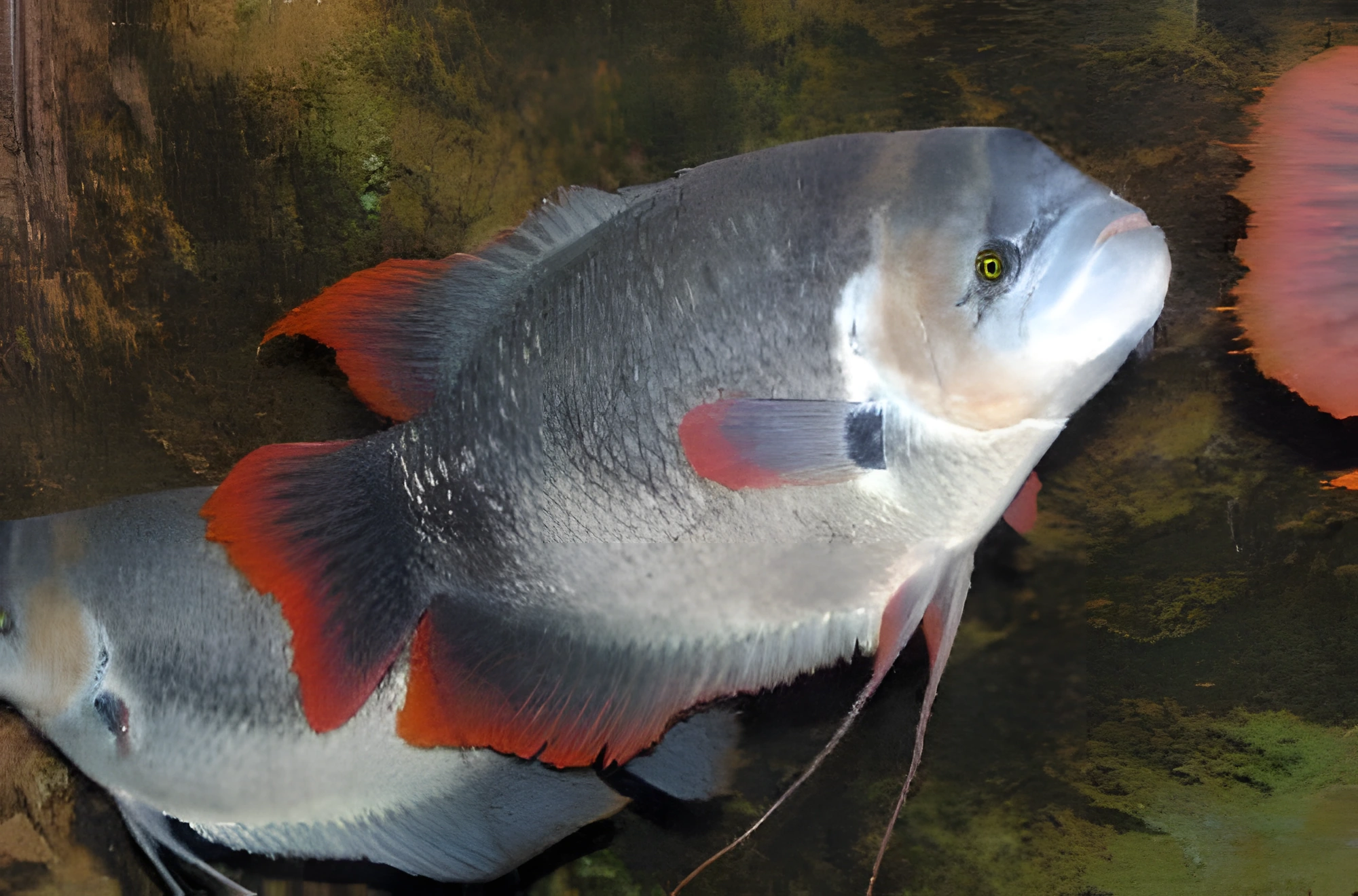
This is a massive, large fish capable of growing up to 50 cm in aquariums. Its body shape is similar to other members of the Gourami genus, but it is distinguished by a large hump or bump on its head, sometimes called an “occipital hump,” which gives it the appearance of an enlarged forehead. The primary coloration of the fish is blue-green, and its fins have a distinctive red trim, which gave it its name. Sometimes specimens with variations in color are found; with age, the fish may become red or partially red. In China, such individuals are considered great luck, which maintains a constant demand for them.
Habitat
The scientific description of this species appeared relatively recently, in 1992. Its habitat is Southeast Asia, specifically Malaysia and Indonesia. The Gourami prefers rivers and lakes, and during the rainy season, when forests are flooded, it moves under the forest canopy in search of food. These fish choose areas of water bodies with dense vegetation, where the water is either stagnant or has a weak current. Their diet consists of any aquatic organisms they can swallow: from aquatic weeds to small fish, frogs, earthworms, and various insects.
Behavior and Compatibility
This species is generally considered peaceful, but there are exceptions. Some large males may show aggression, defending their territory and attacking other fish. Also, due to their size and natural feeding habits, small fish can become their prey. Co-housing with other large fish is possible, preferably if they grow up together to prevent future conflicts. A species-specific tank with a single fish or a male/female pair is considered most preferable, although determining the sex of these fish is quite problematic due to the lack of obvious external differences.
Care and Maintenance
Keeping this fish will not be difficult if you have a suitable place to install an aquarium with a volume of at least 600 liters. It is important to consider that the total weight of a filled tank, including substrate and equipment, can exceed 700 kg, so it is necessary to ensure the floor can support such weight. Since the fish actively produces waste, it is recommended to use several powerful filters and perform weekly water changes of up to 25% to ease the burden on the biosystem. If the fish is kept alone, the frequency of water changes can be reduced to once every two weeks. Other necessary equipment includes a heater, lighting system, and air pump. Special attention in the design should be given to creating ample swimming areas. Comfortable conditions can be provided by several shelters combined with dense plant thickets. Fast-growing species should be chosen, as Gouramis will enjoy nibbling on them. Using dark substrate helps to bring out brighter coloration in the fish.
Diet
This species is completely omnivorous and, due to its size, very voracious. It readily accepts any aquarium foods: flakes, pellets, tablets, as well as various meat products such as worms, bloodworms, insect larvae, or pieces of shrimp and mussels. However, mammalian meat should not be fed, as Gouramis are unable to digest it. The fish also gladly consumes boiled potatoes, vegetables, and bread. It is recommended to feed these fish once a day. When purchasing an adult specimen, it is important to clarify its usual diet, because if the fish was fed exclusively meat or small fish from childhood, changing its food preferences may be impossible, which will lead to significant financial costs for food.
Breeding and Reproduction
Reproduction of this species in home aquariums is not practical. There are no differences between the sexes in these fish, so to form a pair, it is advisable to acquire several individuals at once, for example, five. Such a number requires a very large aquarium, over 1000 liters. In addition, as they mature, conflicts may arise between males, of which there will likely be 2 or more. Given these complexities, breeding the Giant Red-tailed Gourami is a challenging task.
Diseases
In a balanced aquarium with a well-functioning biosystem, these fish do not experience health problems. More detailed information on possible symptoms and treatment methods for diseases can be found in the "Aquarium Fish Diseases" section.
How to choose
When choosing this fish, its rarity and high cost should be taken into account. Inspect specimens for fin damage, ulcers, or signs of emaciation, as due to high demand in Asia, specimens kept in overcrowded conditions are often found. It is important to clarify the current diet with the seller: adult individuals accustomed to a specific type of food may refuse other types of food, which will require additional costs. Avoid purchasing if the fish shows obvious aggression or apathy, as this may indicate stress or illness.
- give preference to individuals with active behavior and clean skin
- clarify transportation conditions, considering the large size and sensitivity of the fish to water quality
- assess the possibility of providing long-term keeping, as the species requires significant aquarium volumes and has a long lifespan
Frequently asked questions
The essentials: size, tank volume, water parameters and care
How big does Red-tailed Gourami get?
An adult reaches 50 cm in length. Plan the tank around the maximum size: the fish quickly outgrows a cramped setup.
What size aquarium does Red-tailed Gourami need?
The minimum recommended volume is 600 L. A smaller tank speeds up nitrate build-up and raises stress levels.
What water parameters does Red-tailed Gourami need?
Temperature 20–30 °C, pH 6.5–8, hardness 5–25 dGH. Stability matters more than exact values: sudden swings are harder on the fish than a small deviation from the ideal.
How long does Red-tailed Gourami live?
Around 20 years when kept properly. Lifespan depends directly on tank volume, water quality and a varied diet.
Is Red-tailed Gourami aggressive?
Temperament: predator, but semi-peaceful (gets along with large ones). This is a predatory species — any fish small enough to fit in its mouth will eventually be eaten.
How many Red-tailed Gourami should be kept together?
Recommended setup: solitary. Ignoring this is a common cause of stress and disease.
What does Red-tailed Gourami eat?
Diet type: any (universal). Feed small portions that are finished within a couple of minutes — overfeeding does more harm than underfeeding.
What is the scientific name of Red-tailed Gourami?
The scientific name of the species is Osphronemus laticlavius, family Osphronemidae.