Temperature15 – 21 °C
Natural range
- West Bengal area
- India area
LoachesConservation status: Least concern LC
Other scientific names: Noemacheilus elongatus
Aborichthys elongatus, also known as the Red-tailed Loach, bears the scientific name Aborichthys elongatus and is classified in the family Nemacheilidae. This species is not frequently encountered in pet stores, which is attributed to the remoteness of its natural habitat and the lack of widespread breeding in aquarium conditions. It is not uncommon to find closely related, but distinct, species sold under this name.
- Required aquarium volume
- 50 L
- Size in aquarium
- 6 – 7 cm
- Temperature
- 15 – 21 °C
- Temperament
- Semi-peaceful (including aggression during spawning / intraspecific conflicts)
Parameters
Water pHNeutral (6.5) – Neutral (7.5)
Water dHSoft (5) – Hard (12)
Water salinityno salt (freshwater)
Size in aquarium6 – 7 cm
Lifespan8 years
TemperamentSemi-peaceful (including aggression during spawning / intraspecific conflicts)
Toward small fishnot a predator
Required aquarium volume50 L
Lightingbright
Substraterocky (rock formations, boulders, etc.)
Water flowmoderate or strong
FeedingMeat / protein (live, frozen, fresh)
CareMedium group (6–8 individuals)
Description
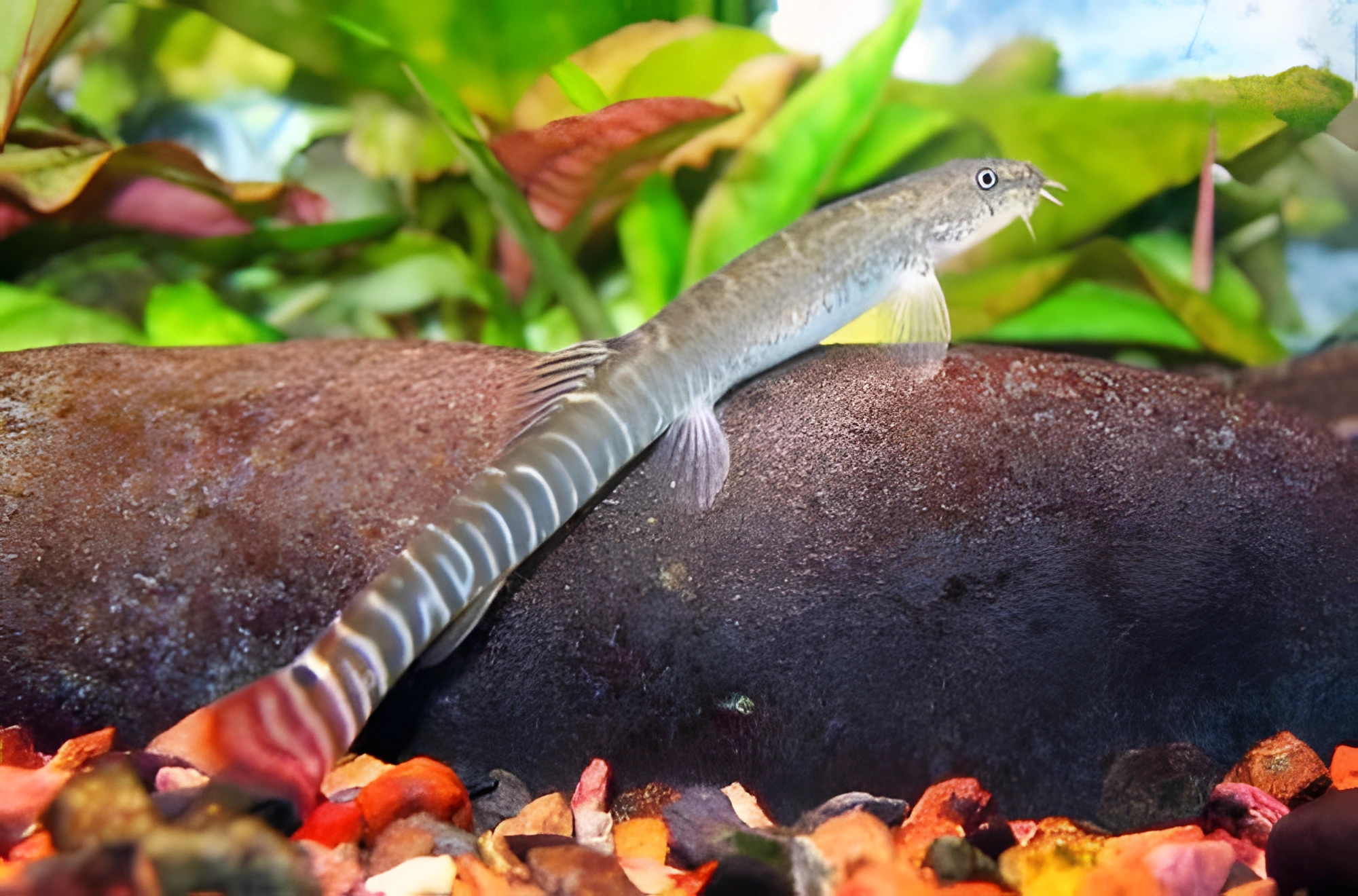
Adult Red-tailed Loaches reach a length of about 6–7 cm. Sexual dimorphism is extremely weak in this species: males and females are practically indistinguishable, except that females may be slightly larger. The fish's body has an elongated, eel-like shape. The coloration is usually gray, with a characteristic light striped pattern, and the tail stands out with a reddish hue.
Habitat
These fish originate from India, specifically the state of West Bengal. They can be found in cool mountain rivers and streams that are part of the extensive Brahmaputra River basin. Their natural habitat is characterized by fast-flowing and turbulent currents, as well as a stony bottom. A biofilm of algae and various microorganisms forms on the surface of these stones. Aquatic vegetation predominantly grows along the banks here.
Behavior and Compatibility
These are active fish, and frequent skirmishes among themselves are typical. However, such behavior is considered normal and rarely leads to serious consequences. Since Aborichthys elongatus requires fast water flow and relatively low temperatures, which are contraindicated for many tropical species, selecting tank mates can be challenging. Good companions might include, for example, Corydoras catfish, other types of catfishes, and some species of Loaches.
Care and Maintenance
To maintain the health of 6 fish, one should start with an aquarium of at least 50 L. A crucial condition is the imitation of a natural mountain current within the aquarium. Stones for creating crevices and grottoes, as well as snags, are excellent elements for decoration. Any other decorative elements on the bottom are also permissible. Live plants are not a strict requirement; artificial options or hardy mosses and ferns can be used, attaching them to snags. A high-quality filtration system takes center stage in environmental organization, performing two important functions simultaneously: purifying the water and maintaining the necessary movement with turbulent flows. It should be noted that not all types of filters can create the desired current effect, so an additional artificial current system or its self-creation may be needed. Aquarium care includes several simple but regular procedures: removal of organic debris, cleaning glass from film, and a weekly 30–50% water change with fresh water.
Diet
In their natural environment, these loaches feed on zooplankton, which they scrape off the surface of stones. When kept in a home aquarium, it is preferable to feed them live or frozen foods such as bloodworms, daphnia, and brine shrimp. Dry foods, such as flakes, pellets, or tablets, serve as a good supplement to the main diet.
Breeding and Reproduction
As of the preparation of this article, no reliable information on successful breeding of the Red-tailed Loach in aquarium conditions has been recorded. All specimens entering the aquarium industry are caught directly from natural waters.
Diseases
Non-ornamental fish species that have retained a close resemblance to their wild relatives usually exhibit high endurance, strong immunity, and resistance to various diseases. The occurrence of health problems most often indicates unsuitable keeping conditions. Therefore, before proceeding with treatment, it is strongly recommended to check the water quality and parameters. Only after all indicators have been brought back to normal should treatment begin, if it is still necessary. Detailed information on diseases, their symptoms, and therapy methods can be found in the “Aquarium Fish Diseases” section.
How to choose
When choosing a red-tailed loach, pay attention to the fish's overall activity: healthy individuals should be mobile, show interest in foraging, and actively explore the aquarium bottom. Avoid specimens with signs of emaciation, such as a sunken belly, or fish that appear apathetic and constantly hide, unless this is due to transport stress. Carefully inspect the skin for damage, ulcers, or white film, which may indicate diseases developed due to improper keeping conditions.
Since this species is territorial and can show aggression towards conspecifics, signs of skirmishes, such as damaged fins, can often be observed in the store. Minor nips are not always critical, but fish with deep wounds or severely frayed fins require special attention and quarantine. Given that red-tailed loaches are schooling fish, it is recommended to acquire a group of 4–6 individuals to reduce stress levels and ensure more natural behavior in the home aquarium.
Frequently asked questions
The essentials: size, tank volume, water parameters and care
How big does Red-tailed Loach get?
An adult reaches 6–7 cm in length. Plan the tank around the maximum size: the fish quickly outgrows a cramped setup.
What size aquarium does Red-tailed Loach need?
The minimum recommended volume is 50 L. A smaller tank speeds up nitrate build-up and raises stress levels.
What water parameters does Red-tailed Loach need?
Temperature 15–21 °C, pH 6.5–7.5, hardness 5–12 dGH. Stability matters more than exact values: sudden swings are harder on the fish than a small deviation from the ideal.
How long does Red-tailed Loach live?
Around 8 years when kept properly. Lifespan depends directly on tank volume, water quality and a varied diet.
Is Red-tailed Loach aggressive?
Temperament: semi-peaceful (including aggression during spawning / intraspecific conflicts). Keep this in mind when choosing tank mates.
How many Red-tailed Loach should be kept together?
Recommended setup: medium group (6–8 individuals). Ignoring this is a common cause of stress and disease.
What does Red-tailed Loach eat?
Diet type: meat / protein (live, frozen, fresh). Feed small portions that are finished within a couple of minutes — overfeeding does more harm than underfeeding.
What is the scientific name of Red-tailed Loach?
The scientific name of the species is Aborichthys elongatus, family Nemacheilidae. It also appears in the literature as: Noemacheilus elongatus.