Temperature22 – 25 °C
Natural range
- Madagascar area
RainbowfishConservation status: Endangered EN
The Red-tailed Bedotia (scientific name Bedotia geayi) is a representative of the Bedotiidae family, also known as Madagascar rainbowfish. Despite its vibrant and active nature, this fish requires special attention from the aquarist to maintain impeccable water quality, which is one of the main difficulties in its keeping.
- Required aquarium volume
- 200 L
- Size in aquarium
- 9 cm
- Temperature
- 22 – 25 °C
- Temperament
- Peaceful (regular)
Parameters
Water pHNeutral (6.5) – Slightly alkaline (8.5)
Water dHMedium hardness (10) – Very hard (25)
Water salinityno salt (freshwater)
Size in aquarium9 cm
Lifespan5 years
TemperamentPeaceful (regular)
Toward small fishnot a predator
Required aquarium volume200 L
Lightingdimmed
Substrateany, but dark
Water flowmoderate
FeedingAny (universal)
CareGroup (8–10 individuals)
Description
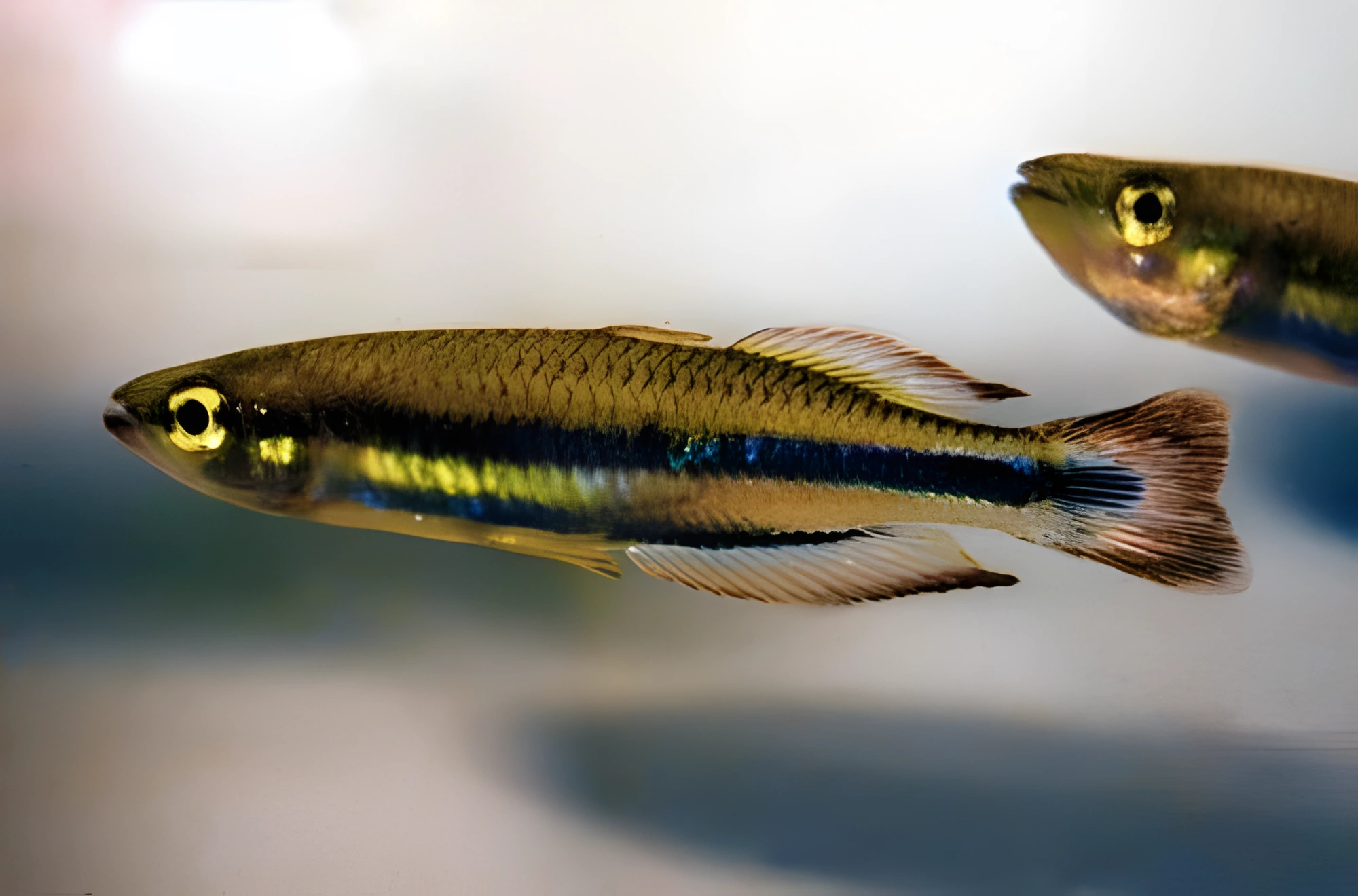
Adults of this fish can grow up to 9 cm in length. Their body is yellowish in color, highlighted by two distinct dark stripes: one runs from the head to the tail, and the second passes along the belly. Males usually have a more intense coloration; during spawning, a red spot can be seen on their head. Their dorsal and anal fins are pointed, have a black and yellow edging, and additional red hues. In females, these fins are more rounded, with a predominance of yellow.
Habitat
This species is endemic to the island of Madagascar, inhabiting primarily the Mananjary River basin. It can be found in the upper and middle reaches of water arteries flowing through humid tropical forests. Abundant aquatic vegetation is observed along the banks, and tree branches often hang over the surface. The bottom of the reservoirs is usually stony or sandy.
Behavior and Compatibility
These fish prefer to live in groups of 6 or more individuals. They exhibit a peaceful disposition both towards their own kind and towards other fish species. However, their increased activity can be undesirable for slower aquarium inhabitants.
Care and Maintenance
Red-tailed Bedotias are highly active, which dictates their need for a spacious aquarium. For a group of 8-10 individuals, the optimal volume starts from 200 L. To prevent accidental jumping out, it is recommended to use a lid. The aquarium design should include both open swimming spaces and hiding areas formed by dense plant thickets. It has been noted that subdued lighting and dark substrate, combined with high-quality foods, help preserve the vibrancy of their coloration. Conversely, excessive light and a variegated substrate can make the fish appear dull. The long-term successful keeping of these fish directly depends on impeccable water quality. Being inhabitants of flowing waters, Bedotias are extremely sensitive to the accumulation of organic waste. Therefore, regular aquarium cleaning, weekly water changes of 25–50% of the volume with fresh water, and the installation of a powerful filtration system are mandatory conditions.
Diet
This species is omnivorous and readily eats most popular aquarium foods — be it dry mixes, frozen, or live products. Foods rich in protein are especially suitable.
Breeding and Reproduction
Ideal conditions for breeding can be created in a species-specific aquarium with medium-hard water and moderate current. The presence of dense plant thickets where spawning will occur is also essential. The eggs are laid and attached to the surface of plants. The spawning process can last several weeks. The incubation period for the eggs is approximately 7–10 days. Although parents are usually indifferent to their offspring, showing no care and not attempting to eat them, many aquarists still prefer to transfer the fry to a separate tank for their safety.
Diseases
In a favorable and stable environment, cases of disease in these fish are extremely rare. At the first signs of illness, such as lethargy, body deformation, or the appearance of spots, the water parameters should be checked first. Very often, bringing all environmental indicators back to normal allows the fish's body to recover on its own. Otherwise, medication may be required, more details of which can be found in the section “Diseases of Aquarium Fish.”
How to choose
When choosing Bedotias, attention should be paid to the overall activity of the shoal: healthy fish are mobile, constantly moving in the water column, and show curiosity. Avoid individuals with signs of emaciation, scale damage, body film, or unnaturally clamped fins. It is important to assess the cleanliness of the water in the retail aquarium, as the species is sensitive to organic accumulation. It is recommended to purchase at least 6–8 individuals at a time, as fish experience severe stress and become timid when alone.
Frequently asked questions
The essentials: size, tank volume, water parameters and care
How big does Red-tailed Bedotia get?
An adult reaches 9 cm in length. Plan the tank around the maximum size: the fish quickly outgrows a cramped setup.
What size aquarium does Red-tailed Bedotia need?
The minimum recommended volume is 200 L. A smaller tank speeds up nitrate build-up and raises stress levels.
What water parameters does Red-tailed Bedotia need?
Temperature 22–25 °C, pH 6.5–8.5, hardness 10–25 dGH. Stability matters more than exact values: sudden swings are harder on the fish than a small deviation from the ideal.
How long does Red-tailed Bedotia live?
Around 5 years when kept properly. Lifespan depends directly on tank volume, water quality and a varied diet.
Is Red-tailed Bedotia aggressive?
Temperament: peaceful (regular). Keep this in mind when choosing tank mates.
How many Red-tailed Bedotia should be kept together?
Recommended setup: group (8–10 individuals). Ignoring this is a common cause of stress and disease.
What does Red-tailed Bedotia eat?
Diet type: any (universal). Feed small portions that are finished within a couple of minutes — overfeeding does more harm than underfeeding.
What is the scientific name of Red-tailed Bedotia?
The scientific name of the species is Bedotia geayi, family Madagascar Rainbowfish (Bedotiidae).