Temperature24 – 28 °C
Natural range
- South America area
Predators CharacinsConservation status: Data deficient DD
The Redtail Barracuda, scientifically known as Acestrorhynchus altus, belongs to the family Acestrorhynchidae. Its appearance, combining a streamlined, dynamic physique with jaws full of teeth, clearly indicates its predatory nature. This formidable aquatic hunter looks very impressive in a species-specific aquarium and will undoubtedly attract those who appreciate such exoticism. However, this species is not suitable for novice aquarists, as its keeping requires special attention, certain experience, and significant financial investment.
- Required aquarium volume
- 200 L
- Size in aquarium
- 27 cm
- Temperature
- 24 – 28 °C
- Temperament
- Predator (dangerous to small, incompatible)
Parameters
Water pHSlightly acidic (6) – Neutral (7.5)
Water dHMedium hardness (8) – Hard (15)
Water salinityno salt (freshwater)
Size in aquarium27 cm
Lifespan10 years
TemperamentPredator (dangerous to small, incompatible)
Toward small fishpredator
Required aquarium volume200 L
Lightingmoderate (regular)
Substrateany (no restrictions)
Water flowmoderate
FeedingFor carnivores (live fish, insects, etc.)
CareSmall group (3–4 individuals)
Description
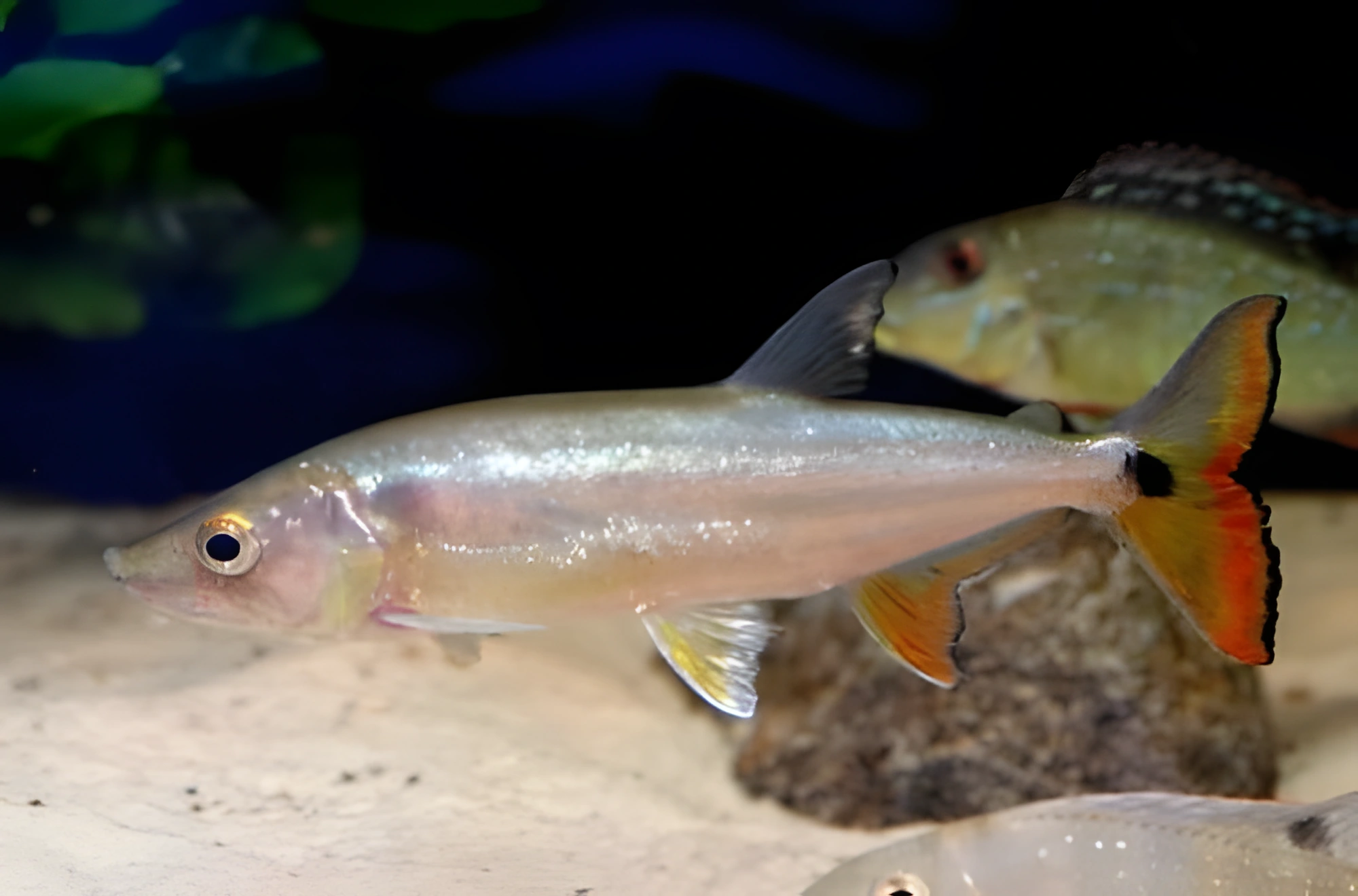
The body structure of this fish is elongated and slender, outwardly resembling a pike. Its large mouth is equipped with numerous sharp teeth, which are clearly visible when the mouth is open. The coloration is usually silvery or with a golden sheen, with the belly being lighter. The fins are transparent, sometimes with an orange tint, and the bright red tail with a striking black spot at the base makes a particular impression.
Habitat
The natural habitat of this species covers the tropical regions of South America, including the vast basins of rivers such as the Amazon and Orinoco. They prefer clear waters with moderate currents, where they can often be found in groups. The barracuda's diet consists exclusively of live fish, and they can hunt prey up to half their own size.
Behavior and Compatibility
In natural conditions, these fish are often found in small schools, but when kept alone in a home aquarium, they become timid and quickly panic at loud noises. The ideal option is to keep several individuals (3–4) in an aquarium with other fish of comparable or slightly larger size. The Redtail Barracuda does not show aggression and will not attack tankmates unless it perceives them as potential food.
Care and Maintenance
Like any large predator, the Redtail Barracuda produces a significant amount of waste, so it is crucial to provide it with an effective filtration system. It is recommended to use high-performance filters which, in addition to cleaning, will create the necessary water movement in the aquarium. Regular water changes of 30–50% every two weeks are as important as installing quality filtration. Other necessary equipment includes an aerator, heater, and lighting system. For decor, sturdy root plants placed along the aquarium walls are preferred. The central part should remain free to provide the fish with ample swimming space. The substrate can be any type, and the presence of shelters is welcome. Shelters can be natural elements (snags, roots, rock formations) or artificial ones (castles, sunken ships, etc.), with their height not exceeding half the height of the tank.
Diet
Being a carnivorous species, this fish feeds exclusively on live fish. Pieces of meat or dead prey will not interest this predator. It is advisable to provide an additional tank for breeding small, prolific fish, such as livebearers. This will ensure a constant supply of food.
Breeding and Reproduction
Currently, all individuals of this species offered in commercial networks have been caught from the wild, as they do not breed in captivity.
Diseases
Most often, these fish enter home aquariums from specialized stores rather than directly from the river, which means they are adapted to confined spaces and food unnatural to the wild. As a rule, such fish do not have health problems. More detailed information on disease symptoms and treatment methods can be found in the "Aquarium Fish Diseases" section.
How to choose
When choosing a Redtail Barracuda, special attention should be paid to the condition of the fins and skin, as this species often suffers from injuries during transportation and keeping in cramped conditions. A healthy fish should show activity and alertness, not apathy. Avoid individuals with visible damage, body film, or signs of emaciation, as restoring the health of wild-caught individuals can be extremely difficult.
Keep in mind that this species is a timid predator prone to panic, so in the store, the fish may dart around the aquarium and injure itself against the walls. When purchasing, it is recommended to:
- check for absence of jaw and fin damage;
- ensure the fish is well-fed, without sunken sides;
- clarify whether the fish is accustomed to non-live foods, as transitioning them can take a long time;
- choose individuals of comparable size when buying a group to avoid intraspecific aggression.
Frequently asked questions
The essentials: size, tank volume, water parameters and care
How big does Redtail Barracuda get?
An adult reaches 27 cm in length. Plan the tank around the maximum size: the fish quickly outgrows a cramped setup.
What size aquarium does Redtail Barracuda need?
The minimum recommended volume is 200 L. A smaller tank speeds up nitrate build-up and raises stress levels.
What water parameters does Redtail Barracuda need?
Temperature 24–28 °C, pH 6–7.5, hardness 8–15 dGH. Stability matters more than exact values: sudden swings are harder on the fish than a small deviation from the ideal.
How long does Redtail Barracuda live?
Around 10 years when kept properly. Lifespan depends directly on tank volume, water quality and a varied diet.
Is Redtail Barracuda aggressive?
Temperament: predator (dangerous to small, incompatible). This is a predatory species — any fish small enough to fit in its mouth will eventually be eaten.
How many Redtail Barracuda should be kept together?
Recommended setup: small group (3–4 individuals). Ignoring this is a common cause of stress and disease.
What does Redtail Barracuda eat?
Diet type: for carnivores (live fish, insects, etc.). Feed small portions that are finished within a couple of minutes — overfeeding does more harm than underfeeding.
What is the scientific name of Redtail Barracuda?
The scientific name of the species is Acestrorhynchus altus, family Acestrorhynchidae.