Temperature20 – 28 °C
Natural range
- Borneo area
- Sarawak area
UnusualConservation status: Near threatened NT
The Red-Eyed Pufferfish, scientifically known as Carinotetraodon salivator, belongs to the family Tetraodontidae, or pufferfish. In moments of potential threat, this fish, like other members of its family, can inflate significantly, simultaneously extending sharp spines, which makes it less appealing to predators. Its ease of care makes this species recommendable even for beginner aquarists.
- Required aquarium volume
- 50 L
- Size in aquarium
- 4 – 5 cm
- Temperature
- 20 – 28 °C
- Temperament
- Semi-peaceful (including aggression during spawning / intraspecific conflicts)
Parameters
Water pHSlightly acidic (5) – Neutral (7.5)
Water dHVery soft (1) – Hard (12)
Water salinityno salt (freshwater)
Size in aquarium4 – 5 cm
Lifespan5 years
TemperamentSemi-peaceful (including aggression during spawning / intraspecific conflicts)
Toward small fishnot a predator
Required aquarium volume50 L
Lightingdimmed
Substratesandy (regular, light)
Water flowmoderate
FeedingMeat / protein (live, frozen, fresh)
CareSolitary + other species (large / compatible)
Description
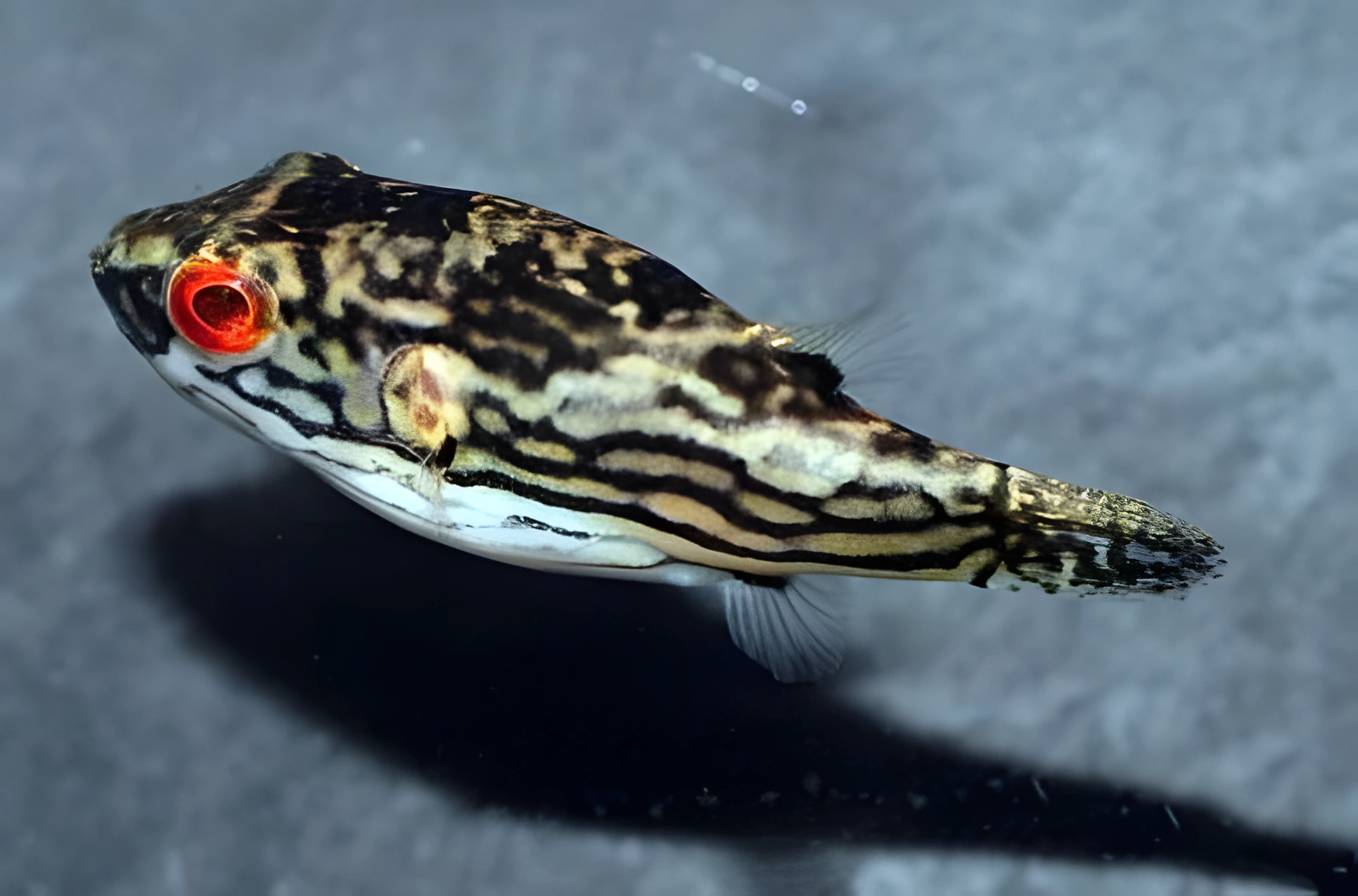
Adults can reach a length of up to 5 cm. Their appearance is somewhat unusual: the fish have an oval body shape, small fins, and appear slightly clumsy. The body is covered with tough skin, adorned with small spines. The mouth of the Red-Eyed Pufferfish resembles a beak, consisting of two plate-like “teeth” that serve to crush mollusk shells. These “teeth” grow throughout the fish's life and are subject to natural wear. A distinctive feature of the species is its bright red eyes. The coloration usually consists of dark patterns on a gray or, less commonly, yellow background. Males may have a reddish belly and 3 to 5 creamy stripes on the underside of the head. Females, in turn, display a similar pattern but with black stripes and a white belly.
Habitat
The natural habitat of these fish spans Southeast Asia, specifically the Indonesian part of Borneo (Sarawak state). They prefer small streams and rivers with flowing water, where soft sandy substrates, abundant aquatic vegetation, and a bottom covered with fallen leaves and various snags prevail.
Behavior and Compatibility
Compared to other pufferfish, the Red-Eyed Pufferfish is considered less aggressive, but solitary keeping is still recommended. However, in large aquariums, several individuals can be kept, provided each has enough personal space. Peaceful fish of comparable size, primarily from the carp family, may be suitable as tank mates.
Care and Maintenance
For a single fish, the most suitable aquarium volume starts from 50 liters. For the aquarium setup, it is recommended to use a sandy substrate, as well as clusters of rooted and floating plants, snags, and other decorative elements. Adding dried leaves, such as Indian almond or European oak, will not only make the setup more natural but also positively affect the water's chemical composition. As they decompose, the leaves enrich the water with tannins, giving it a brownish, "tea-like" tint, which mimics natural conditions where various plant debris enters rivers. Since these fish inhabit flowing waters, maintaining high water quality is extremely important. Essential conditions include a productive filtration system and weekly partial water changes with fresh water. Regular cleaning of the substrate with a siphon will help prevent the accumulation of organic waste.
Diet
This carnivorous species feeds on snails, mussels, and shrimp in natural conditions, and also scrapes algae from the surface of rocks. In a home aquarium, it is important to provide a diet that includes hard food. Mollusks with shells, offered fresh, frozen, or crushed, are suitable for this. The absence of hard components in the diet can lead to excessive growth of "teeth" and subsequent feeding difficulties. The menu can be diversified with softer foods, such as bloodworms, brine shrimp, or dry foods in the form of flakes and granules.
Breeding and Reproduction
In aquarium conditions, it has not yet been possible to breed this species; no successful breeding attempts have been recorded. These fish are mainly supplied for sale from commercial fish farms in Asia. In the wild, Red-eyed Puffers lay their eggs among dense plant thickets. After spawning, the female leaves the clutch, while the male remains to guard it until the fry appear.
Diseases
Under suitable keeping conditions, diseases are quite rare in these fish. The main problem can be excessive growth of "teeth" in the absence of hard food, which, in turn, can lead to serious difficulties. Otherwise, it is a hardy and undemanding fish.
How to choose
When choosing a red-eyed pufferfish, preference should be given to individuals with active behavior who show curiosity towards surrounding objects. It is important to carefully inspect the fish for external damage, signs of emaciation, or a sunken abdomen, which may indicate feeding problems or the presence of internal parasites. A healthy individual should have clean fins without signs of rot or white patches, and clear eyes.
Given the territorial nature of the species, it is not recommended to purchase fish that appear intimidated or constantly hide in the corners of the aquarium due to the dominance of tank mates. When purchasing, it is advisable to clarify the keeping conditions in the store and carefully examine other fish in the same aquarium: the presence of sick individuals in the common tank poses a serious health risk to the purchased specimen. If possible, choose fish that have already adapted to the proposed diet.
Frequently asked questions
The essentials: size, tank volume, water parameters and care
How big does Red-Eyed Pufferfish get?
An adult reaches 4–5 cm in length. Plan the tank around the maximum size: the fish quickly outgrows a cramped setup.
What size aquarium does Red-Eyed Pufferfish need?
The minimum recommended volume is 50 L. A smaller tank speeds up nitrate build-up and raises stress levels.
What water parameters does Red-Eyed Pufferfish need?
Temperature 20–28 °C, pH 5–7.5, hardness 1–12 dGH. Stability matters more than exact values: sudden swings are harder on the fish than a small deviation from the ideal.
How long does Red-Eyed Pufferfish live?
Around 5 years when kept properly. Lifespan depends directly on tank volume, water quality and a varied diet.
Is Red-Eyed Pufferfish aggressive?
Temperament: semi-peaceful (including aggression during spawning / intraspecific conflicts). Keep this in mind when choosing tank mates.
How many Red-Eyed Pufferfish should be kept together?
Recommended setup: solitary + other species (large / compatible). Ignoring this is a common cause of stress and disease.
What does Red-Eyed Pufferfish eat?
Diet type: meat / protein (live, frozen, fresh). Feed small portions that are finished within a couple of minutes — overfeeding does more harm than underfeeding.
What is the scientific name of Red-Eyed Pufferfish?
The scientific name of the species is Carinotetraodon salivator, family Pufferfish (Tetraodontidae).