Temperature23 – 28 °C
Natural range
- Rio de Janeiro State
- Brazil area
CharacinsConservation status: Endangered EN
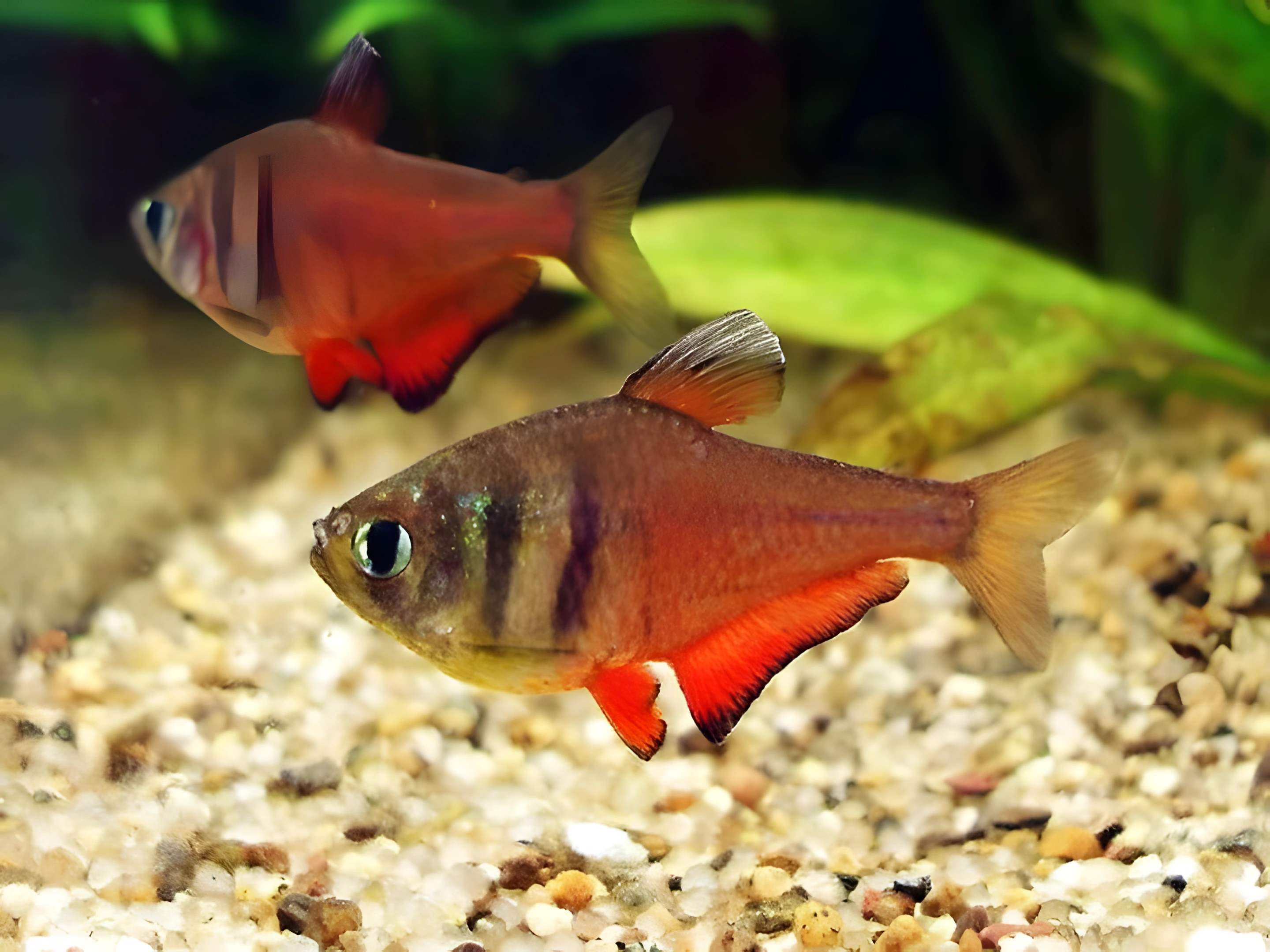
Hyphessobrycon flammeus, also known as the Flame Tetra or Red Tetra, belongs to the family Characidae. These fish are distinguished by their beautiful fiery coloration. However, when purchased from pet stores, their color is often faded due to stress caused by increased attention. Once favorable conditions are established at home, these Tetras regain their vibrant coloring.
- Required aquarium volume
- 40 L
- Size in aquarium
- 4 cm
- Temperature
- 23 – 28 °C
- Temperament
- Peaceful (regular)
Parameters
Water pHSlightly acidic (5.8) – Slightly alkaline (7.8)
Water dHVery soft (3) – Very hard (20)
Water salinityno salt (freshwater)
Size in aquarium4 cm
Lifespan6 years
TemperamentPeaceful (regular)
Toward small fishnot a predator
Required aquarium volume40 L
Lightingdimmed
Substratesandy (regular, light)
Water flowweak
FeedingAny (universal)
CareSchooling (usually from 5–6 individuals and more)
Description
The Flame Tetra is modest in size, rarely exceeding 4 cm in length in aquarium conditions. Its body has the typical tetra shape – high and laterally compressed, with a large anal fin that extends from the middle of the belly to the tail. The front part of the body is silvery, and from the middle onwards, it is colored red. Particularly deep and rich shades are observed on the back and at the base of the fins. Two dark vertical stripes are clearly visible behind the gill cover.
Males are generally larger and have a brightly colored anal fin, while in females, it is paler, sometimes with a yellowish tint.
Habitat
In 1924, researchers discovered this fish while studying the fauna of South America. It is widespread in coastal rivers in eastern Brazil, near Rio de Janeiro. It primarily inhabits small rivers, streams, and backwaters with weak currents. In their natural environment, these fish live in schools. Their diet consists of small zooplankton and vegetation.
Behavior and Compatibility
This is a very timid species, prone to stress from increased attention and active tank mates. They are compatible with small and peaceful fish; keeping them with large species is strongly discouraged. The Flame Tetra feels safer in a group of 6 or more individuals.
Care and Maintenance
Fish of this species are hardy and adapt successfully to various conditions. However, to achieve optimal health and the most vibrant coloration, they require soft, slightly acidic water. Therefore, it is advisable to use a filter with water-softening media. Very clean water is required, and in addition to filtration, it is recommended to change 30–50% of the water every two weeks. Other necessary equipment includes a heater, an aerator, and a low-intensity lighting system. When decorating the aquarium, dense plant thickets should be used, arranged in groups along the walls to leave enough open space for swimming. It is essential to provide hiding places. Adding a few dried leaves can give the water a light brown tint, which will bring the aquarium conditions closer to their natural habitat in the wild. Leaves should be replaced every two weeks, which can be conveniently combined with water changes.
Diet
This species is considered omnivorous; they readily accept high-quality dry foods such as flakes and pellets. It is also recommended to include live foods in their diet, such as bloodworms or large daphnia.
Breeding and Reproduction
The ease of breeding makes this species popular among aquarists. Since parents do not care for their offspring and may even eat the eggs, breeding should be carried out in a separate aquarium. A spawning tank of 20 liters or more will be sufficient. It should be densely planted, including plants with broad leaves. As a substrate, it is recommended to use balls about 1 cm in diameter or gravel of a similar size. Equipment for the spawning aquarium includes a heater, a lighting system, and an air-lift filter. Water parameters should be similar to those of the main aquarium. Spawning begins with the regular inclusion of live food, such as bloodworms, in their daily diet. After some time, the courtship process will begin: males acquire brighter coloration and circle around the females. A guaranteed effect is achieved in a group of 12 individuals – 6 males and 6 females. The formed pair is placed in the spawning aquarium, where the female lays eggs on plant leaves. Fallen eggs roll between the substrate particles, becoming inaccessible to the parents, which saves them from being eaten. After spawning, the parents are moved back. Fry appear on the second day and begin to swim independently after 3–4 days. They should be fed special micro-foods or Artemia nauplii.
Diseases
In an aquarium with clean water and appropriate pH and GH parameters, health problems usually do not arise. More detailed information on symptoms and treatment methods can be found in the "Aquarium Fish Diseases" section.
How to choose
When choosing Flame Tetras, active individuals with clean fins and no visible damage or spots on the body should be preferred. In pet store conditions, fish often appear pale due to stress, but their coloration should quickly recover in a calm environment. Avoid purchasing fish that stay at the surface, breathe heavily, or show signs of apathy, as this may indicate hidden diseases or improper keeping conditions in the retail tank.
Frequently asked questions
The essentials: size, tank volume, water parameters and care
How big does Flame Tetra get?
An adult reaches 4 cm in length. Plan the tank around the maximum size: the fish quickly outgrows a cramped setup.
What size aquarium does Flame Tetra need?
The minimum recommended volume is 40 L. A smaller tank speeds up nitrate build-up and raises stress levels.
What water parameters does Flame Tetra need?
Temperature 23–28 °C, pH 5.8–7.8, hardness 3–20 dGH. Stability matters more than exact values: sudden swings are harder on the fish than a small deviation from the ideal.
How long does Flame Tetra live?
Around 6 years when kept properly. Lifespan depends directly on tank volume, water quality and a varied diet.
Is Flame Tetra aggressive?
Temperament: peaceful (regular). Keep this in mind when choosing tank mates.
How many Flame Tetra should be kept together?
Recommended setup: schooling (usually from 5–6 individuals and more). Ignoring this is a common cause of stress and disease.
What does Flame Tetra eat?
Diet type: any (universal). Feed small portions that are finished within a couple of minutes — overfeeding does more harm than underfeeding.
What is the scientific name of Flame Tetra?
The scientific name of the species is Hyphessobrycon flammeus, family Characidae.