Temperature20 – 26 °C
Natural range
- Malay Peninsula area
- Sumatra area
- Malaysia area
- Indonesia area
CyprinidsConservation status: Least concern LC
Other scientific names: Rasbora brittani
Kottelatia brittani, known as Brittan's Kottelatia, is a member of the Cyprinidae family. The fish is named after the Swiss ichthyologist Maurice Kottelat, as well as Martin Brittan, who first described this species in his monograph on Rasboras. This fish is distinguished by its simplicity in both keeping and breeding, making it an excellent choice for beginner aquarists.
- Required aquarium volume
- 70 L
- Size in aquarium
- 5 – 6 cm
- Temperature
- 20 – 26 °C
- Temperament
- Peaceful (regular)
Parameters
Water pHSlightly acidic (6) – Neutral (7.5)
Water dHVery soft (1) – Medium hardness (8)
Water salinityno salt (freshwater)
Size in aquarium5 – 6 cm
Lifespan4 years
TemperamentPeaceful (regular)
Toward small fishnot a predator
Required aquarium volume70 L
Lightingany
Substrateany (no restrictions)
Water flowweak or moderate
FeedingAny (universal)
CareGroup (8–10 individuals)
Description
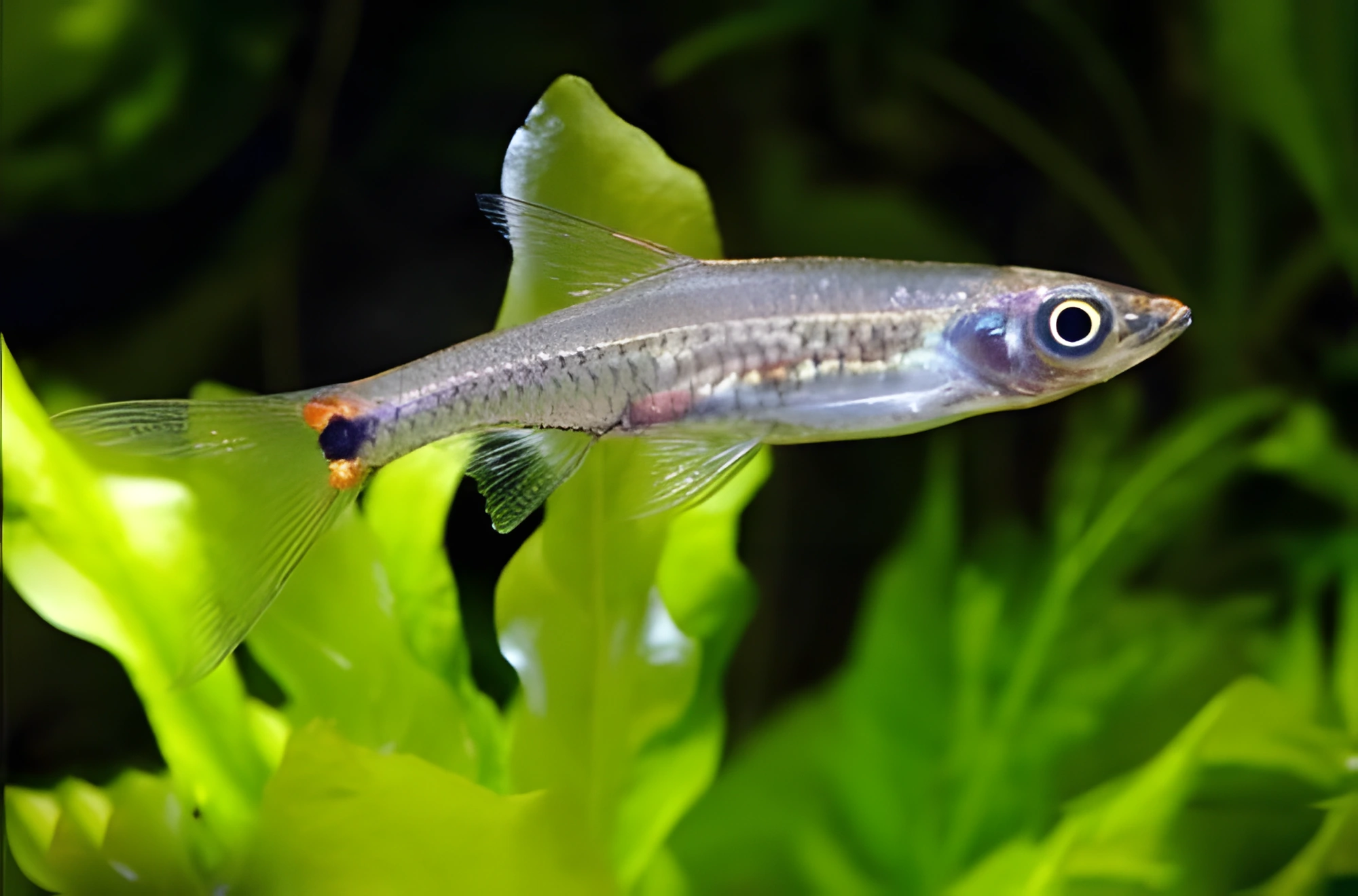
Adults of this fish reach a length of up to 5-6 cm. Sexual dimorphism is weakly expressed, determined mainly by size: females are usually slightly larger than males. The coloration is characterized by gray tones with a silvery belly, and the fins remain translucent. A distinctive feature of the species is the red-black pigmentation located at the base of the tail.
Habitat
The origin of this species is associated with Southeast Asia, specifically the Malay Peninsula and Sumatra Island, although precise data on its natural habitat is still scarce. Wholesale supplies of these fish come from Singapore, and it was based on these specimens that the initial description of the species was given. Kottelatia brittani likely prefers to inhabit small forest streams and tributaries with clear water.
Behavior and Compatibility
This peaceful and active schooling fish will be a good addition to a community of other non-aggressive species of comparable size. It is recommended to keep them in a group of at least 8–10 individuals, or preferably an even larger school.
Care and Maintenance
The optimal aquarium volume for a small group of these fish starts from 60–70 liters. Although decor is not critically important for keeping Cottelata brittani, it has been observed that in aquariums with abundant vegetation, dark substrate, and subdued lighting, the fish's coloration becomes more pronounced. It should be noted, however, that the color palette of this fish is not particularly vibrant. Significantly more attention should be paid to maintaining water quality, which is achieved not only through weekly partial water changes but also through an effective filtration system and regular cleaning of the aquarium from organic debris. The aquarium must be equipped with a lid to prevent accidental jumps by the fish.
Diet
The diet of these fish can include most common foods intended for aquarium inhabitants. It is recommended to combine various types of products, such as dry flakes and granules, with live or frozen foods, for example, bloodworms or brine shrimp.
Breeding and Reproduction
Under favorable conditions, the fish regularly reproduce. However, the survival rate of fry in a community tank will be extremely low, as this species does not exhibit parental instinct and may even eat its own eggs. To preserve the entire brood, it is advisable to prepare a separate spawning aquarium. It usually has a small volume — about 20–40 liters. For equipment, a simple air-driven sponge filter, a heater, and a low-power light are sufficient. Artificial plants or shade-loving mosses and ferns can be used as decor. After spawning, the eggs are carefully moved to the prepared spawning aquarium, where the water parameters should be identical. Fry emerge within 24 hours, and after a few days, they begin to swim freely in search of food. They should be fed specialized micro-foods or Artemia nauplii.
Diseases
Cottelata brittani is a hardy and undemanding fish. When suitable keeping conditions are met, health problems usually do not arise. Diseases can appear in cases of injury, contact with already sick fish, or a significant deterioration of habitat parameters (for example, in a dirty aquarium or with poor nutrition). More detailed information on symptoms and treatment methods can be found in the section "Diseases of aquarium fish."
How to choose
When choosing specimens, attention should be paid to their activity and the integrity of their integuments. A healthy fish should show curiosity, stay in a school, and have no visible damage, ulcers, or signs of emaciation. Avoid specimens with unnatural behavior, such as sluggish swimming at the surface or attempts to stay separate from the group, as this may indicate stress or hidden diseases.
- Inspect the condition of the fins: they should be transparent, without signs of destruction or white coating.
- Ensure there are no visible parasites on the body and gill covers.
- Ask the seller about the keeping conditions and diet, as a sudden change in water parameters can negatively affect the fish's adaptation in a new aquarium.
Frequently asked questions
The essentials: size, tank volume, water parameters and care
How big does Kottelatia brittani get?
An adult reaches 5–6 cm in length. Plan the tank around the maximum size: the fish quickly outgrows a cramped setup.
What size aquarium does Kottelatia brittani need?
The minimum recommended volume is 70 L. A smaller tank speeds up nitrate build-up and raises stress levels.
What water parameters does Kottelatia brittani need?
Temperature 20–26 °C, pH 6–7.5, hardness 1–8 dGH. Stability matters more than exact values: sudden swings are harder on the fish than a small deviation from the ideal.
How long does Kottelatia brittani live?
Around 4 years when kept properly. Lifespan depends directly on tank volume, water quality and a varied diet.
Is Kottelatia brittani aggressive?
Temperament: peaceful (regular). Keep this in mind when choosing tank mates.
How many Kottelatia brittani should be kept together?
Recommended setup: group (8–10 individuals). Ignoring this is a common cause of stress and disease.
What does Kottelatia brittani eat?
Diet type: any (universal). Feed small portions that are finished within a couple of minutes — overfeeding does more harm than underfeeding.
What is the scientific name of Kottelatia brittani?
The scientific name of the species is Kottelatia brittani, family Cyprinids (Cyprinidae). It also appears in the literature as: Rasbora brittani.