Temperature25 – 29 °C
Natural range
- Pará area
- Brazil area
Catfish
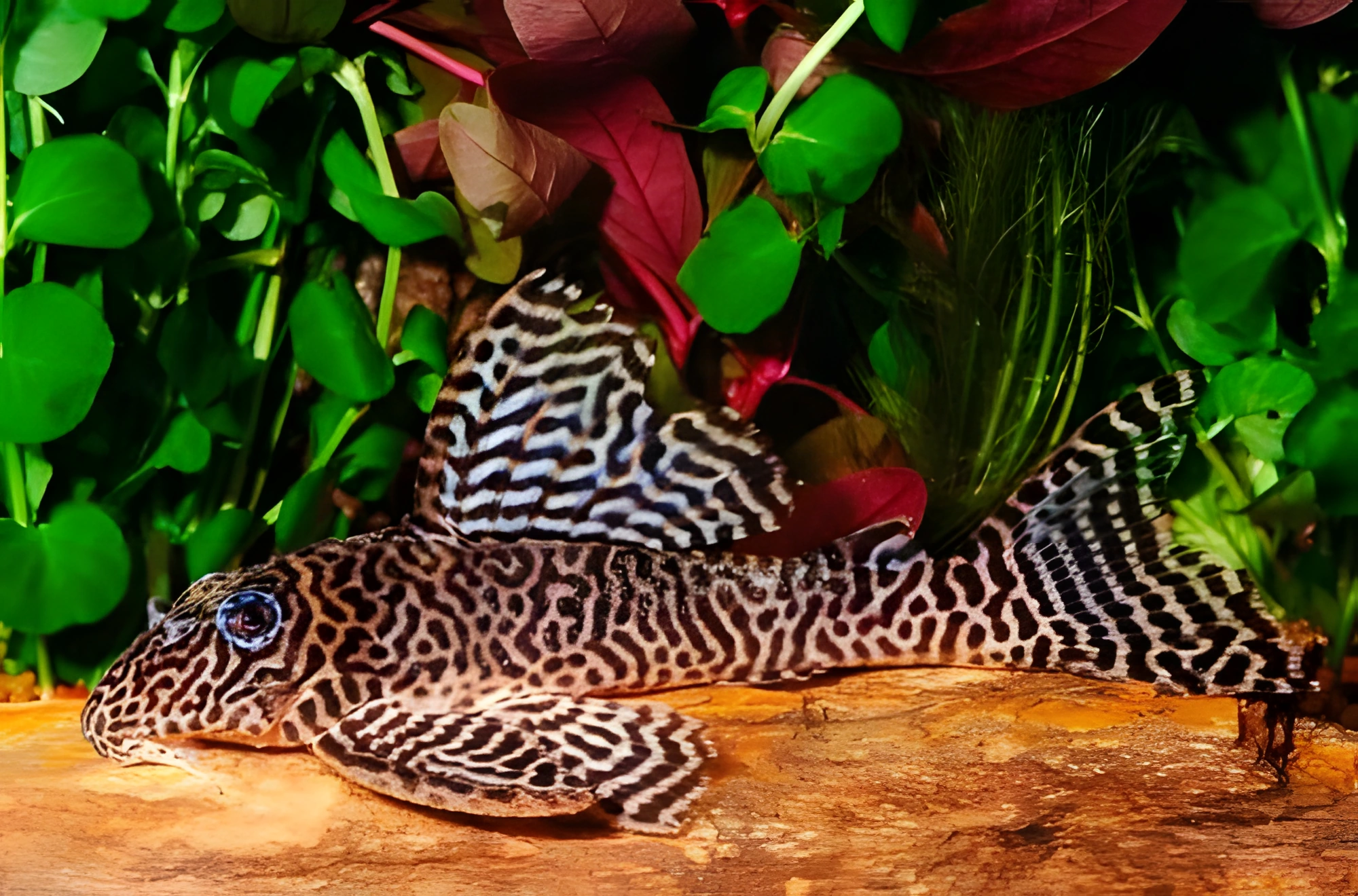
The Royal Tiger Pleco, scientifically known as Hypancistrus sp. L066, belongs to the family Loricariidae, or Armored Catfishes. Its natural habitat is South America, where it is primarily found in the Brazilian state of Pará, in two large tributaries of the Amazon — the Xingu and Tapajós rivers.
- Required aquarium volume
- 70 L
- Size in aquarium
- 12 cm
- Temperature
- 25 – 29 °C
- Temperament
- Territorial (often aggressive)
Parameters
Water pHSlightly acidic (5.8) – Neutral (7)
Water dHVery soft (1) – Hard (12)
Water salinityno salt (freshwater)
Size in aquarium12 cm
Lifespan10 years
TemperamentTerritorial (often aggressive)
Toward small fishnot a predator
Required aquarium volume70 L
Lightingdimmed or moderate
Substrateany (no restrictions)
Water flowweak or moderate
FeedingPlant-based (algae, vegetables)
CareBoth solitary and in group (flexible)
Description
Adult specimens reach a length of approximately 12 cm. A distinctive feature of this fish is its flattened body with a noticeably large head. The eyes are located on the top of the head, and the mouth is on the underside. The fins of these fish are quite large, and their first rays are thickened and modified into sharp spines. The hard body coverings, covered with many small prickles, serve as additional protection against potential predators. The coloration of young individuals is predominantly light, adorned with many dark lines. Over time, as they mature, these lines thicken and can completely cover the light areas, giving the fish a darker hue.
Habitat
The species inhabits Brazil, in the Xingu River basin. It prefers areas with strong currents, a rocky substrate, and high dissolved oxygen content in the water. In nature, it stays among rock crevices and stones, where the water flow is most intense.
Behavior and Compatibility
Representatives of this species exhibit territorial behavior. In confined spaces, they may compete with conspecifics and other bottom-dwelling fish for the most suitable area of the aquarium bottom. Compatibility with other aquarium inhabitants will be good if these are fish that prefer to stay in the water column or near its surface.
Care and Maintenance
The aquarium volume depends on the number of Royal Tiger Plecos. For a single specimen, a tank of 60–70 liters will be sufficient, while a group of 3–4 fish will require at least 200 liters. In this case, the bottom area is more important than the height of the aquarium. If you plan to keep several Plecos or other bottom-dwelling catfishes, it is important to provide enough shelters in the aquarium setup, located at some distance from each other, so that their number corresponds to the number of bottom-dwelling fish. Natural elements such as snags and stones, as well as artificial analogs or decorative objects, can be used as shelters. Some aquarists use ordinary PVC pipe fragments of suitable diameter. The presence of aquatic plants is not mandatory, but they contribute to a more natural design. This species does not pose a threat to delicate plants. The fish needs warm water rich in oxygen. Water parameters should be in the slightly acidic pH range, and hardness should not be high. The aquarium may need to be equipped with an additional aeration system, as oxygen solubility is significantly lower in warm water than in cool water. The diet should be based on high-protein foods, such as dry foods for carnivorous species, bloodworms, and pieces of shrimp or mussel meat.
Diet
The diet of these fish should be based on protein-rich foods. Such foods include, for example, dry mixes intended for carnivorous species, as well as bloodworms, pieces of shrimp or mussel meat.
Breeding and Reproduction
These fish are cave spawners. The male selects a suitable narrow cavity or tube, which he actively guards and into which he entices the female. After spawning, the male takes over all care of the offspring, ensuring a fresh water flow to the clutch. Spawning is often stimulated by imitating the rainy season through regular water changes with cooler water and increased aeration.
Diseases
The species is sensitive to water quality and the accumulation of organic pollutants, which can lead to bacterial infections and fin erosion. To prevent diseases, it is necessary to maintain high water purity and effective filtration. Under poor keeping conditions, the fish become lethargic, lose their appetite and coloration.
How to choose
When choosing, pay attention to the fish's activity in the evening and the absence of external damage, such as ulcers or whitish spots on the body. A healthy Pleco should have a rounded belly, not sunken, which indicates good nutrition. Avoid individuals that appear emaciated or are constantly visible during the day, as this may be a sign of stress or illness.
Frequently asked questions
The essentials: size, tank volume, water parameters and care
How big does Royal Tiger Pleco get?
An adult reaches 12 cm in length. Plan the tank around the maximum size: the fish quickly outgrows a cramped setup.
What size aquarium does Royal Tiger Pleco need?
The minimum recommended volume is 70 L. A smaller tank speeds up nitrate build-up and raises stress levels.
What water parameters does Royal Tiger Pleco need?
Temperature 25–29 °C, pH 5.8–7, hardness 1–12 dGH. Stability matters more than exact values: sudden swings are harder on the fish than a small deviation from the ideal.
How long does Royal Tiger Pleco live?
Around 10 years when kept properly. Lifespan depends directly on tank volume, water quality and a varied diet.
Is Royal Tiger Pleco aggressive?
Temperament: territorial (often aggressive). Keep this in mind when choosing tank mates.
How many Royal Tiger Pleco should be kept together?
Recommended setup: both solitary and in group (flexible). Ignoring this is a common cause of stress and disease.
What does Royal Tiger Pleco eat?
Diet type: plant-based (algae, vegetables). Feed small portions that are finished within a couple of minutes — overfeeding does more harm than underfeeding.
What is the scientific name of Royal Tiger Pleco?
The scientific name of the species is Hypancistrus sp. L066, family Armored Catfishes (Loricariidae).