Temperature20 – 26 °C
Natural range
- Ecuador area
- Northern Peru area
CorydorasConservation status: Least concern LC
Corydoras zygatus, also known as the zygatus cory catfish (scientific name Corydoras zygatus), belongs to the armored catfish family Callichthyidae. The species name is derived from the Greek word ζυγόν (zugón), meaning “yoke,” subtly hinting at the striped body pattern where black bands resemble a harness yoke. This fish originates from South America, specifically from the Marañón and Ucayali river basins. Its natural habitat spans Ecuador and the northern part of Peru. It is most commonly found in shallow tributaries, and less frequently in the main river channels.
- Required aquarium volume
- 80 L
- Size in aquarium
- 6 – 7 cm
- Temperature
- 20 – 26 °C
- Temperament
- Peaceful (regular)
Parameters
Water pHSlightly acidic (5.5) – Neutral (7.5)
Water dHVery soft (2) – Hard (12)
Water salinityno salt (freshwater)
Size in aquarium6 – 7 cm
Lifespan10 years
TemperamentPeaceful (regular)
Toward small fishnot a predator
Required aquarium volume80 L
Lightingdimmed or moderate
Substratesandy (regular, light)
Water flowweak or moderate
FeedingSinking (any)
CareSmall group (5–6 individuals)
Description
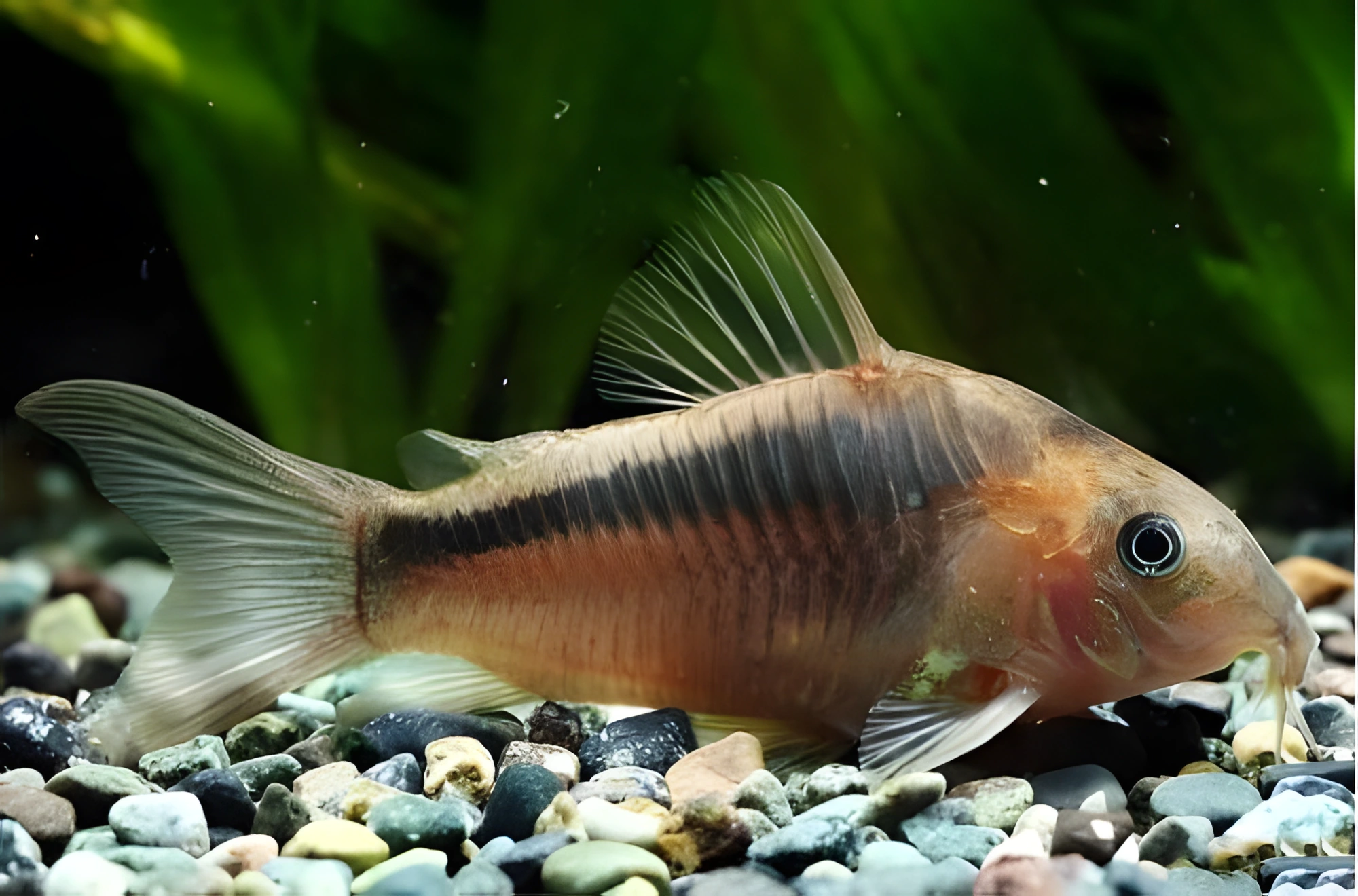
In appearance and body pattern, this species resembles its close relative, Corydoras rabauti. The differences between them are minor: Corydoras zygatus is slightly larger, reaching a length of 6–7 cm, and the dark stripe on its back, characteristic of both species, does not extend to the base of its tail. Its silvery body coloration sometimes takes on orange hues, especially under certain lighting.
Habitat
The species inhabits the western part of the Amazon River basin in South America. It prefers freshwater bodies with clear water, where it leads a bottom-dwelling lifestyle. In its natural habitat, water parameters typically vary widely due to seasonal changes in tropical river systems.
Behavior and Compatibility
A peaceful schooling fish, most active at dusk and at night. In an aquarium, it is recommended to keep a group of 5–8 individuals, as solitary fish become timid and less active. The species is well compatible with other calm aquarium inhabitants that occupy the middle and upper water layers.
Care and Maintenance
Like many members of the genus Corydoras, this catfish is considered an excellent choice for beginner aquarists. It is undemanding to care for and demonstrates high adaptability to various conditions, provided that changes occur gradually. For example, the fish feels comfortable in both soft, slightly acidic water and harder, slightly alkaline water; however, direct transfer from one environment to another without acclimatization is unacceptable. Changes in hydrochemical parameters should be gradual. Maintaining a healthy biological environment in the aquarium directly depends on reliable equipment, regular weekly partial water changes, and timely removal of organic waste such as excrement and uneaten food. The optimal aquarium volume for a group of 4–6 individuals starts from 80 liters. The decor can be anything, but the key is to have a clean, soft substrate and several hiding places, which can be created from driftwood, dense plant thickets, or any other decorative elements, both natural and artificial. Regarding diet, this catfish readily accepts most common aquarium foods: dry, freeze-dried, frozen, and live. A varied diet, including a combination of several types of food, will be highly beneficial. Behavior and compatibility: Corydoras zygatus is a peaceful and friendly fish. It enjoys being in the company of its own kind, so it is recommended to acquire a group of at least 4 individuals. Due to its calm temperament and ability to adapt to diverse conditions, this catfish will be an excellent tankmate for many other species of aquarium fish.
Diet
An omnivorous species, feeding on small invertebrates, insect larvae, and detritus in nature. When kept in an aquarium, the diet should consist mainly of high-quality sinking foods: catfish tablets, granules, or flakes. It is recommended to periodically supplement the diet with live or frozen foods, such as bloodworms or Artemia, to maintain health.
Breeding and Reproduction
Breeding is typical for members of the genus. Spawning is stimulated by water changes to softer and fresher water, as well as by imitating seasonal temperature changes. The female lays eggs on a substrate, for example, on broad plant leaves or aquarium glass. There is no parental care for the offspring, so it is recommended to remove the parents after spawning.
Diseases
Fish are sensitive to water quality and substrate condition. The presence of sharp particles in the substrate can lead to damage to their sensitive barbels, which opens the way for bacterial infections. The species tolerates elevated salt concentrations in the water poorly, the use of which is contraindicated in the treatment of some diseases.
How to choose
When purchasing, choose active fish with clean fins and no visible skin damage. It is important to pay attention to the condition of the barbels: they should be intact and show no signs of erosion. It is not recommended to acquire individuals that appear emaciated or show signs of apathy, as this may indicate health problems.
Frequently asked questions
The essentials: size, tank volume, water parameters and care
How big does Corydoras zygatus get?
An adult reaches 6–7 cm in length. Plan the tank around the maximum size: the fish quickly outgrows a cramped setup.
What size aquarium does Corydoras zygatus need?
The minimum recommended volume is 80 L. A smaller tank speeds up nitrate build-up and raises stress levels.
What water parameters does Corydoras zygatus need?
Temperature 20–26 °C, pH 5.5–7.5, hardness 2–12 dGH. Stability matters more than exact values: sudden swings are harder on the fish than a small deviation from the ideal.
How long does Corydoras zygatus live?
Around 10 years when kept properly. Lifespan depends directly on tank volume, water quality and a varied diet.
Is Corydoras zygatus aggressive?
Temperament: peaceful (regular). Keep this in mind when choosing tank mates.
How many Corydoras zygatus should be kept together?
Recommended setup: small group (5–6 individuals). Ignoring this is a common cause of stress and disease.
What does Corydoras zygatus eat?
Diet type: sinking (any). Feed small portions that are finished within a couple of minutes — overfeeding does more harm than underfeeding.
What is the scientific name of Corydoras zygatus?
The scientific name of the species is Corydoras zygatus, family Armored or Callichthyid Catfish (Callichthyidae).