Temperature21 – 27 °C
Natural range
- Upper Amazon River basin
- Ecuador area
- Peru area
CorydorasConservation status: Data deficient DD
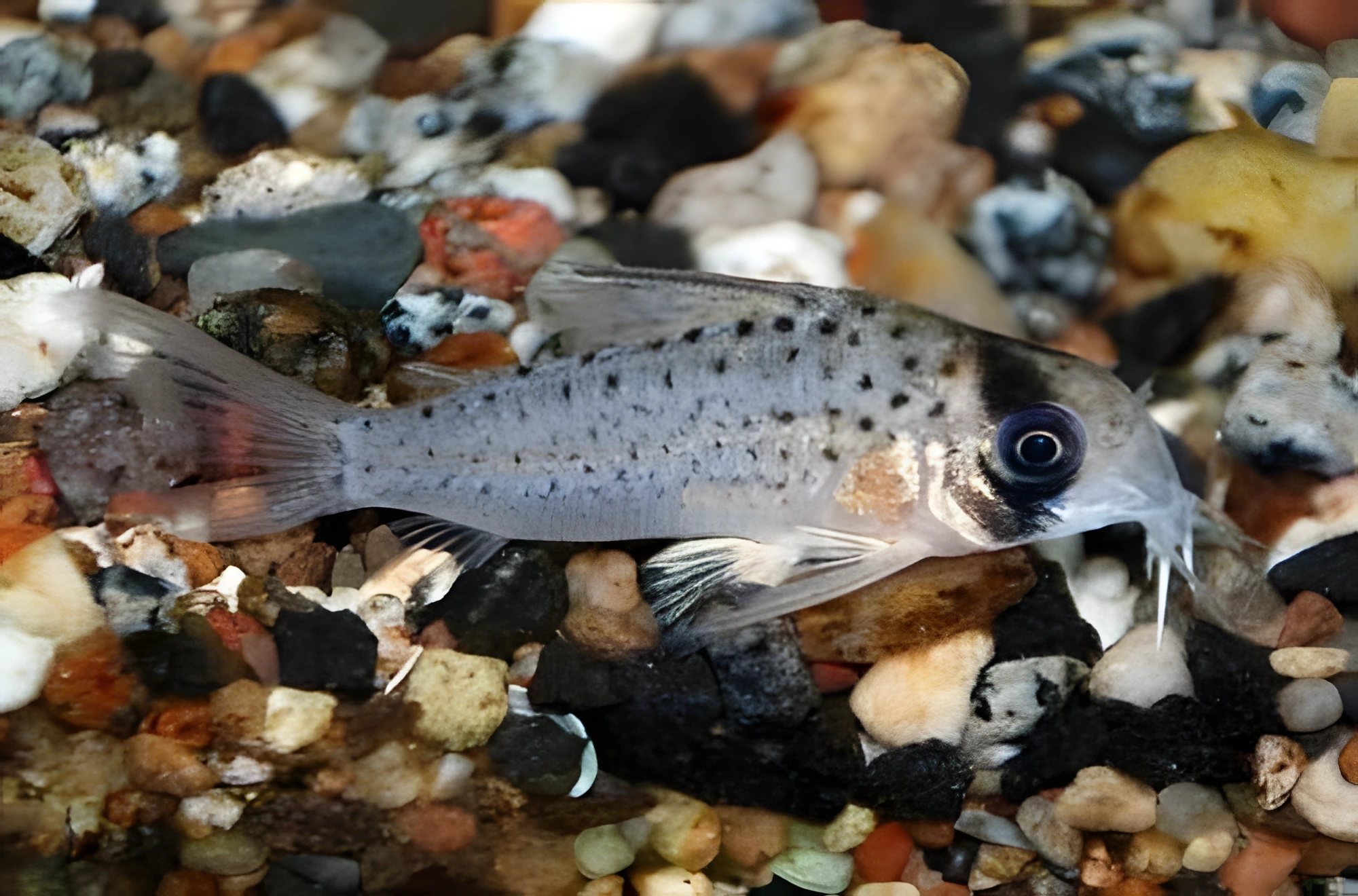
The Masked Corydoras, known scientifically as Corydoras atropersonatus, belongs to the family Callichthyidae, which includes armored or callichthyid catfishes. Its name refers to the dark mark on its head. This fish originates from small river systems in South America, located on the border of Ecuador and in the northeastern regions of Peru.
- Required aquarium volume
- 60 L
- Size in aquarium
- 4 cm
- Temperature
- 21 – 27 °C
- Temperament
- Peaceful (regular)
Parameters
Water pHSlightly acidic (5) – Neutral (7)
Water dHVery soft (1) – Medium hardness (10)
Water salinityno salt (freshwater)
Size in aquarium4 cm
Lifespan5 years
TemperamentPeaceful (regular)
Toward small fishnot a predator
Required aquarium volume60 L
Lightingdimmed or moderate
Substratesandy (regular, light)
Water flowweak or moderate
FeedingSinking (any)
CareSmall group (5–6 individuals)
Description
Adults of this fish typically reach about 4 cm in length. Their coloration consists of a light silvery background, dotted with numerous small black specks all over the body, with the exception of the belly. A characteristic feature is a broad dark stripe running across the head. The fins and caudal fin remain translucent.
Habitat
The species inhabits river systems in the upper Amazon basin within Ecuador and Peru. In nature, it lives in bodies of water with soft, slightly acidic water. It prefers areas with sandy bottoms, where it can safely move around and search for food.
Behavior and Compatibility
A peaceful and active schooling fish. Keeping them alone is not recommended, as it causes stress to the catfish. For comfortable existence, it is necessary to acquire a group of 4–6 individuals or more. Corydoras get along well with any non-aggressive fish species that occupy the middle and upper water layers.
Care and Maintenance
This fish is unpretentious and quite easy to keep, readily adapting to various water conditions and not demanding high requirements for tank decoration. However, the Masked Corydoras feels most comfortable in soft, slightly acidic water; in terms of decor, special attention should be paid to the substrate and the availability of shelters. The use of sandy substrate, driftwood, dense plant thickets, and other decorative elements, both artificial and natural, will allow the fish to find shelter. For a group of 4–6 catfish, an aquarium of at least 60 liters is recommended. Aquarium cleanliness is one of the key factors for the successful keeping of Masked Corydoras, as indeed for any other fish. It is important to avoid the accumulation of organic waste and maintain water parameters (pH and dGH) within acceptable limits. The uninterrupted operation of equipment, especially the filtration system, is paramount, as are regular mandatory aquarium maintenance procedures: partial water changes, removal of excrement and food residues. Since the catfish spends most of its time at the bottom, its diet should consist of sinking foods. The basis of the diet can be dry products, such as flakes or granules. Due to their peaceful nature, corydoras get along excellently with many non-aggressive fish. Intraspecies relationships are also harmonious; the catfish prefer to stay in groups of 4 to 6 individuals. Keeping them alone is not recommended.
Diet
An omnivorous species. In natural conditions, it feeds on small invertebrates, insect larvae, and organic detritus. In the aquarium, the following should be used:
- specialized sinking granules or tablets for bottom fish
- frozen bloodworms, daphnia, or brine shrimp
- high-quality dry foods in the form of flakes that quickly sink to the bottom
Breeding and Reproduction
Breeding is typical for armored catfishes. Spawning is paired or communal, stimulated by water changes with a temperature drop of several degrees. Eggs are laid on the substrate, for example, on broad plant leaves or aquarium glass. After spawning, the parents should be removed to prevent them from eating the eggs.
Diseases
Fish are sensitive to water quality and substrate cleanliness. The main problems arise from the accumulation of organic matter, which leads to damage to the barbels and the development of bacterial skin infections. For prevention, it is necessary to regularly siphon the substrate and perform water changes, avoiding sharp fluctuations in environmental parameters.
How to choose
When purchasing, it is important to assess the overall condition of the individuals. Healthy catfish swim actively, have clean fins without signs of erosion, and intact barbels. Fish with sunken bellies or visible spots on the body should be avoided. It is recommended to purchase the entire school from one aquarium to reduce stress during adaptation.
Frequently asked questions
The essentials: size, tank volume, water parameters and care
How big does Masked Corydoras get?
An adult reaches 4 cm in length. Plan the tank around the maximum size: the fish quickly outgrows a cramped setup.
What size aquarium does Masked Corydoras need?
The minimum recommended volume is 60 L. A smaller tank speeds up nitrate build-up and raises stress levels.
What water parameters does Masked Corydoras need?
Temperature 21–27 °C, pH 5–7, hardness 1–10 dGH. Stability matters more than exact values: sudden swings are harder on the fish than a small deviation from the ideal.
How long does Masked Corydoras live?
Around 5 years when kept properly. Lifespan depends directly on tank volume, water quality and a varied diet.
Is Masked Corydoras aggressive?
Temperament: peaceful (regular). Keep this in mind when choosing tank mates.
How many Masked Corydoras should be kept together?
Recommended setup: small group (5–6 individuals). Ignoring this is a common cause of stress and disease.
What does Masked Corydoras eat?
Diet type: sinking (any). Feed small portions that are finished within a couple of minutes — overfeeding does more harm than underfeeding.
What is the scientific name of Masked Corydoras?
The scientific name of the species is Corydoras atropersonatus, family Armored or Callichthyid Catfish (Callichthyidae).