Temperature22 – 27 °C
Natural range
- Colombia area
Corydoras
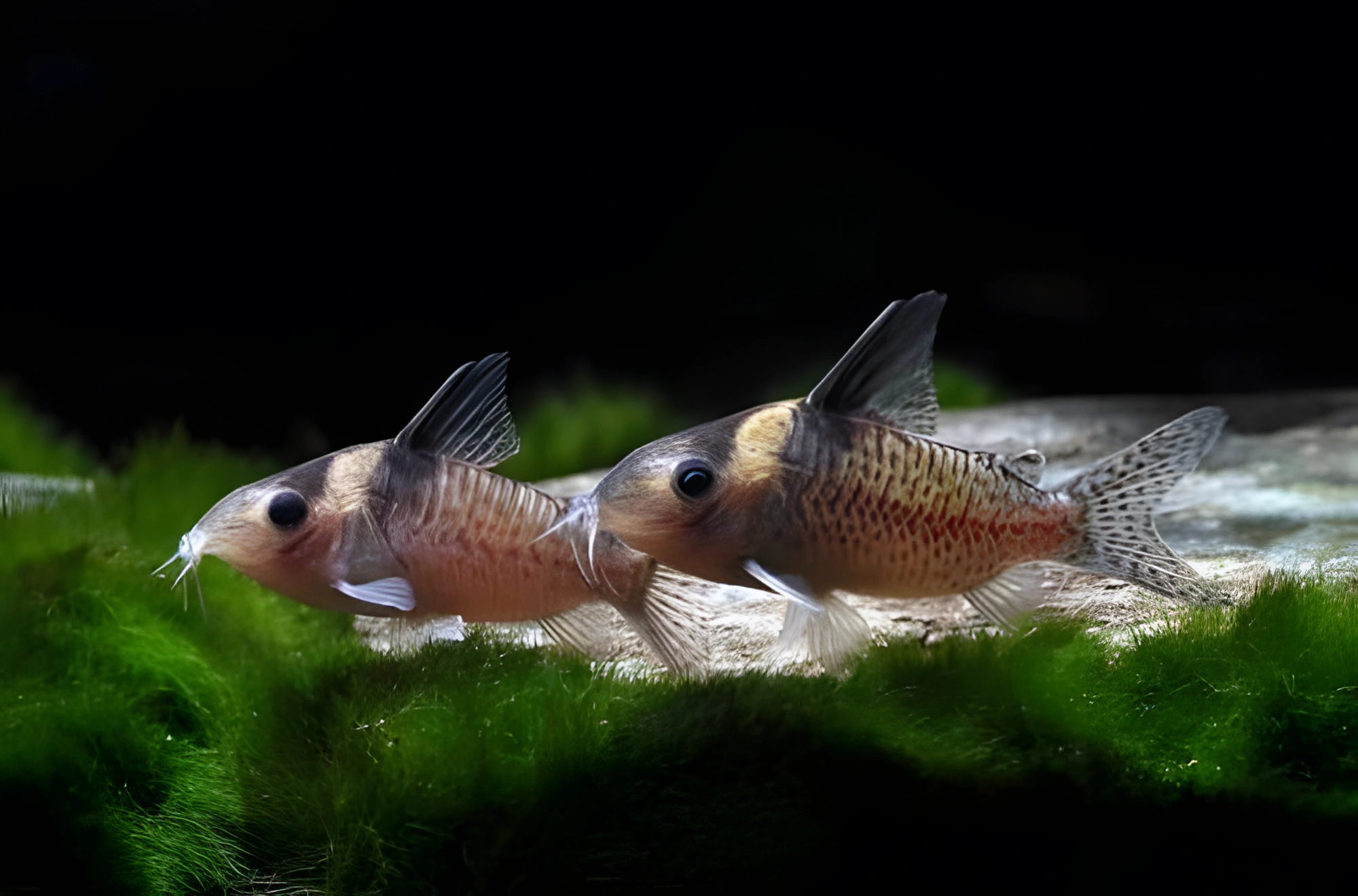
Corydoras delphax, also known as the Pigmy Corydoras, bears the scientific name Corydoras delphax. Scientists may have given this catfish such a name due to its habit of actively rooting in the substrate with its nose in search of food, similar to how pigs behave. The ancient Greek word “delphax” indeed means “little pig” or “piglet.” Of course, the resemblance between the catfish and a pig ends there.
- Required aquarium volume
- 80 L
- Size in aquarium
- 5 – 6 cm
- Temperature
- 22 – 27 °C
- Temperament
- Peaceful (regular)
Parameters
Water pHSlightly acidic (5.5) – Neutral (7.5)
Water dHVery soft (2) – Hard (12)
Water salinityno salt (freshwater)
Size in aquarium5 – 6 cm
Lifespan5 years
TemperamentPeaceful (regular)
Toward small fishnot a predator
Required aquarium volume80 L
Lightingdimmed or moderate
Substratesandy (regular, light)
Water flowweak or moderate
FeedingSinking (any)
CareSmall group (5–6 individuals)
Description
Adults of this fish typically reach a length of 5 to 6 cm. Their bodies are gray and adorned with numerous black speckles that extend to the tail. Two dark stripes are visible on the head and dorsal fin. A distinctive feature is a somewhat elongated snout.
Habitat
The species inhabits South America, in the Inírida River basin and the upper Orinoco River in Colombia. It lives in freshwater bodies with soft, slightly acidic or neutral water, preferring areas with slow currents and sandy or fine-gravel bottoms.
Behavior and Compatibility
A peaceful schooling fish, primarily active during twilight hours. For their comfort, it is recommended to keep a group of 5–6 or more individuals. These catfish are bottom-dwellers, constantly exploring the substrate for food. They get along well with other non-aggressive species, but due to their activity, they may disturb less mobile tankmates.
Care and Maintenance
This fish is undemanding and quite easy to keep, adapting readily to a wide range of conditions. Corydoras delphax can feel comfortable in both slightly acidic and slightly alkaline water, tolerating low to medium hardness levels. An ideal home for them would be an aquarium of 80 liters or more, equipped with soft sandy substrate and several hiding places. It is crucial to ensure consistently warm and clean water, preventing the accumulation of organic waste—food remnants, excrement, and decaying plant matter. Maintaining biological balance directly depends on the proper functioning of equipment, particularly the filtration system, as well as regular mandatory aquarium maintenance procedures. Such procedures include weekly partial water changes with fresh water, as well as cleaning the substrate and decor elements. As for feeding, Corydoras delphax is an omnivorous species that readily accepts most standard aquarium foods of appropriate size. The only condition is that the food must be sinking, as these catfish prefer to spend most of their time in the bottom layers. In terms of behavior and compatibility, the Pigmy Corydoras is peaceful, getting along excellently with both its own kind and other fish species. Thanks to its high adaptability, it is perfectly suited for most freshwater aquariums. These fish feel most comfortable in groups of 4 to 6 individuals.
Diet
An omnivorous species, in nature it feeds on small invertebrates, insect larvae, and detritus. In the aquarium, it readily eats high-quality sinking foods: specialized tablets for catfish, frozen or live foods such as bloodworms, daphnia, and brine shrimp. Feeding is recommended once a day, shortly before the lights are turned off.
Breeding and Reproduction
Breeding occurs by laying eggs on a substrate, often on broad plant leaves or aquarium glass. Water changes to softer and cooler water, simulating the rainy season, stimulate spawning. Parents do not care for their offspring and may eat the eggs, so it is recommended to remove the adults after spawning.
Diseases
These fish have strong immunity but are sensitive to water quality and substrate condition. The main problem is damage to their delicate barbels due to the use of sharp or coarse substrate, which opens the way for bacterial infections. The species tolerates elevated nitrate concentrations and the use of salt in aquarium water poorly.
How to choose
When purchasing, choose active fish with clean skin without spots or damage. It is important to pay attention to the condition of the barbels: they should be intact, without signs of erosion or inflammation. Healthy individuals should show interest in foraging for food on the bottom, rather than appearing apathetic or emaciated.
Frequently asked questions
The essentials: size, tank volume, water parameters and care
How big does Pigmy Corydoras get?
An adult reaches 5–6 cm in length. Plan the tank around the maximum size: the fish quickly outgrows a cramped setup.
What size aquarium does Pigmy Corydoras need?
The minimum recommended volume is 80 L. A smaller tank speeds up nitrate build-up and raises stress levels.
What water parameters does Pigmy Corydoras need?
Temperature 22–27 °C, pH 5.5–7.5, hardness 2–12 dGH. Stability matters more than exact values: sudden swings are harder on the fish than a small deviation from the ideal.
How long does Pigmy Corydoras live?
Around 5 years when kept properly. Lifespan depends directly on tank volume, water quality and a varied diet.
Is Pigmy Corydoras aggressive?
Temperament: peaceful (regular). Keep this in mind when choosing tank mates.
How many Pigmy Corydoras should be kept together?
Recommended setup: small group (5–6 individuals). Ignoring this is a common cause of stress and disease.
What does Pigmy Corydoras eat?
Diet type: sinking (any). Feed small portions that are finished within a couple of minutes — overfeeding does more harm than underfeeding.
What is the scientific name of Pigmy Corydoras?
The scientific name of the species is Corydoras delphax. Учёные назвали этого сомика в честь не самого чистоплотного животного по одной причине — он также роет носом грунт в поисках пищи. Слово «delphax» с древнегреческого как раз и означает «маленькая свинья», family Callichthyidae.