Temperature20 – 25 °C
Natural range
- Colombia area
CorydorasConservation status: Vulnerable VU
The scientific name Corydoras simulatus places it in the family Callichthyidae, known as Armored Catfishes or Callichthids. The species name itself, simulatus, comes from Latin and translates as “to imitate” or “to copy,” which accurately reflects its similarity to Corydoras metae. This species, inhabiting the same geographical area, was discovered earlier. Sometimes these catfishes can be found under the name False Corydoras metae.
- Required aquarium volume
- 100 L
- Size in aquarium
- 6 – 7 cm
- Temperature
- 20 – 25 °C
- Temperament
- Peaceful (regular)
Parameters
Water pHSlightly acidic (6) – Neutral (7)
Water dHVery soft (1) – Hard (12)
Water salinityno salt (freshwater)
Size in aquarium6 – 7 cm
Lifespan5 years
TemperamentPeaceful (regular)
Toward small fishnot a predator
Required aquarium volume100 L
Lightingweak (low)
Substratesandy (regular, light)
Water flowweak or moderate
FeedingSinking (any)
CareSmall group (5–6 individuals)
Description
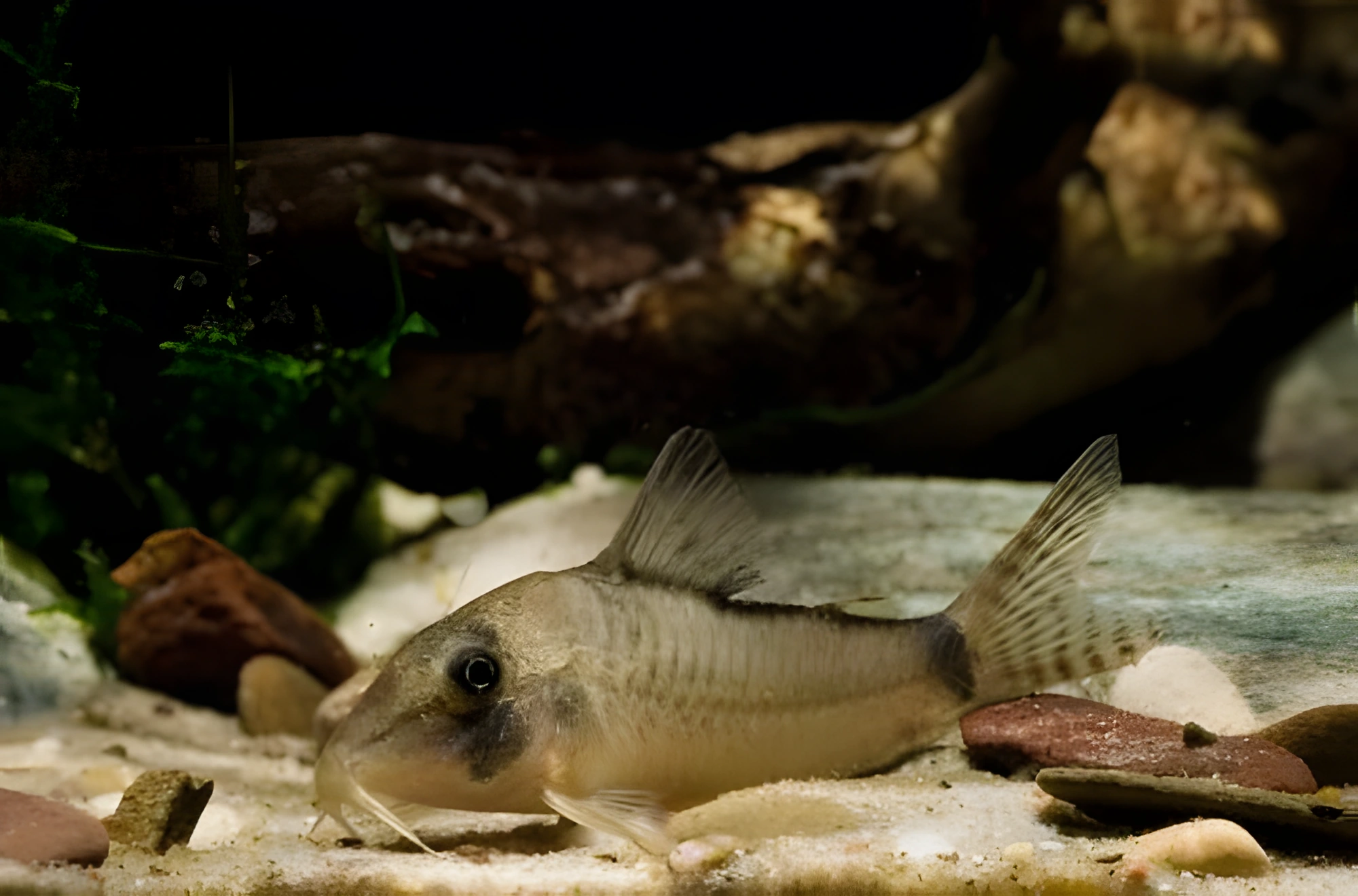
The body pattern and coloration of this catfish can vary significantly depending on its specific region of origin. Due to this diversity, Corydoras simulatus is often misidentified as another species, and it does not always resemble the aforementioned Corydoras metae. Adult fish typically reach a length of 6–7 cm. Their main body color is gray. The characteristic pattern includes a thin black stripe running along the back, and two additional marks: one located on the head, and the second at the base of the tail.
Habitat
The species inhabits the Meta River basin in Colombia. In nature, it prefers bodies of water with clean, clear water and the presence of current. Water conditions in its natural habitat are characterized by a temperature of 20–25 °C, a pH level of 6.0–8.0, and a hardness of 2–25 dGH.
Behavior and Compatibility
A peaceful schooling fish, showing the most activity in groups of 6 or more individuals. The catfishes are primarily bottom-dwelling, constantly exploring the substrate in search of food. They are well compatible with most non-aggressive fish inhabiting the middle and upper water layers.
Care and Maintenance
These catfish are easy to keep and do not have high demands, making them a good choice for both beginners and experienced aquarists. Corydoras simulatus shows adaptability to various living conditions, provided that basic requirements are met: the water must be clean and warm, with acceptable pH and dGH values, the substrate soft, and there must be several shelters where the catfish can find refuge. Aquarium maintenance for these fish does not present significant difficulties and is similar to keeping most other freshwater species. It is recommended to perform weekly water changes of 15–20% of the volume, regularly remove organic waste (uneaten food, metabolic products), clean decor elements and aquarium walls of plaque, and conduct a prophylactic inspection of equipment. As for feeding, being bottom dwellers, these catfish prefer food that sinks and is accessible at the bottom. This is, perhaps, the only condition regarding their diet. They readily accept most common foods, whether dry granules, gel-based, frozen, or live options. In terms of behavior and compatibility, Corydoras simulatus is among the most peaceful aquarium inhabitants. They coexist perfectly with their own kind and with other fish species. Almost any fish that will not consider Cory catfish as a food source will be suitable as tank mates.
Diet
An omnivorous species. In nature, it feeds on small invertebrates, insects, larvae, and plant detritus. In the aquarium, it is recommended to use a variety of sinking foods: specialized tablets for bottom-dwelling fish, frozen or live foods (bloodworms, Artemia, Daphnia).
Breeding and Reproduction
Spawning is paired or in groups, occurring among dense vegetation. The female lays eggs on the substrate, after which the parents do not care for the offspring. In captivity, frequent water changes and imitation of the rainy season serve as stimulation. The eggs are susceptible to fungal infections, so water quality control is required.
Diseases
The species has the typical Corydoras sensitivity to water quality and substrate condition. When kept on a sharp or contaminated substrate, damage to the barbels is possible, which opens the way for bacterial infections. Prevention includes regular siphoning of the bottom and maintaining water cleanliness.
How to choose
When purchasing, choose active fish with clean fins and no body damage. It is important to ensure the integrity of the barbels, as their absence or deformation often indicates poor keeping conditions in the store. Healthy individuals should show interest in searching for food at the bottom of the aquarium.
Frequently asked questions
The essentials: size, tank volume, water parameters and care
How big does Corydoras simulatus get?
An adult reaches 6–7 cm in length. Plan the tank around the maximum size: the fish quickly outgrows a cramped setup.
What size aquarium does Corydoras simulatus need?
The minimum recommended volume is 100 L. A smaller tank speeds up nitrate build-up and raises stress levels.
What water parameters does Corydoras simulatus need?
Temperature 20–25 °C, pH 6–7, hardness 1–12 dGH. Stability matters more than exact values: sudden swings are harder on the fish than a small deviation from the ideal.
How long does Corydoras simulatus live?
Around 5 years when kept properly. Lifespan depends directly on tank volume, water quality and a varied diet.
Is Corydoras simulatus aggressive?
Temperament: peaceful (regular). Keep this in mind when choosing tank mates.
How many Corydoras simulatus should be kept together?
Recommended setup: small group (5–6 individuals). Ignoring this is a common cause of stress and disease.
What does Corydoras simulatus eat?
Diet type: sinking (any). Feed small portions that are finished within a couple of minutes — overfeeding does more harm than underfeeding.
What is the scientific name of Corydoras simulatus?
The scientific name of the species is Corydoras simulatus, family Armored or Callichthyid Catfish (Callichthyidae).