Temperature24 – 28 °C
Natural range
- Guaporé River basin
- Brazil area
- Bolivia area
CorydorasConservation status: Least concern LC
Sterba's Corydoras, scientifically known as Corydoras sterbai, belongs to the family Callichthyidae, also called Armored or Callichthid Catfish. This fish originates from South America, specifically found in the Guaporé River basin in western Brazil. The Guaporé River is part of the middle Amazon. These fish prefer to inhabit small tributaries, streams, and temporarily flooded forest areas.
- Required aquarium volume
- 50 L
- Size in aquarium
- 7 cm
- Temperature
- 24 – 28 °C
- Temperament
- Peaceful (regular)
Parameters
Water pHSlightly acidic (6) – Slightly alkaline (7.8)
Water dHVery soft (1) – Hard (15)
Water salinityno salt (freshwater)
Size in aquarium7 cm
Lifespan8 years
TemperamentPeaceful (regular)
Toward small fishnot a predator
Required aquarium volume50 L
Lightingdimmed or moderate
Substratesandy (regular, light)
Water flowweak or moderate
FeedingSinking (any)
CareSmall group (3–4 individuals)
Description
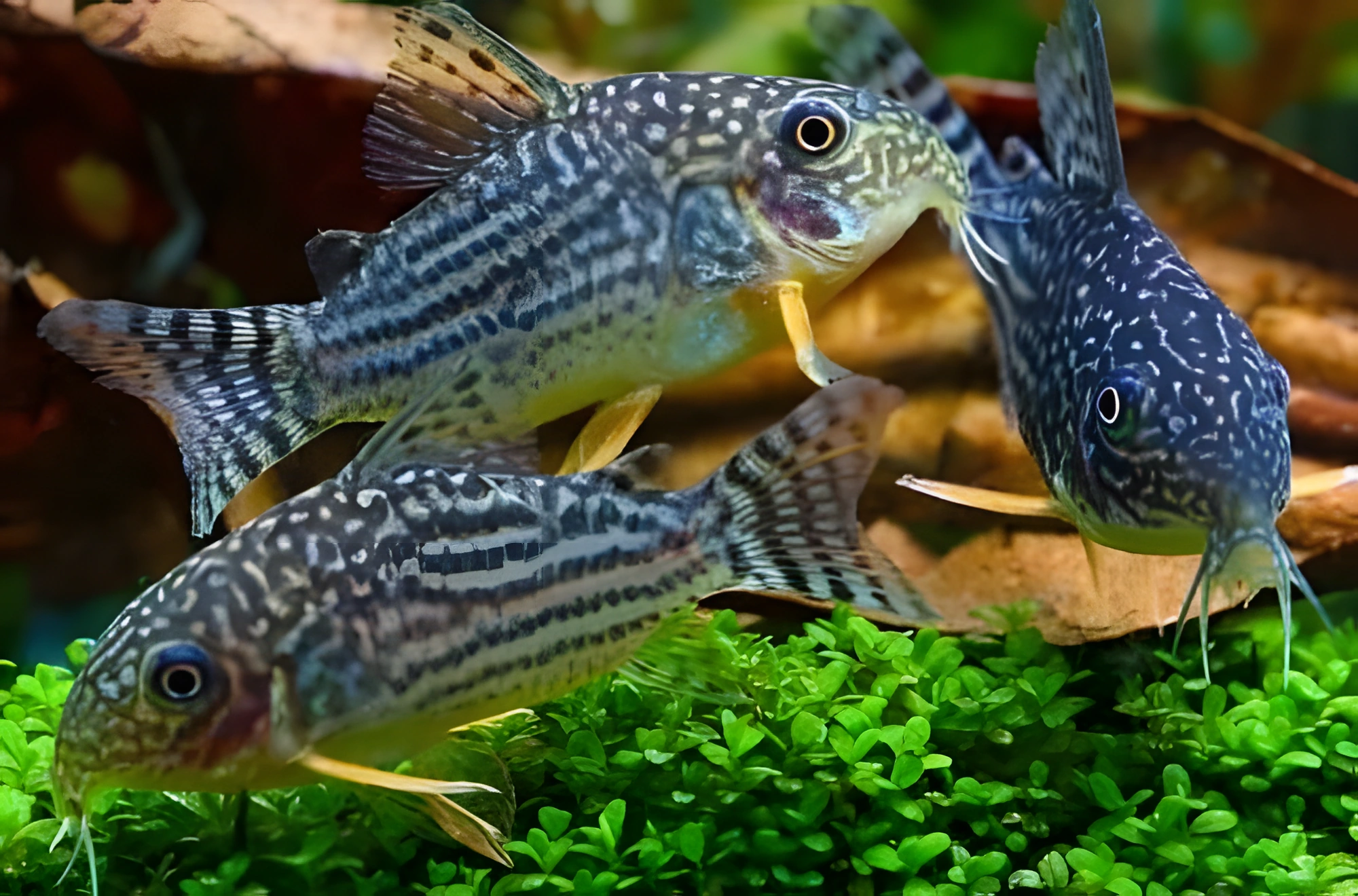
Adult specimens of this species typically reach a length of 5–6 cm, although some individuals can grow up to 7 cm. Their body has the characteristic stocky shape of Corydoras. Instead of ordinary scales, the bodies of these catfish are covered with rows of bony plates, providing reliable protection against small predators. It is also worth noting that the first rays of their fins are thickened and end in sharp spines, serving as an additional defense mechanism. Outwardly, Sterba's Corydoras resembles the Mosaic Corydoras, but their patterns differ: while the Mosaic Corydoras has dark speckles on a light background, Sterba's Corydoras, conversely, has light spots forming rows on a dark background.
Habitat
Sterba's Corydoras originates from South America, inhabiting the Guaporé River basin, which flows through Brazil and Bolivia. In nature, the fish live in tributaries and forest streams, often in flooded forest zones with soft water and sandy or silty bottoms covered with fallen leaves and snags. The species is adapted to life in warm tropical water and can use atmospheric air for breathing when oxygen is scarce [fishbase.mnhn.fr].
Behavior and Compatibility
This is a friendly and peaceful fish that coexists well with its own kind and with other fish species of comparable size. To ensure their comfort and sense of security, it is recommended to keep a group of 5–6 individuals. It is undesirable to choose bottom-dwelling territorial fish as tank mates.
Care and Maintenance
This species is considered relatively easy to keep and undemanding. It is important to note that most Sterba's Corydoras available for sale have been bred in artificial conditions for many generations. This has made them more resilient compared to their wild counterparts and allows them to successfully adapt to various aquarium conditions.
Diet
In its natural habitat, the species is omnivorous, feeding on small invertebrates, insect larvae, and aquatic vegetation. In the aquarium, the fish are undemanding and accept all types of quality foods, but for maintaining health, specialized sinking tablets or wafers for bottom-dwelling fish, containing both animal and plant components, are preferable. It is recommended to supplement the diet with frozen foods, such as bloodworms or brine shrimp, but avoid an excess of protein-rich food [fanfishka.ru].
Breeding and Reproduction
Breeding occurs in a separate spawning tank. The stimulus for spawning is the imitation of the rainy season: abundant feeding with high-protein live or frozen foods combined with frequent water changes to cooler water (3–5 degrees below the usual temperature). The female lays eggs on the substrate (glass, plants, decorations), after which the parents should be removed to prevent them from eating the eggs. The incubation period is 6 to 8 days, depending on the temperature [fanfishka.ru].
Diseases
The species is highly resilient but sensitive to high levels of nitrogenous compounds (ammonia, nitrites, nitrates) and phosphates in the water. Under poor keeping conditions, erosion of the barbels and bacterial skin lesions are possible. Prevention includes weekly water changes, maintaining a clean substrate, and using quality foods. The fish tolerate sudden changes in water parameters and high salinity poorly [zooeco.com].
How to choose
When purchasing, choose active individuals with clean bodies, free of visible spots, ulcers, or fin damage. It is important to pay attention to the condition of the barbels: they should be intact, without signs of deformation or truncation, which is an indicator of the quality of keeping conditions in the store. A healthy fish should show interest in foraging for food on the bottom, rather than appearing apathetic or emaciated [aquascapeclub.com].
Frequently asked questions
The essentials: size, tank volume, water parameters and care
How big does Sterba's Corydoras get?
An adult reaches 7 cm in length. Plan the tank around the maximum size: the fish quickly outgrows a cramped setup.
What size aquarium does Sterba's Corydoras need?
The minimum recommended volume is 50 L. A smaller tank speeds up nitrate build-up and raises stress levels.
What water parameters does Sterba's Corydoras need?
Temperature 24–28 °C, pH 6–7.8, hardness 1–15 dGH. Stability matters more than exact values: sudden swings are harder on the fish than a small deviation from the ideal.
How long does Sterba's Corydoras live?
Around 8 years when kept properly. Lifespan depends directly on tank volume, water quality and a varied diet.
Is Sterba's Corydoras aggressive?
Temperament: peaceful (regular). Keep this in mind when choosing tank mates.
How many Sterba's Corydoras should be kept together?
Recommended setup: small group (3–4 individuals). Ignoring this is a common cause of stress and disease.
What does Sterba's Corydoras eat?
Diet type: sinking (any). Feed small portions that are finished within a couple of minutes — overfeeding does more harm than underfeeding.
What is the scientific name of Sterba's Corydoras?
The scientific name of the species is Corydoras sterbai, family Armored or Callichthyid Catfishes (Callichthyidae).