Temperature22 – 26 °C
Natural range
- Brazil area
CorydorasConservation status: Least concern LC
The Reticulated Corydoras, scientifically known as Corydoras reticulatus, is a member of the family Callichthyidae, or Armored Catfishes. Its natural habitat is South America, where it is widely distributed in the lower Amazon basin. These fish prefer to live on the bottom of small rivers and streams, finding shelter among submerged snags and dense thickets of aquatic plants.
- Required aquarium volume
- 70 L
- Size in aquarium
- 6 cm
- Temperature
- 22 – 26 °C
- Temperament
- Peaceful, calm/shy/inactive
Parameters
Water pHSlightly acidic (6) – Slightly alkaline (8)
Water dHVery soft (2) – Very hard (25)
Water salinityno salt (freshwater)
Size in aquarium6 cm
Lifespan8 years
TemperamentPeaceful, calm/shy/inactive
Toward small fishnot a predator
Required aquarium volume70 L
Lightingdimmed or moderate
Substratesoft silted
Water flowweak or moderate
FeedingSinking (any)
CareSmall group (3–4 individuals)
Description
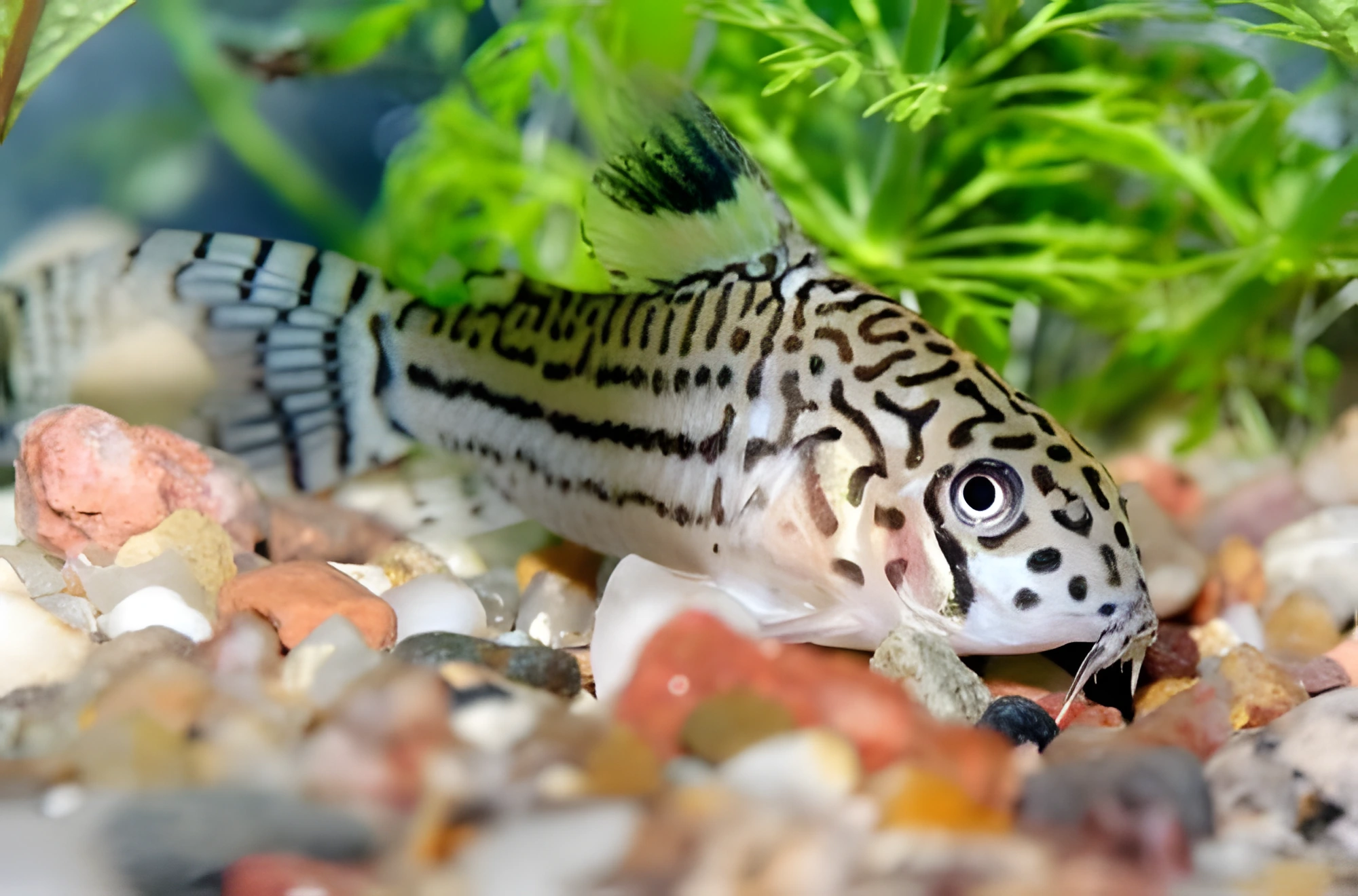
Adults typically reach about 6 cm in length. Their body shape is characteristic of Corydoras: stocky, with a distinctly high back and a large head. The body of these fish is protected by rows of bony plates, which are modified scales, providing them with protection from small predators. The first rays of the fins, which are thickened and pointed at the ends, serve a similar function. The coloration of the Reticulated Corydoras is light, with a characteristic reticulated pattern formed by dark stripes and irregularly shaped spots. A distinctive feature is a dark spot on the dorsal fin.
Habitat
The Reticulated Corydoras inhabits South America, primarily in the lower Amazon River basin in Brazil. In nature, the fish populate shallow areas of rivers and tributaries with slow currents, preferring zones with soft substrate and an abundance of natural shelters in the form of snags and fallen leaves.
Behavior and Compatibility
These peaceful fish get along well with both their own kind and other aquarium inhabitants. They successfully coexist with most non-aggressive fish of similar size. Excellent tank mates include small cyprinids, small cichlids, and labyrinth fish, as well as other non-territorial catfishes, such as other Corydoras species. For comfortable existence, they require a group of 3–4 individuals.
Care and Maintenance
For a school of 6 fish, an aquarium of at least 70 L is desirable. When decorating, it is recommended to use a soft substrate, preferably fine sand, as well as various decorative elements such as snags, stones, and other natural or artificial decorations. The presence of vegetation, including floating plants that create natural shading, will be very beneficial. A key condition for successful and long-term keeping is maintaining warm, clean, oxygen-rich water. In some cases, additional aeration of the aquarium may be required.
Diet
In their natural environment, the species is omnivorous, feeding on small invertebrates, insect larvae, crustaceans, and organic plant detritus. In aquarium conditions, it is recommended to use specialized sinking foods for bottom-dwelling fish, supplementing the diet with live or frozen foods, such as bloodworms or brine shrimp. Feeding should be done in the evening to ensure food availability for the catfishes.
Breeding and Reproduction
Breeding takes place in a separate spawning tank. Frequent water changes with fresh water and a decrease in temperature by several degrees, mimicking the rainy season, serve as a stimulus for spawning. Spawning occurs in a T-position, after which the female attaches the fertilized eggs to a substrate, such as broad plant leaves or the glass. Parents do not care for their offspring and may eat the eggs, so they should be removed immediately after the process is completed.
Diseases
The species has a strong immune system but is sensitive to high levels of nitrogen compounds and phosphates in the water. Under poor keeping conditions, fungal infections, bacterial skin infections, and damage to the sensitive barbels from rough or sharp substrate are possible. Prevention includes regular water changes, the use of quality filtration, and maintaining cleanliness in the aquarium.
How to choose
When purchasing, choose active fish with clean skin without spots, ulcers, or visible growths. It is important to ensure that the barbels are not damaged, as their absence makes it difficult to find food. Healthy individuals should exhibit schooling behavior and have a plump body without signs of emaciation. It is recommended to acquire a group of 5-10 individuals, as fish experience stress when kept alone.
Frequently asked questions
The essentials: size, tank volume, water parameters and care
How big does Reticulated Corydoras get?
An adult reaches 6 cm in length. Plan the tank around the maximum size: the fish quickly outgrows a cramped setup.
What size aquarium does Reticulated Corydoras need?
The minimum recommended volume is 70 L. A smaller tank speeds up nitrate build-up and raises stress levels.
What water parameters does Reticulated Corydoras need?
Temperature 22–26 °C, pH 6–8, hardness 2–25 dGH. Stability matters more than exact values: sudden swings are harder on the fish than a small deviation from the ideal.
How long does Reticulated Corydoras live?
Around 8 years when kept properly. Lifespan depends directly on tank volume, water quality and a varied diet.
Is Reticulated Corydoras aggressive?
Temperament: peaceful, calm/shy/inactive. Keep this in mind when choosing tank mates.
How many Reticulated Corydoras should be kept together?
Recommended setup: small group (3–4 individuals). Ignoring this is a common cause of stress and disease.
What does Reticulated Corydoras eat?
Diet type: sinking (any). Feed small portions that are finished within a couple of minutes — overfeeding does more harm than underfeeding.
What is the scientific name of Reticulated Corydoras?
The scientific name of the species is Corydoras reticulatus, family Armored Catfish (Callichthyidae).