Temperature20 – 28 °C
Natural range
- Brazil area
CorydorasConservation status: Least concern LC
Sands's Corydoras, also known as Cory Sands catfish (scientific name Corydoras davidsandsi), belongs to the family Callichthyidae — armored or callichthyid catfishes. It was named in honor of David Sands, a renowned English aquarist and author of numerous books on keeping freshwater fish.
- Required aquarium volume
- 80 L
- Size in aquarium
- 5 – 6 cm
- Temperature
- 20 – 28 °C
- Temperament
- Peaceful (regular)
Parameters
Water pHSlightly acidic (5) – Neutral (7)
Water dHVery soft (1) – Medium hardness (8)
Water salinityno salt (freshwater)
Size in aquarium5 – 6 cm
Lifespan8 years
TemperamentPeaceful (regular)
Toward small fishnot a predator
Required aquarium volume80 L
Lightingweak (low)
Substratesandy (regular, light)
Water flowweak or moderate
FeedingSinking (any)
CareSmall group (5–6 individuals)
Description
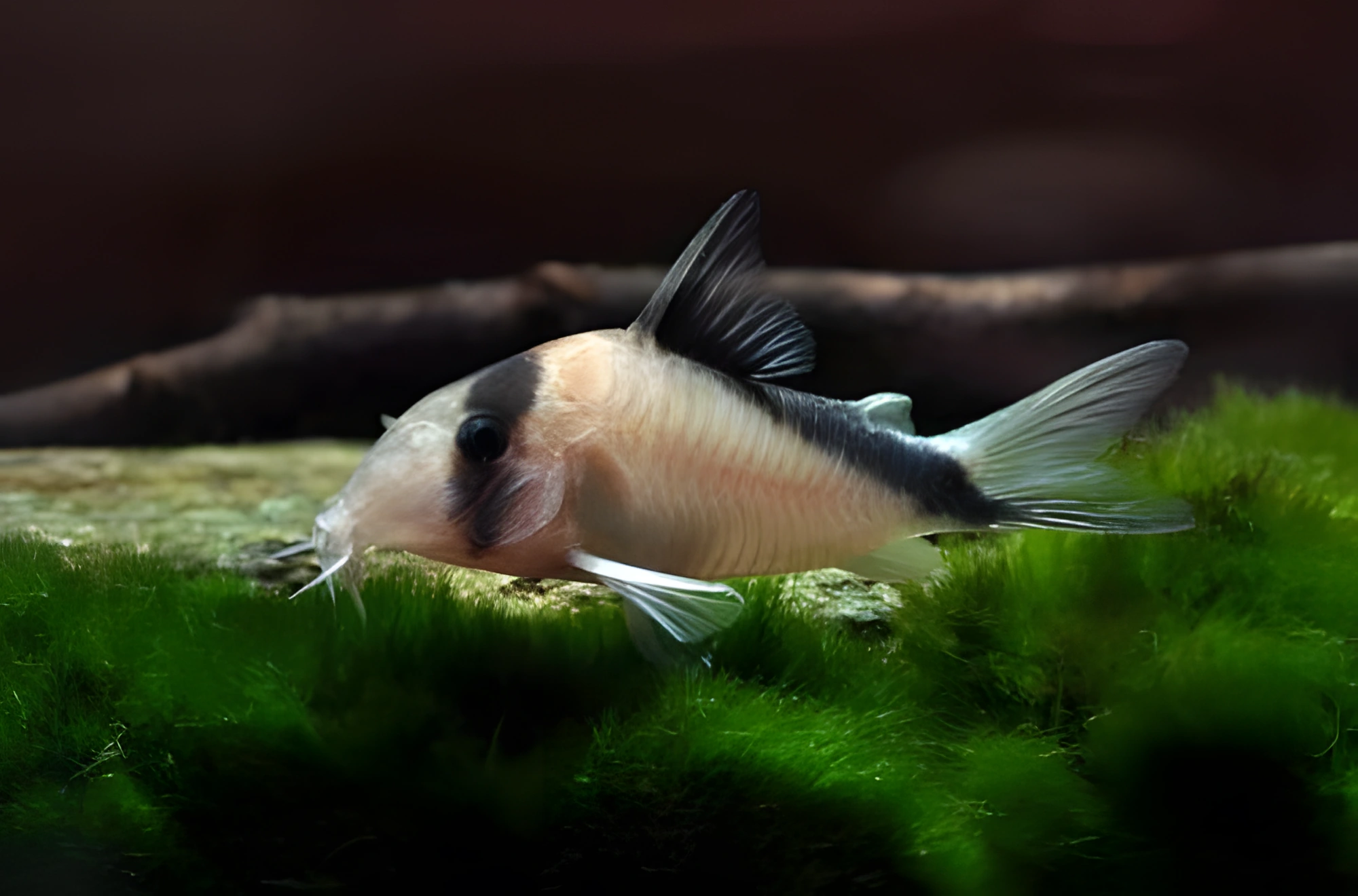
These catfishes are close relatives of Corydoras adolfoi and Corydoras burgessi, which is easily noticeable by the similarity in their coloration and pattern. Adult specimens reach a length of 5 to 6 cm. Their coloration is pale gray, sometimes with slight pinkish hues. A distinctive feature is a pattern of two black stripes: one runs along the back, from the dorsal fin to the tail, and the second is a diagonal dash on the head.
Habitat
The species inhabits South America, primarily in tributaries of the Rio Negro basin in Brazil. In nature, it lives in slow-flowing bodies of water where the bottom is covered with soft sand and a layer of organic detritus. The water in these areas is usually soft, slightly acidic or neutral, with low transparency due to suspended particles.
Behavior and Compatibility
A peaceful schooling fish, active mainly in the bottom layer. For their well-being, it is necessary to keep a group of five or more individuals. Compatible with most peaceful fish species inhabiting the middle and upper water layers. Intraspecific aggression is absent, but when kept alone, the fish become timid and less active.
Care and Maintenance
Over many generations of life in artificial aquarium conditions, Sands's Corydoras have adapted to an environment somewhat different from that of their wild relatives. This has made their keeping requirements quite simple. It is crucial to maintain water hydrochemical parameters within acceptable limits (pH and dGH), offer them a balanced diet, and avoid cohabitation with aggressive fish species. For a group of 4–6 individuals, the optimal tank volume starts from 80 L. The aquarium setup can be simple and is chosen at the aquarist's discretion or based on the needs of other inhabitants. For the catfishes themselves, a sandy or fine-gravel substrate and several hiding places are sufficient — these can be driftwood, dense plant thickets, or other natural/artificial decor. A powerful filter and regular aquarium cleaning, combined with weekly partial water changes, will help prevent the accumulation of organic waste and maintain stable biological balance. Feeding. These catfishes readily accept most popular foods — dry, frozen, and live. A varied diet is highly valued, for example, a combination of flakes and pellets with bloodworms, artemia, or daphnia. It is important that the food sinks. Overfeeding fish is unacceptable, as uneaten food can quickly lead to water pollution. Behavior and compatibility. Cory catfishes prefer to stay in groups of 4–6 individuals. They are very peaceful and get along well with other fish of similar size and temperament.
Diet
An omnivorous species, it accepts a variety of foods in the aquarium. The basis of the diet should be high-quality sinking tablets or granules for bottom-dwelling fish. It is recommended to supplement the menu with live or frozen foods, such as bloodworms, daphnia, or artemia. Regular feeding with quality products is key to the health and activity of the fish.
Breeding and Reproduction
Spawning is paired or communal, stimulated by replacing part of the water with fresher, cooler water, which mimics the onset of the rainy season. Eggs are laid on the substrate: plants, stones, or aquarium glass. After the process is complete, it is recommended to remove the parents to prevent them from eating the clutch. Fry begin to feed a few days after hatching; Artemia nauplii are suitable as a starter food.
Diseases
Fish are sensitive to water quality and substrate cleanliness. Under poor keeping conditions, damage to the delicate barbels is possible, which opens the way for bacterial infections. A clean substrate with a soft fraction and no sharp edges is the main prevention of diseases. When transporting and catching, avoid using fine-mesh nets, as the fish have sharp spines in their fins that can get tangled.
How to choose
When purchasing, choose active fish with clean skin, free of spots, sores, or fin damage. It is important to ensure that the barbels are intact, as their absence indicates improper keeping. Healthy corydoras should show interest in foraging in the substrate and stay in a school. Avoid specimens with sunken bellies or signs of lethargy.
Frequently asked questions
The essentials: size, tank volume, water parameters and care
How big does Sands's Corydoras get?
An adult reaches 5–6 cm in length. Plan the tank around the maximum size: the fish quickly outgrows a cramped setup.
What size aquarium does Sands's Corydoras need?
The minimum recommended volume is 80 L. A smaller tank speeds up nitrate build-up and raises stress levels.
What water parameters does Sands's Corydoras need?
Temperature 20–28 °C, pH 5–7, hardness 1–8 dGH. Stability matters more than exact values: sudden swings are harder on the fish than a small deviation from the ideal.
How long does Sands's Corydoras live?
Around 8 years when kept properly. Lifespan depends directly on tank volume, water quality and a varied diet.
Is Sands's Corydoras aggressive?
Temperament: peaceful (regular). Keep this in mind when choosing tank mates.
How many Sands's Corydoras should be kept together?
Recommended setup: small group (5–6 individuals). Ignoring this is a common cause of stress and disease.
What does Sands's Corydoras eat?
Diet type: sinking (any). Feed small portions that are finished within a couple of minutes — overfeeding does more harm than underfeeding.
What is the scientific name of Sands's Corydoras?
The scientific name of the species is Corydoras davidsandsi, family Armored or Callichthyid Catfishes (Callichthyidae).