Temperature22 – 26 °C
Natural range
- Pantanal area
- Bolivia area
- Brazil area
- Paraguay area
CorydorasConservation status: Least concern LC
Corydoras pantanalensis, scientifically known as Corydoras pantanalensis, belongs to the armored catfish family (Callichthyidae). It originates from South America, specifically the vast wetland area called the Pantanal, which spans the borders of Brazil, Bolivia, and Paraguay. Typically, these catfish inhabit still waters with clear water and abundant aquatic vegetation.
- Required aquarium volume
- 80 L
- Size in aquarium
- 8 cm
- Temperature
- 22 – 26 °C
- Temperament
- Peaceful (regular)
Parameters
Water pHNeutral (6.5) – Neutral (7.5)
Water dHVery soft (1) – Hard (12)
Water salinityno salt (freshwater)
Size in aquarium8 cm
Lifespan5 years
TemperamentPeaceful (regular)
Toward small fishnot a predator
Required aquarium volume80 L
Lightingbright
Substratesoft silted
Water flownone or stagnant (no flow)
FeedingSinking (any)
CareSmall group (3–4 individuals)
Description
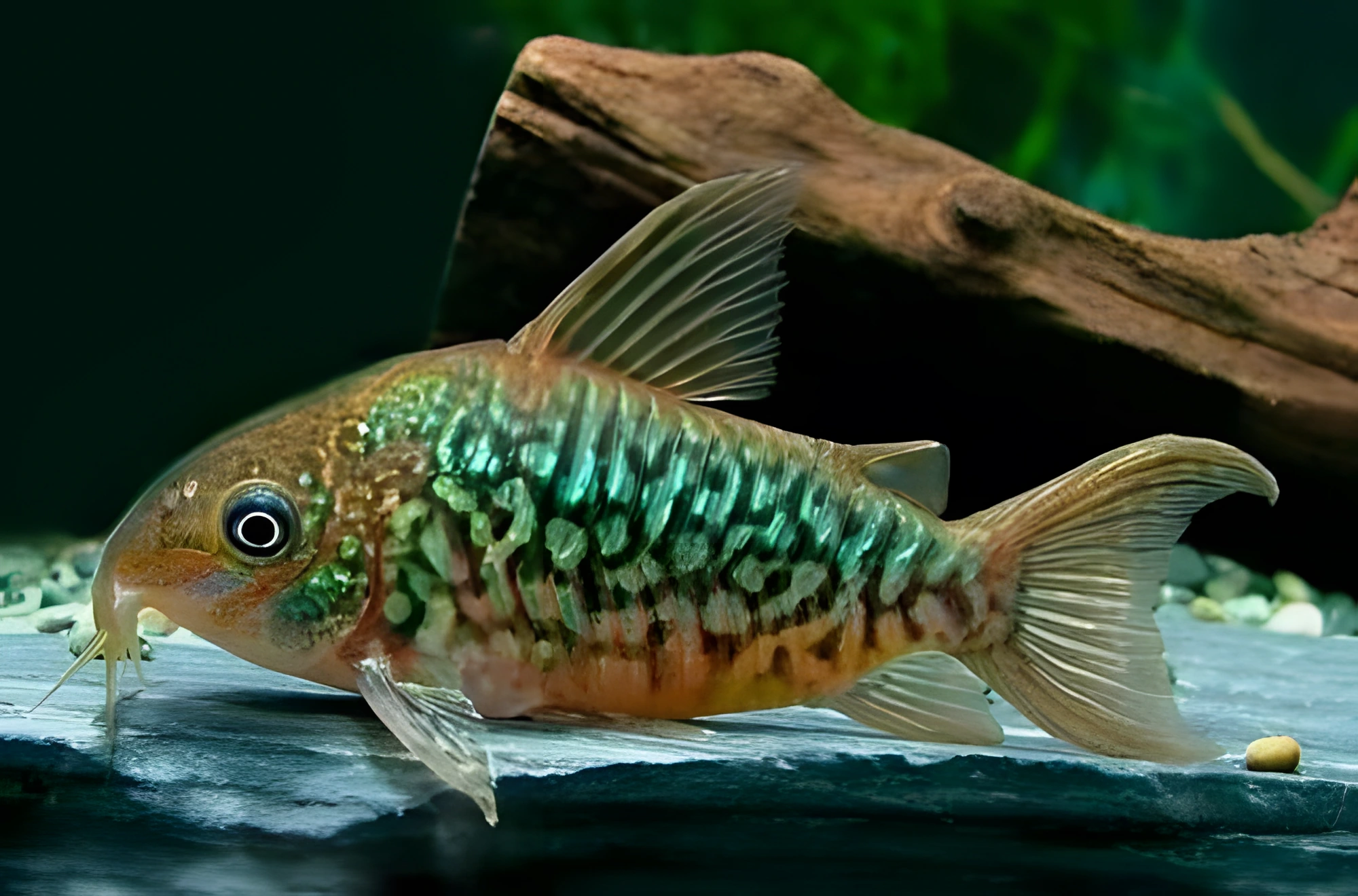
Adults of this species grow to approximately 8 cm in length. A distinctive feature of Corydoras is their characteristic body shape, covered with rows of bony plates, and their pectoral fins are equipped with sharp spines. It is almost impossible to distinguish males from females when they are young. The coloration is usually grey-brown, with a slight greenish tint. As they age, males develop a distinct reticulated pattern, and emerald green hues begin to dominate their coloration, while the females' coloration remains unchanged.
Habitat
This species inhabits South America, primarily in the Cussis and Las Petas river basins in Bolivia. In its natural habitat, it lives in small forest rivers and streams with dark water. It prefers areas with sandy or sandy-stony bottoms, where it leads a benthic lifestyle, moving in groups.
Behavior and Compatibility
This fish is distinguished by its peaceful and friendly nature, which allows it to coexist perfectly with other aquarium inhabitants of similar size and temperament. Corydoras prefer a schooling lifestyle, so it is recommended to keep them in groups of at least 3–4 individuals.
Care and Maintenance
For a group of 3–4 fish, the optimal aquarium volume starts from 80 liters. When decorating, preference should be given to soft substrates and densely planted aquatic vegetation, and the lighting should be bright. The most comfortable conditions for keeping them are warm, soft, slightly acidic water and the absence of noticeable internal current. In small aquariums, simple air-lift filters are recommended to maintain water purity. For long-term keeping, it is important to prevent the accumulation of organic waste, as contaminated substrate can lead to diseases and infection of the catfish's sensitive barbels. Regular aquarium maintenance is necessary, including weekly substrate cleaning and partial water changes with fresh water. Corydoras pantanalensis readily accept most types of food: dry, frozen, and fresh. Sinking foods such as flakes and granules are particularly suitable, as are live or frozen foods — bloodworms, daphnia, artemia, small gammarus, and other invertebrates.
Diet
These fish readily accept a variety of foods: dry, frozen, or fresh. Sinking food types such as flakes and granules are a good choice. Their diet can also include bloodworms, daphnia, artemia, small gammarus, and other invertebrates. It is highly probable that the breeding process of Corydoras pantanalensis is similar to that observed in other members of this genus. Environmental changes serve as a strong stimulus for spawning, which in natural conditions coincides with the onset of the rainy season. In an aquarium, this is achieved by gradually lowering the water temperature, increasing aeration to raise oxygen levels, and enriching the fish's diet with high-protein foods, such as bloodworms. It should be remembered that catfish do not exhibit parental care and are prone to eating their own offspring, so a separate breeding tank is recommended for reproduction. More detailed information on breeding Corydoras can be found in a separate article.
Breeding and Reproduction
It is assumed that the breeding of Corydoras pantanalensis is similar to that of other members of the genus. A key stimulus for spawning is a change in external environmental conditions, which in nature correspond to the beginning of the rainy season. In aquarium conditions, this can be simulated by gradually lowering the water temperature, increasing oxygen levels through additional aeration, and including protein-rich foods, such as bloodworms, in their diet. It should be noted that these catfish do not exhibit parental care and may eat their offspring, so a separate breeding tank is recommended for successful breeding. Detailed information on breeding Corydoras is available in specialized materials. Data sources: fishbase.de, planetcatfish.com
Diseases
Like other members of the family, this catfish is sensitive to water quality and substrate composition. The use of sharp or overly coarse substrate can lead to damage to their sensitive barbels, which opens the way for bacterial infections. The fish react extremely negatively to the addition of salt to the water, so salt baths should be avoided when treating diseases. It is important to maintain a clean bottom, as the accumulation of organic waste promotes the development of skin parasites and fin erosion.
How to choose
When selecting individuals in a store, attention should be paid to the activity of the fish and the integrity of their skin. Healthy corydoras should be active, without visible ulcers, spots, or damage on their bodies. Avoid purchasing fish with broken barbels, as their regeneration is difficult and often accompanied by infections. It is also worth assessing the plumpness of the individuals: a sunken abdomen may indicate chronic malnutrition or the presence of internal parasites.
Frequently asked questions
The essentials: size, tank volume, water parameters and care
How big does Corydoras pantanalensis get?
An adult reaches 8 cm in length. Plan the tank around the maximum size: the fish quickly outgrows a cramped setup.
What size aquarium does Corydoras pantanalensis need?
The minimum recommended volume is 80 L. A smaller tank speeds up nitrate build-up and raises stress levels.
What water parameters does Corydoras pantanalensis need?
Temperature 22–26 °C, pH 6.5–7.5, hardness 1–12 dGH. Stability matters more than exact values: sudden swings are harder on the fish than a small deviation from the ideal.
How long does Corydoras pantanalensis live?
Around 5 years when kept properly. Lifespan depends directly on tank volume, water quality and a varied diet.
Is Corydoras pantanalensis aggressive?
Temperament: peaceful (regular). Keep this in mind when choosing tank mates.
How many Corydoras pantanalensis should be kept together?
Recommended setup: small group (3–4 individuals). Ignoring this is a common cause of stress and disease.
What does Corydoras pantanalensis eat?
Diet type: sinking (any). Feed small portions that are finished within a couple of minutes — overfeeding does more harm than underfeeding.
What is the scientific name of Corydoras pantanalensis?
The scientific name of the species is Corydoras pantanalensis, family Armored Catfish (Callichthyidae).