Temperature20 – 26 °C
Natural range
- Oiapoque River basin
- French Guiana area
- Brazil area
CorydorasConservation status: Least concern LC
Corydoras condiscipulus, or the Condiscipulus Catfish (scientific name Corydoras condiscipulus), belongs to the family Callichthyidae, known as armored or callichthyid catfishes. The name itself comes from the Latin word condiscipulus, which translates to “classmate.” This unusual naming is due to the fact that this catfish is a natural variation of Corydoras condiscipulus, which was discovered several years ago and inhabits the same area. Thus, scientists have classified it as an already known species.
- Required aquarium volume
- 80 L
- Size in aquarium
- 5 – 6 cm
- Temperature
- 20 – 26 °C
- Temperament
- Peaceful (regular)
Parameters
Water pHSlightly acidic (6) – Neutral (7.5)
Water dHVery soft (2) – Hard (12)
Water salinityno salt (freshwater)
Size in aquarium5 – 6 cm
Lifespan10 years
TemperamentPeaceful (regular)
Toward small fishnot a predator
Required aquarium volume80 L
Lightingdimmed or moderate
Substratesandy (regular, light)
Water flowweak or moderate
FeedingSinking (any)
CareSmall group (5–6 individuals)
Description
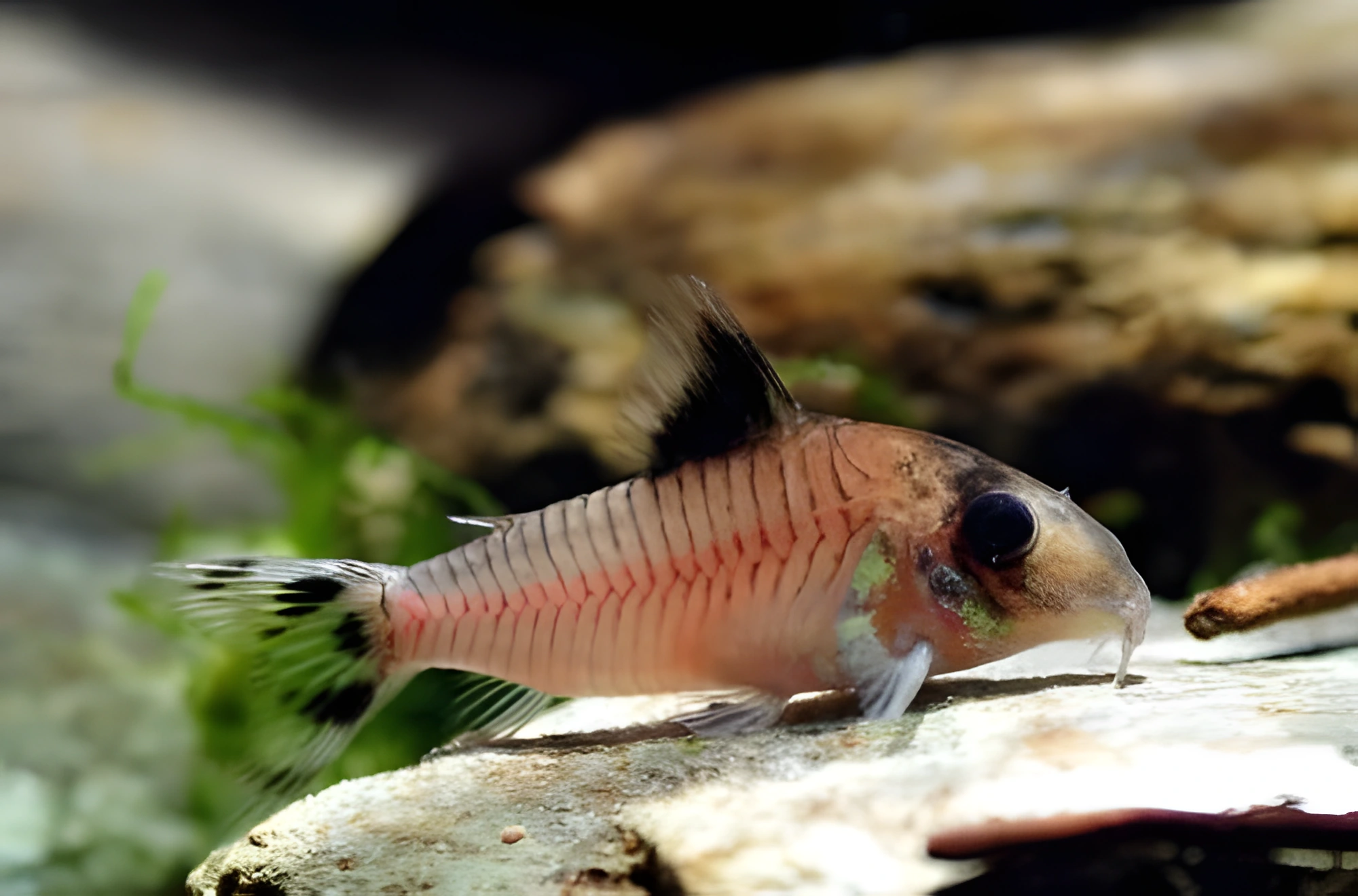
The external features of this catfish resemble the aforementioned Corydoras condiscipulus. However, it differs from it by a more slender and elongated body, as well as a more elongated snout. Its size is also somewhat different: adult specimens can reach a length of 5–6 cm. The coloration can vary depending on the lighting, ranging from delicate pink to light gray. A characteristic greenish tint is often noticeable on the head and gill covers, and the dorsal fin and tail have dark pigmentation.
Habitat
The species inhabits the Oyapock River basin, which flows through French Guiana and Brazil. It is found in various types of water bodies, including blackwater sections of rivers flowing through tropical forests, as well as in streams subject to tidal influence. In nature, it prefers the bottom layers of water.
Behavior and Compatibility
A peaceful schooling fish that is active during the day. Catfish prefer to stay in groups, so it is recommended to keep them in a community of six or more individuals. The species is compatible with most peaceful aquarium fish of a comparable size. In its natural environment, it is often found in association with the closely related species Corydoras oiapoquensis.
Care and Maintenance
This fish is considered unpretentious and hardy. For a group of 4–6 catfish, an aquarium of at least 80 L is recommended. When decorating the aquarium, the main attention is paid to the bottom layer. A sandy substrate and several shelters, such as driftwood or dense plant thickets, will be quite sufficient. An important condition for successful and long-term keeping is maintaining high water quality within the permissible range of temperatures and hydrochemical parameters. Water quality here means low concentrations of pollutants formed as a result of the decomposition of organic matter, including food residues, excrement, and plant fragments. Regular aquarium maintenance and the installation of necessary equipment are the key to the health of its inhabitants. As for nutrition, the diet is of considerable, and sometimes decisive, importance. Although the catfish is omnivorous, it should not be fed on a residual basis. It is necessary to offer high-quality dry, frozen, and/or live foods of appropriate size. As for behavior and compatibility, this fish is surprisingly peaceful and calm. It coexists perfectly with its conspecifics and with other species of comparable size. It prefers to stay in a group.
Diet
An omnivorous species, feeding on small invertebrates and organic detritus in nature. In aquarium conditions, it accepts high-quality dry foods in the form of sinking granules or tablets, specialized for catfish. The diet should be supplemented with frozen or live foods, such as bloodworms, daphnia, or artemia, to maintain health and activity.
Breeding and Reproduction
Breeding in captivity requires the creation of specific conditions that mimic the rainy season. Frequent large water changes with fresh water and a drop in temperature by several degrees serve as a stimulus for spawning. After spawning on the substrate, it is recommended to remove the parents to avoid egg consumption. Fry are fed with Artemia nauplii or specialized micro-foods.
Diseases
The species has strong immunity if kept under proper conditions. The main danger is the contamination of the substrate with organic waste, which can lead to damage to the sensitive barbels and the development of bacterial infections. It is important to maintain substrate cleanliness and good water filtration, avoiding sharp fluctuations in environmental parameters.
How to choose
When purchasing, choose active fish with clean skin without visible spots, sores, or fin damage. Important signs of health are intact, unbroken barbels and the absence of signs of emaciation. In the store, the fish should show interest in searching for food in the substrate and not appear lethargic or constantly hanging near the water surface.
Frequently asked questions
The essentials: size, tank volume, water parameters and care
How big does Corydoras condiscipulus get?
An adult reaches 5–6 cm in length. Plan the tank around the maximum size: the fish quickly outgrows a cramped setup.
What size aquarium does Corydoras condiscipulus need?
The minimum recommended volume is 80 L. A smaller tank speeds up nitrate build-up and raises stress levels.
What water parameters does Corydoras condiscipulus need?
Temperature 20–26 °C, pH 6–7.5, hardness 2–12 dGH. Stability matters more than exact values: sudden swings are harder on the fish than a small deviation from the ideal.
How long does Corydoras condiscipulus live?
Around 10 years when kept properly. Lifespan depends directly on tank volume, water quality and a varied diet.
Is Corydoras condiscipulus aggressive?
Temperament: peaceful (regular). Keep this in mind when choosing tank mates.
How many Corydoras condiscipulus should be kept together?
Recommended setup: small group (5–6 individuals). Ignoring this is a common cause of stress and disease.
What does Corydoras condiscipulus eat?
Diet type: sinking (any). Feed small portions that are finished within a couple of minutes — overfeeding does more harm than underfeeding.
What is the scientific name of Corydoras condiscipulus?
The scientific name of the species is Corydoras condiscipulus, family Armored or Callichthyid Catfish (Callichthyidae).