Temperature20 – 28 °C
Natural range
- Colombia area
CorydorasConservation status: Vulnerable VU
Corydoras metae, known among aquarists as Meta Corydoras, Bandit Cory, or “Black Mask” Catfish, is a member of the Callichthyidae family. This species is found exclusively in the Meta River basin, a left tributary of the Orinoco, flowing through Colombia and Venezuela. It can be found in backwaters, flooded forest areas, and slow-flowing sections, where it prefers to stay among fallen tree branches, roots, and dense riparian vegetation.
- Required aquarium volume
- 70 L
- Size in aquarium
- 5 cm
- Temperature
- 20 – 28 °C
- Temperament
- Peaceful (regular)
Parameters
Water pHSlightly acidic (6) – Neutral (7)
Water dHVery soft (1) – Hard (12)
Water salinityno salt (freshwater)
Size in aquarium5 cm
Lifespan5 years
TemperamentPeaceful (regular)
Toward small fishnot a predator
Required aquarium volume70 L
Lightingdimmed or moderate
Substratesandy (regular, light)
Water flowweak or moderate
FeedingSinking (any)
CareSmall group (5–6 individuals)
Description
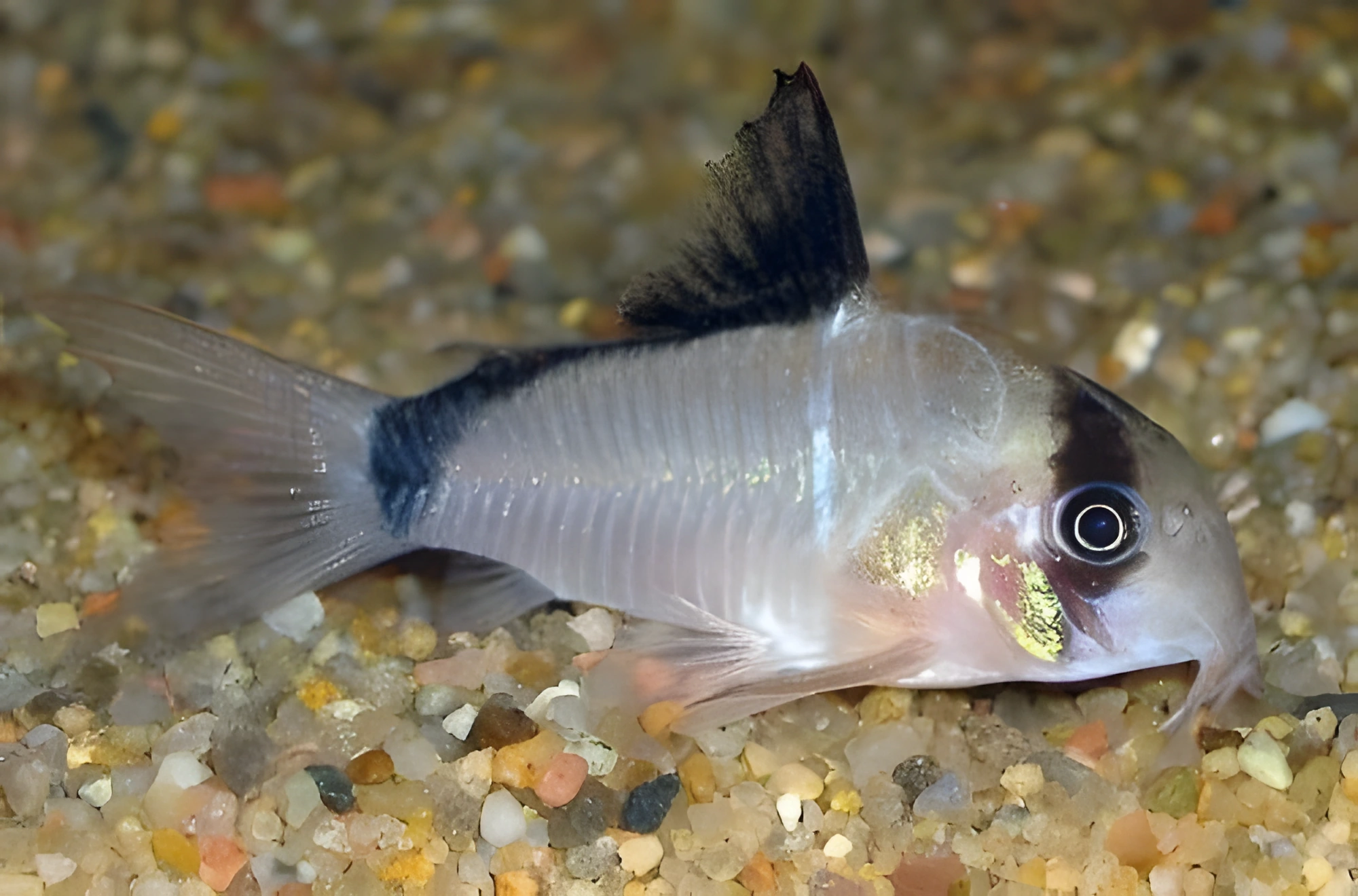
Adults of this species, reaching 4–5 cm in length, possess striking coloration. A characteristic feature of their body is a dark stripe running along the back from the dorsal fin to the tail. Additionally, there are dark streaks on the head that pass through the eyes, creating the impression of a “black mask” — this feature is reflected in one of its common names. Notably, similar mask-like coloration is found in many members of the genus Corydoras. The coloration and body pattern of this catfish are so similar to those of the Arched Corydoras that they are often mistaken for each other.
Habitat
Meta Corydoras is endemic to South America. In the wild, the species inhabits the Meta River basin in Colombia. The fish prefer areas with slow currents, silty or sandy substrates, and places with dense aquatic vegetation.
Behavior and Compatibility
This is a peaceful, schooling species, most active in the bottom layer of the water. For comfortable existence and to reduce stress levels, it is recommended to keep a group of six or more individuals. It coexists well with other non-aggressive fish species that occupy the middle and upper layers of the aquarium.
Care and Maintenance
For keeping a group of these fish, an aquarium of at least 60 liters is required. Soft sand should be used as substrate, as sharp gravel particles can damage the fish's sensitive barbels. The aquascape should include live plants, driftwood, and rocks, creating areas for shelter. It is important to maintain water purity, ensuring effective filtration and regular partial water changes.
Diet
This species is omnivorous. In the aquarium, the diet should be varied and consist of high-quality sinking foods: specialized tablets for bottom-dwelling fish, granules, or flakes. To maintain health, it is recommended to periodically supplement their diet with live or frozen foods, such as Artemia, Daphnia, or bloodworms.
Breeding and Reproduction
Breeding is relatively straightforward. Spawning occurs in pairs or groups and is stimulated by frequent water changes with cooler water. The female lays eggs on plant leaves, rocks, or the aquarium glass. After spawning, it is recommended to remove the parent fish to prevent them from eating the eggs. The incubation period lasts up to 5 days, after which the fry begin free swimming.
Diseases
This species has a strong immune system when kept under proper conditions. The main threat is deteriorating water quality, which can provoke bacterial infections and damage to their delicate barbels. For prevention, it is necessary to maintain a clean substrate and avoid overfeeding, which leads to the accumulation of organic waste.
How to choose
When purchasing, choose active fish with clean skin and undamaged fins. It is important to check the condition of their barbels—they should be intact, without signs of erosion. It is not recommended to acquire individuals showing signs of emaciation, lethargic behavior, or visible spots on their bodies.
Frequently asked questions
The essentials: size, tank volume, water parameters and care
How big does Meta Corydoras get?
An adult reaches 5 cm in length. Plan the tank around the maximum size: the fish quickly outgrows a cramped setup.
What size aquarium does Meta Corydoras need?
The minimum recommended volume is 70 L. A smaller tank speeds up nitrate build-up and raises stress levels.
What water parameters does Meta Corydoras need?
Temperature 20–28 °C, pH 6–7, hardness 1–12 dGH. Stability matters more than exact values: sudden swings are harder on the fish than a small deviation from the ideal.
How long does Meta Corydoras live?
Around 5 years when kept properly. Lifespan depends directly on tank volume, water quality and a varied diet.
Is Meta Corydoras aggressive?
Temperament: peaceful (regular). Keep this in mind when choosing tank mates.
How many Meta Corydoras should be kept together?
Recommended setup: small group (5–6 individuals). Ignoring this is a common cause of stress and disease.
What does Meta Corydoras eat?
Diet type: sinking (any). Feed small portions that are finished within a couple of minutes — overfeeding does more harm than underfeeding.
What is the scientific name of Meta Corydoras?
The scientific name of the species is Corydoras metae, family Armored Catfish (Callichthyidae).