Temperature20 – 26 °C
Natural range
- Pastaza River basin
- Peru area
- Ecuador area
CorydorasConservation status: Least concern LC
Cope's Corydoras, scientifically known as Corydoras copei, belongs to the extensive armored catfish family (Callichthyidae). This species was named in honor of the American ichthyologist Edward Drinker Cope, who lived from 1840 to 1897. This catfish is rarely available for sale. It should be noted that individuals offered on the aquarium market are often wild-caught from natural waters, which imposes certain conditions on their subsequent keeping.
- Required aquarium volume
- 70 L
- Size in aquarium
- 4 – 5 cm
- Temperature
- 20 – 26 °C
- Temperament
- Peaceful (regular)
Parameters
Water pHSlightly acidic (5) – Neutral (7)
Water dHVery soft (2) – Medium hardness (10)
Water salinityno salt (freshwater)
Size in aquarium4 – 5 cm
Lifespan4 years
TemperamentPeaceful (regular)
Toward small fishnot a predator
Required aquarium volume70 L
Lightingdimmed or moderate
Substratesandy (regular, light)
Water flowweak or moderate
FeedingSinking (any)
CareSmall group (5–6 individuals)
Description
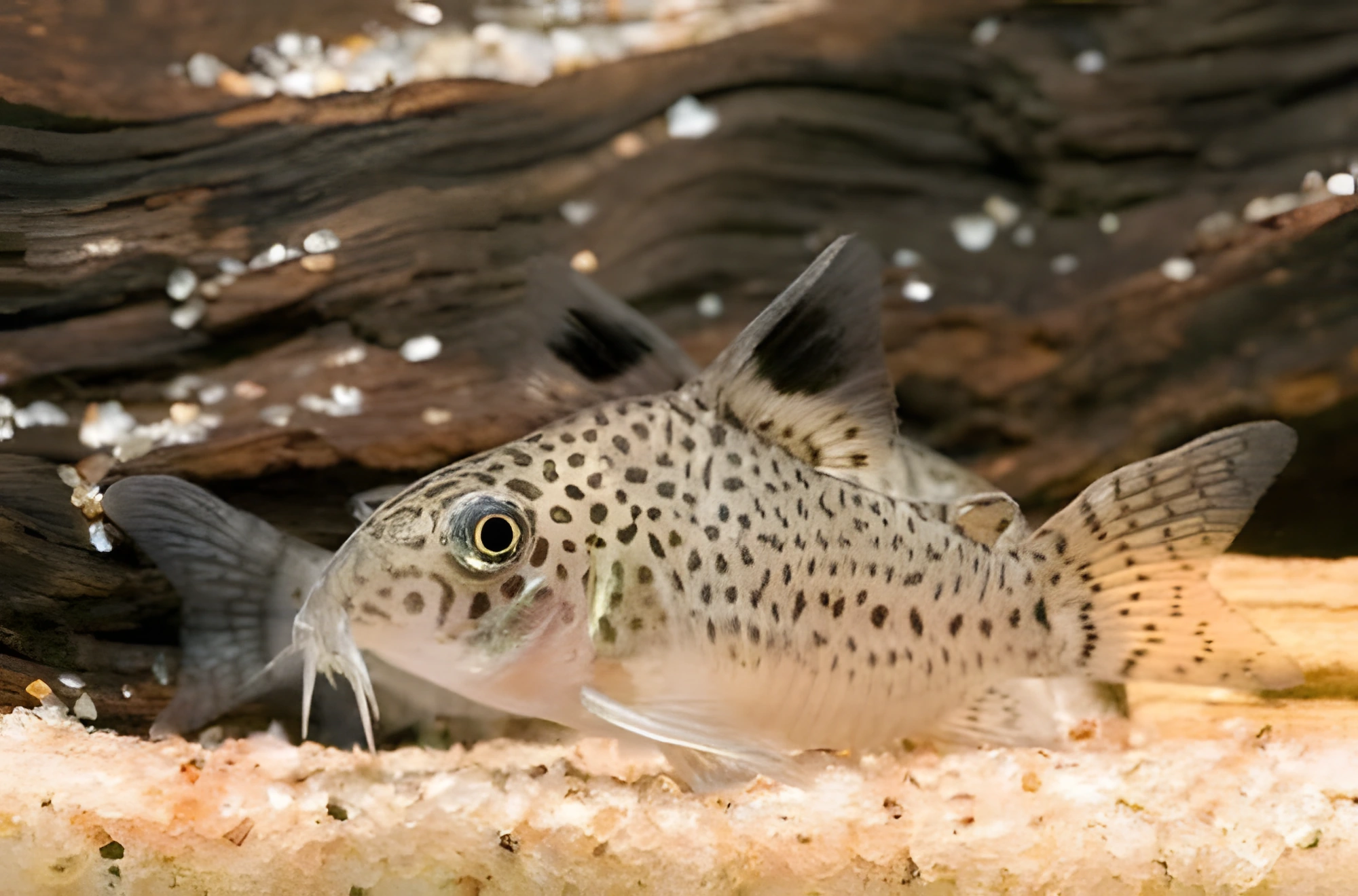
Adult fish typically reach 4 to 5 cm in length. Their bodies are adorned with numerous randomly distributed black speckles, which are particularly noticeable against a general silvery or light gray background. This spotted pattern extends to the caudal and dorsal fins. The dorsal fin also features a large dark spot, which is a characteristic trait of this species.
Habitat
The species inhabits the river basins of Peru and Ecuador, specifically in the Pastaza River system. In nature, it prefers bodies of water with slow currents, dense vegetation, and soft substrate, where the fish can naturally move along the bottom in search of food. The water in its habitat is usually characterized by moderate acidity and softness.
Behavior and Compatibility
This is a peaceful schooling species that spends most of its time in the lower water column. Cope's Corydoras are primarily active during twilight hours; however, when kept in a group of five or more individuals, the fish become bolder and exhibit natural behavior throughout the day. They coexist well with other non-aggressive fish species of suitable size.
Care and Maintenance
Most Corydoras species are relatively easy to keep and can successfully adapt to various conditions. However, if Corydoras copei fish were caught in their natural habitat and then exported for sale, it will be necessary to reproduce their natural living conditions as accurately as possible. Given the rarity of this species, one often deals with wild-caught specimens. Before acquiring such fish, it is crucial to clarify with the consultant what specific conditions they require for comfortable existence. Typically, wild specimens need soft, slightly acidic, flowing water with minimal organic pollutants. The presence of dissolved tannins may also be required, which can be sourced from special essences or certain tree leaves; more details can be found in the article “Which Tree Leaves Can Be Used in an Aquarium.” The aquarium setup should be bottom-oriented: it is recommended to use a soft sandy substrate and create shelters from driftwood or dense plant thickets. Regarding feeding, wild fish initially prefer live foods, but most often, by the time of sale, they can already be accustomed to alternative products such as dry flakes, granules, tablets, as well as frozen brine shrimp, daphnia, and bloodworms. These fish are peaceful and sociable, feeling best in a group of 4–6 individuals. They are well compatible with many other non-aggressive freshwater species of comparable size.
Diet
An omnivorous species, feeding on small invertebrates and organic detritus in nature. In the aquarium, it is recommended to use high-quality sinking foods designed for bottom-dwelling fish, such as tablets or granules. The diet should be supplemented with frozen or live foods, such as brine shrimp or bloodworms, to maintain health and activity.
Breeding and Reproduction
Breeding in captivity is not well studied, but like other members of the genus, this catfish is an egg-laying species. Spawning is stimulated by imitating the rainy season through partial water changes with cooler, fresh water. For successful breeding, it is recommended to use a group of fish and provide fine-leaved plants or special spawning substrates.
Diseases
The species is sensitive to water quality and substrate condition. The main threat to health is injury to sensitive barbels when using sharp or unsuitable substrate, which can lead to secondary bacterial infections. Prevention includes using soft sand, regular siphoning of the bottom, and maintaining stable water parameters without high levels of nitrogenous compounds.
How to choose
When choosing, attention should be paid to the activity of the fish, the integrity of their fins, and the absence of body damage. Healthy specimens should have clean, unbroken barbels, which is an indicator of proper care in the store. Avoid purchasing fish with signs of lethargy, redness on the belly, or visible growths on the body.
Frequently asked questions
The essentials: size, tank volume, water parameters and care
How big does Cope's Corydoras get?
An adult reaches 4–5 cm in length. Plan the tank around the maximum size: the fish quickly outgrows a cramped setup.
What size aquarium does Cope's Corydoras need?
The minimum recommended volume is 70 L. A smaller tank speeds up nitrate build-up and raises stress levels.
What water parameters does Cope's Corydoras need?
Temperature 20–26 °C, pH 5–7, hardness 2–10 dGH. Stability matters more than exact values: sudden swings are harder on the fish than a small deviation from the ideal.
How long does Cope's Corydoras live?
Around 4 years when kept properly. Lifespan depends directly on tank volume, water quality and a varied diet.
Is Cope's Corydoras aggressive?
Temperament: peaceful (regular). Keep this in mind when choosing tank mates.
How many Cope's Corydoras should be kept together?
Recommended setup: small group (5–6 individuals). Ignoring this is a common cause of stress and disease.
What does Cope's Corydoras eat?
Diet type: sinking (any). Feed small portions that are finished within a couple of minutes — overfeeding does more harm than underfeeding.
What is the scientific name of Cope's Corydoras?
The scientific name of the species is Corydoras copei, family Armored or Callichthyid Catfish (Callichthyidae).