Temperature20 – 26 °C
Natural range
- Western Venezuela area
- Venezuela area
CorydorasConservation status: Near threatened NT
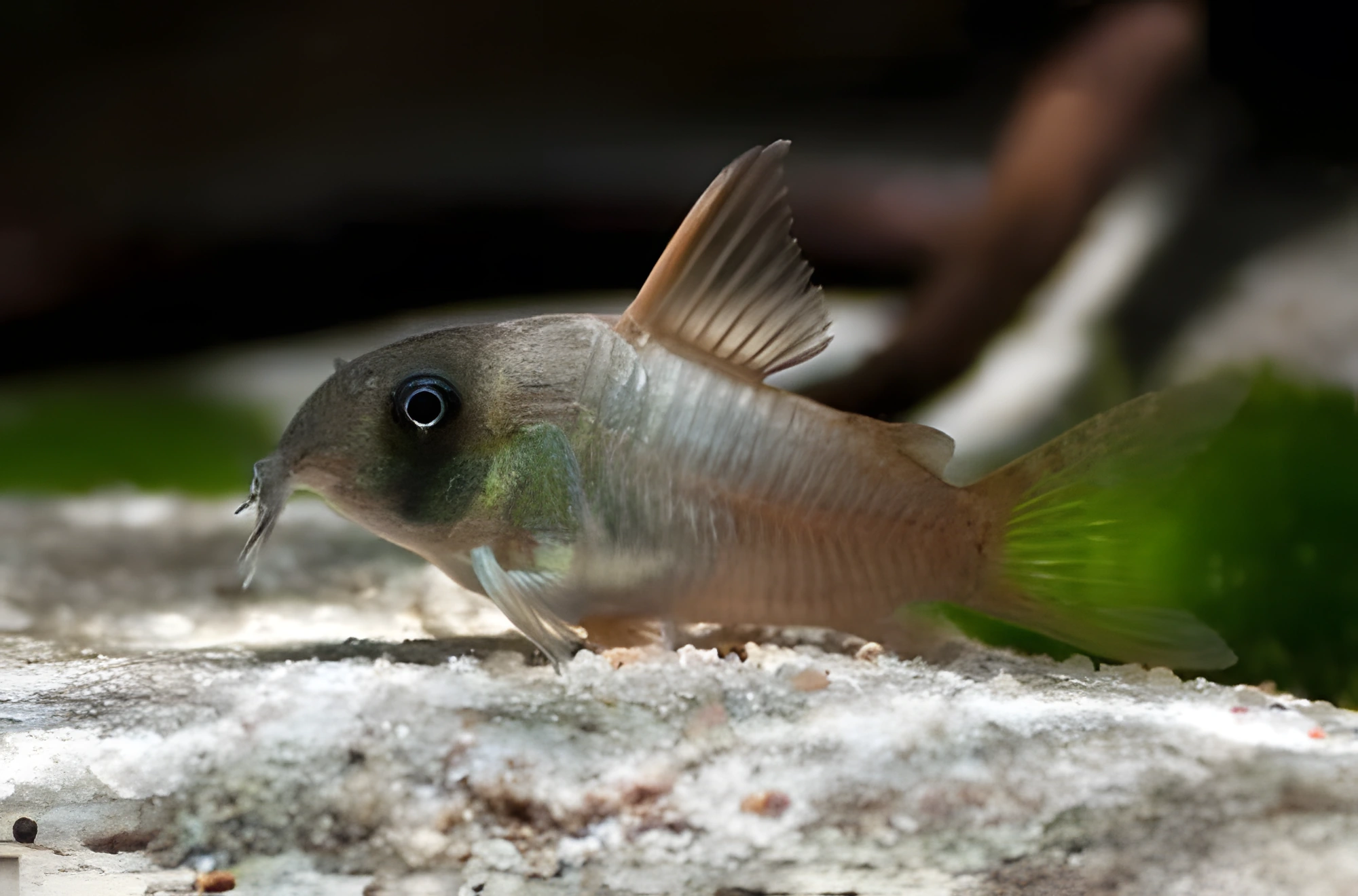
Corydoras concolor, also known as the Concolor Cory, belongs to the family Callichthyidae. Its scientific name is Corydoras concolor. This name accurately reflects a key feature of this fish: its coloration is predominantly a uniform gray. The natural habitat of this catfish is in South America, in the Orinoco River basin, where its range is limited to the western provinces of Venezuela.
- Required aquarium volume
- 70 L
- Size in aquarium
- 5 – 6 cm
- Temperature
- 20 – 26 °C
- Temperament
- Peaceful (regular)
Parameters
Water pHSlightly acidic (5.5) – Neutral (7)
Water dHVery soft (1) – Medium hardness (10)
Water salinityno salt (freshwater)
Size in aquarium5 – 6 cm
Lifespan8 years
TemperamentPeaceful (regular)
Toward small fishnot a predator
Required aquarium volume70 L
Lightingweak (low)
Substratesandy (regular, light)
Water flowweak or moderate
FeedingSinking (any)
CareSmall group (5–6 individuals)
Description
Adults of this fish can reach a length of 5–6 cm. As mentioned, its main color is gray, but the fins and tail may have a beautiful bronze tint. Interestingly, greenish reflections can often be seen on the body, especially immediately behind the gill cover. Under certain lighting, a dark stripe sometimes appears on the head, running diagonally through the eye.
Habitat
The species' range is restricted to the Orinoco River basin in western Venezuela [seriouslyfish.com]. It inhabits rivers and streams with soft water, preferring areas with sandy or silty bottoms where it can exhibit natural foraging behavior [fishintankhouse.space].
Behavior and Compatibility
A peaceful schooling fish, active both day and night. To ensure comfort and reduce stress, a group of at least 4–6 individuals should be kept [seriouslyfish.com]. It is compatible with most non-aggressive fish of comparable size and does not display territorial aggression [fishintankhouse.space].
Care and Maintenance
The Corydoras concolor catfish is quite undemanding and easy to keep, provided certain important conditions are met. These conditions include maintaining clean water with low levels of pollutants, ensuring a balanced and high-quality diet, and the absence of aggressive tank mates. These fish prefer to stay in groups, so a small school of 4–6 individuals will require an aquarium of at least 70 liters. The aquarium setup can be chosen freely, based on the aquarist's personal preferences or considering the needs of other inhabitants. It is important to pay special attention to the bottom layer: coarse sand is recommended as a substrate, or fine-grained gravel, which will also be good. To create a cozy environment, several hiding places should be provided, which can be formed from driftwood, dense plant thickets, or other natural or artificial decorative elements. To maintain high water quality, the aquarium equipment, especially the filtration system, must operate continuously. Regular aquarium maintenance is also extremely important: this includes weekly partial water changes with fresh water and prompt removal of organic residues, such as uneaten food and excrement. As for feeding, Corydoras concolor is an omnivorous species that readily accepts most dry foods, whether flakes or granules. Live or frozen foods, such as bloodworms, daphnia, and brine shrimp, can also be included in its diet. Since these catfishes spend most of their time at the bottom, sinking foods are preferable. The behavior of this species is characterized by a peaceful and calm disposition, allowing it to get along well with both its own kind and other fish species of comparable size.
Diet
An omnivorous fish, feeding on small invertebrates and organic detritus in nature. In the aquarium, it accepts high-quality sinking dry foods, as well as frozen and live products such as bloodworms or brine shrimp [seriouslyfish.com]. They should not be relied upon as scavengers to clean up leftover food from other fish; a complete diet is necessary [seriouslyfish.com].
Breeding and Reproduction
Spawning is in pairs, with eggs laid on the substrate, such as aquarium glass or fine-leaved plants [seriouslyfish.com]. The female holds 2–4 eggs between her pelvic fins for fertilization by the male, after which she transfers them to the chosen location [fishbase.se]. Fry hatch after 3–4 days and, after absorbing their yolk sac, begin to feed on small live food [seriouslyfish.com].
Diseases
The species generally has robust health if water cleanliness is maintained. It is sensitive to high organic content and sudden changes in environmental parameters. It is important to avoid injuring their sensitive barbels by using a soft substrate, as damage to them can lead to bacterial infections [seriouslyfish.com].
How to choose
When purchasing, choose active fish with clean fins and no external skin damage. Particular attention should be paid to the condition of the barbels: they should be intact and show no signs of erosion. Avoid individuals with sunken bellies or signs of apathy, as this may indicate emaciation or hidden diseases [fishintankhouse.space].
Frequently asked questions
The essentials: size, tank volume, water parameters and care
How big does Corydoras concolor get?
An adult reaches 5–6 cm in length. Plan the tank around the maximum size: the fish quickly outgrows a cramped setup.
What size aquarium does Corydoras concolor need?
The minimum recommended volume is 70 L. A smaller tank speeds up nitrate build-up and raises stress levels.
What water parameters does Corydoras concolor need?
Temperature 20–26 °C, pH 5.5–7, hardness 1–10 dGH. Stability matters more than exact values: sudden swings are harder on the fish than a small deviation from the ideal.
How long does Corydoras concolor live?
Around 8 years when kept properly. Lifespan depends directly on tank volume, water quality and a varied diet.
Is Corydoras concolor aggressive?
Temperament: peaceful (regular). Keep this in mind when choosing tank mates.
How many Corydoras concolor should be kept together?
Recommended setup: small group (5–6 individuals). Ignoring this is a common cause of stress and disease.
What does Corydoras concolor eat?
Diet type: sinking (any). Feed small portions that are finished within a couple of minutes — overfeeding does more harm than underfeeding.
What is the scientific name of Corydoras concolor?
The scientific name of the species is Corydoras concolor, family Callichthyidae.