Temperature20 – 26 °C
Natural range
- Rio Negro basin
- Isana River
- Brazil area
- Colombia area
CorydorasConservation status: Data deficient DD
Corydoras incolicana, known by its scientific name Corydoras incolicana, is a species of armored catfish from the family Callichthyidae. This fish was named after its initial discovery location — the basin of the Icana River, situated in northern Brazil, South America. Nevertheless, the natural habitat of this catfish extends beyond just the Icana, also encompassing the upper reaches of the Rio Negro (of which the Icana is a tributary) across vast territories of northern Brazil and in some southeastern departments of Colombia.
- Required aquarium volume
- 100 L
- Size in aquarium
- 7 – 8 cm
- Temperature
- 20 – 26 °C
- Temperament
- Peaceful (regular)
Parameters
Water pHAcidic (4) – Neutral (7)
Water dHVery soft (1) – Medium hardness (10)
Water salinityno salt (freshwater)
Size in aquarium7 – 8 cm
Lifespan8 years
TemperamentPeaceful (regular)
Toward small fishnot a predator
Required aquarium volume100 L
Lightingweak (low)
Substratesandy (regular, light)
Water flowweak or moderate
FeedingSinking (any)
CareSmall group (5–6 individuals)
Description
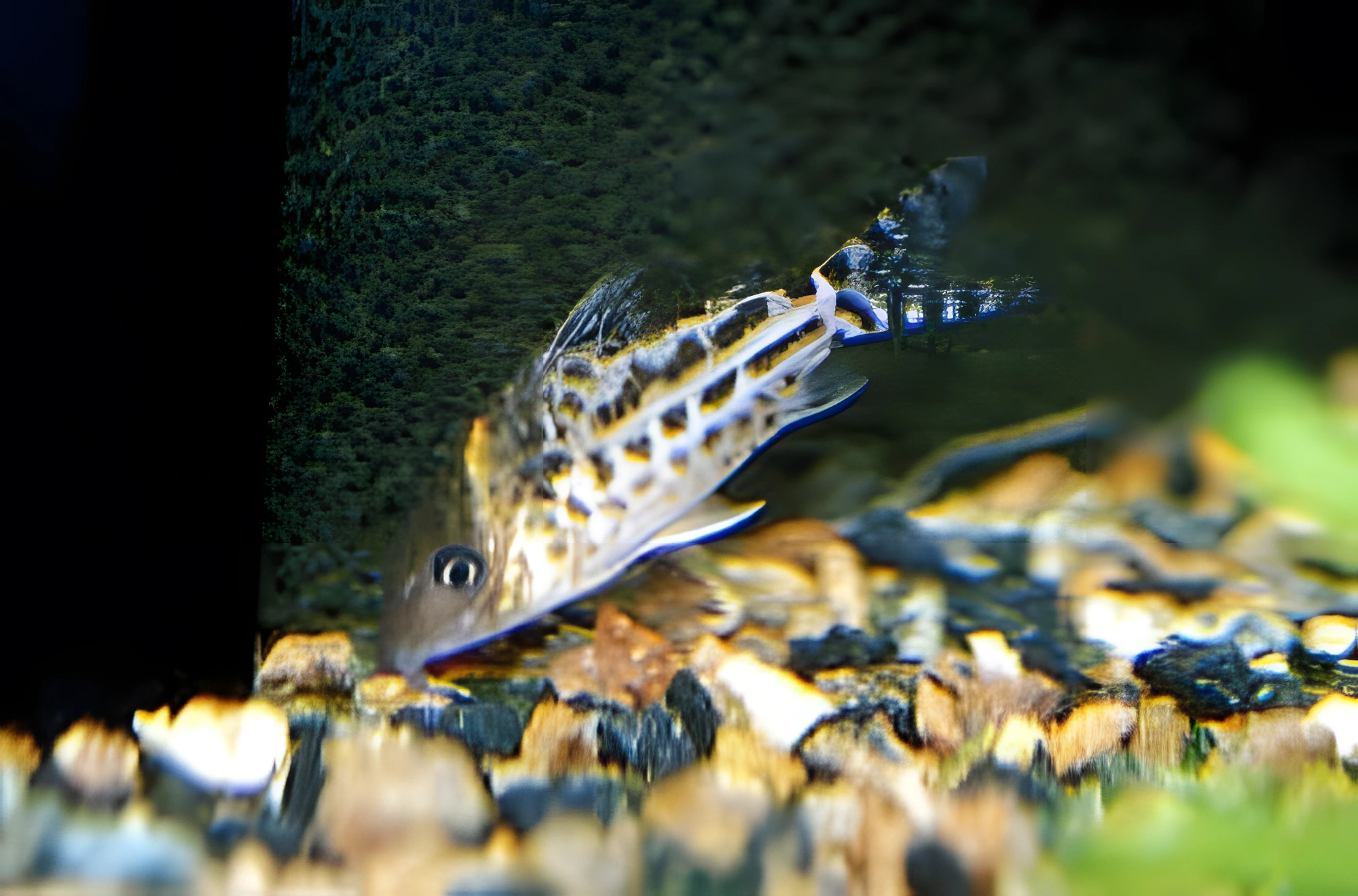
Among Corydoras, this species stands out for its rather impressive size, reaching approximately 8 cm in length. The body pattern of the fish can vary significantly depending on their specific region of origin. Dark spots are arranged on a light background, which can merge or remain separate, forming dark stripes closer to the caudal fin. At the same time, the pattern on the head and the anterior part of the body is more stable, characterized by a distinct black stripe running through the eyes.
Habitat
The species inhabits the Rio Negro basin, primarily the Isana River on the border of Brazil and Colombia [seriouslyfish.com]. In nature, it populates areas with "black water," rich in organic compounds, where the water has a characteristic tea-like tint, extremely low hardness, and acidity in the pH range of 4.0–6.0 [seriouslyfish.com].
Behavior and Compatibility
A peaceful and schooling species, requiring maintenance in a group of 4–6 individuals or more [seriouslyfish.com]. The fish spend most of their time in the bottom layer, actively searching for food [aquaportail.com]. They are compatible with small characins and other peaceful species inhabiting similar conditions [seriouslyfish.com].
Care and Maintenance
Catfish successfully acclimated and bred in aquarium conditions generally do not impose excessive demands on their keeping conditions. Aquarium care will be similar in principle to that applied to most other freshwater fish species. Among the main tasks are ensuring consistently clean and warm water with optimal pH and dGH parameters, as well as regular (weekly) partial water changes with fresh water. It is also important to timely remove organic waste and perform preventive equipment maintenance. Wild-caught individuals show greater sensitivity to water quality and hydrochemical composition; for them, parameters should be as close as possible to the conditions of the Rio Negro. However, it should be noted that the likelihood of finding such fish for sale in the European market is low. Corydoras incolicana is also not demanding regarding aquarium decor. To create a comfortable environment, it is sufficient to provide a soft sandy substrate and several hiding places. Natural driftwood, dense thickets of aquatic plants, rock formations, or specialized decorative elements designed for aquarium use can serve as such shelters. Feeding. These fish readily accept most common types of food, whether live, frozen, or dry. It is important to choose high-quality sinking foods from reputable manufacturers to ensure the catfish do not have to rise to the surface to feed. Behavioral characteristics and compatibility. A distinctive feature is their peaceful and rather modest disposition, which is evident in interactions with their conspecifics as well as with fish of other species. They get along well with many non-aggressive and non-territorial aquarium inhabitants of comparable size.
Diet
An omnivorous species, it feeds on small benthic invertebrates and organic detritus in nature [seriouslyfish.com]. In the aquarium, high-quality sinking dry foods should be offered, as well as frozen or live foods such as bloodworms or tubifex [seriouslyfish.com]. It is not recommended to rely solely on leftover food from other fish [seriouslyfish.com].
Breeding and Reproduction
Breeding is typical for most members of the genus [seriouslyfish.com]. Abundant feeding and a significant water change with cooler water serve as a stimulus [seriouslyfish.com]. Eggs are laid on the substrate, glass, or fine-leaved plants [seriouslyfish.com]. Fry require high water quality and starter foods such as Artemia nauplii or microworms [seriouslyfish.com].
Diseases
The species is sensitive to water quality and the accumulation of organic matter in the substrate [seriouslyfish.com]. If keeping conditions are violated, bacterial infections and fin rot are possible. An important aspect of prevention is the use of fine sand as a substrate, which reduces the risk of damage to sensitive barbels and the development of infections [seriouslyfish.com].
How to choose
When purchasing, active fish with clean fins and no visible body damage should be selected [seriouslyfish.com]. It is important to ensure that the fish's barbels are intact and show no signs of erosion. Due to similarities with other Corydoras species, it is recommended to acquire specimens from reputable suppliers, as accurate species identification can be difficult [seriouslyfish.com].
Frequently asked questions
The essentials: size, tank volume, water parameters and care
How big does Corydoras incolicana get?
An adult reaches 7–8 cm in length. Plan the tank around the maximum size: the fish quickly outgrows a cramped setup.
What size aquarium does Corydoras incolicana need?
The minimum recommended volume is 100 L. A smaller tank speeds up nitrate build-up and raises stress levels.
What water parameters does Corydoras incolicana need?
Temperature 20–26 °C, pH 4–7, hardness 1–10 dGH. Stability matters more than exact values: sudden swings are harder on the fish than a small deviation from the ideal.
How long does Corydoras incolicana live?
Around 8 years when kept properly. Lifespan depends directly on tank volume, water quality and a varied diet.
Is Corydoras incolicana aggressive?
Temperament: peaceful (regular). Keep this in mind when choosing tank mates.
How many Corydoras incolicana should be kept together?
Recommended setup: small group (5–6 individuals). Ignoring this is a common cause of stress and disease.
What does Corydoras incolicana eat?
Diet type: sinking (any). Feed small portions that are finished within a couple of minutes — overfeeding does more harm than underfeeding.
What is the scientific name of Corydoras incolicana?
The scientific name of the species is Corydoras incolicana, family Armored Catfish (Callichthyidae).