Temperature20 – 26 °C
Natural range
- Rio Negro basin
- Upper Amazon basin
- Brazil area
- Venezuela area
CorydorasConservation status: Least concern LC
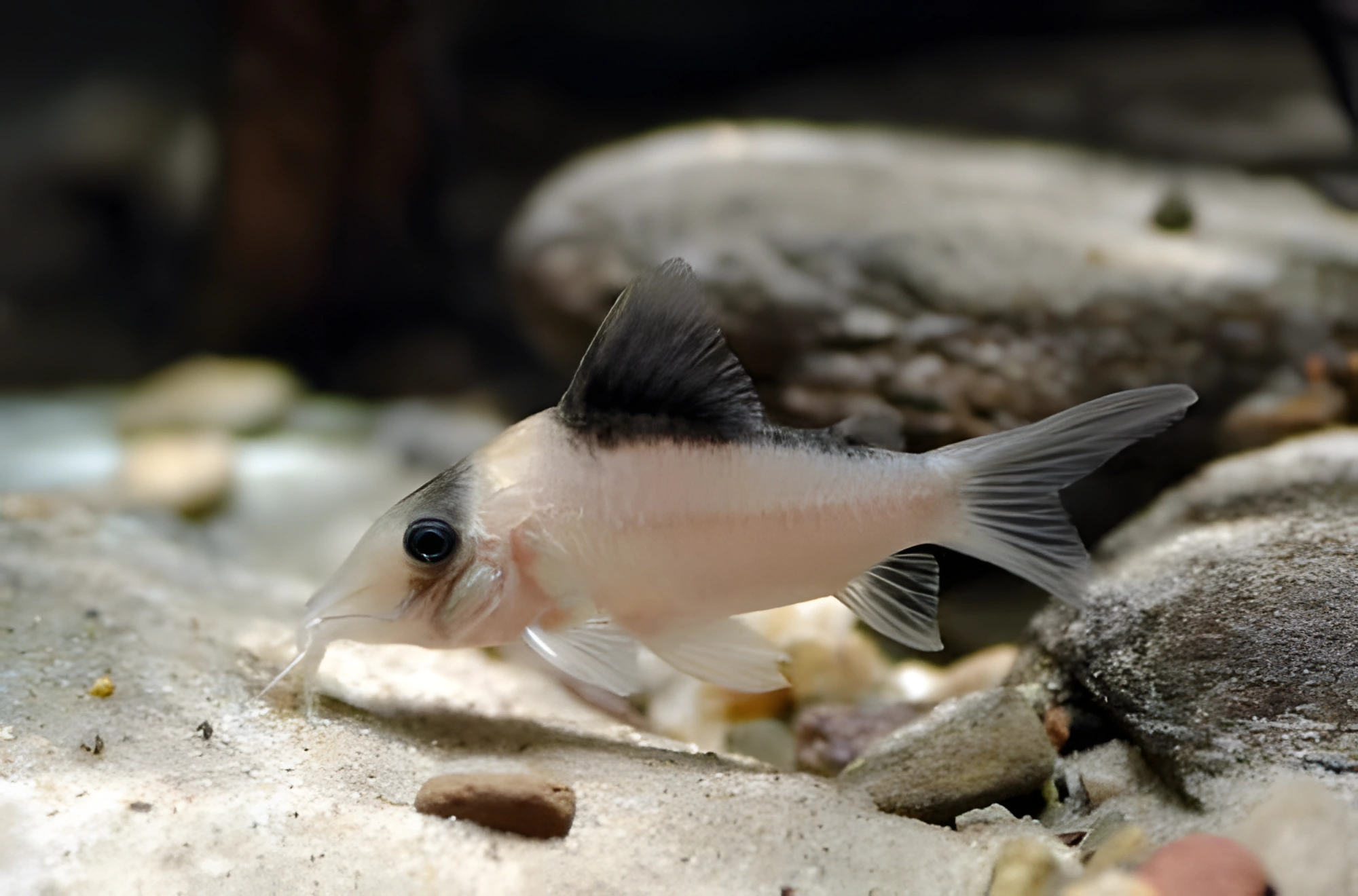
Corydoras imitator, or the Imitator Cory catfish, belongs to the family Callichthyidae (Armored or Callichthyid catfishes) and bears the scientific name Corydoras imitator. Its name contains the word "imitator," which reflects the striking resemblance of the fish to Corydoras adolfoi in appearance.
- Required aquarium volume
- 80 L
- Size in aquarium
- 5 – 6 cm
- Temperature
- 20 – 26 °C
- Temperament
- Peaceful (regular)
Parameters
Water pHAcidic (4) – Neutral (7)
Water dHVery soft (1) – Soft (5)
Water salinityno salt (freshwater)
Size in aquarium5 – 6 cm
Lifespan5 years
TemperamentPeaceful (regular)
Toward small fishnot a predator
Required aquarium volume80 L
Lightingdimmed or moderate
Substratesandy (regular, light)
Water flowweak or moderate
FeedingSinking (any)
CareSmall group (5–6 individuals)
Description
As mentioned, this catfish shows an external resemblance to Corydoras adolfoi, as well as several similar species such as Corydoras sandsi, Corydoras duplicareus, and Corydoras burgessi. Despite almost complete identity, these species differ only in minor details. Adult specimens reach a length of 5–6 cm. Their coloration has a silvery hue with a characteristic pattern of black streaks running along the head and back. Among the distinctive features are an elongated snout and a black dorsal fin. In some cases, the dark pigmentation of the dorsal fin may be incomplete.
Habitat
Corydoras imitator inhabits the Rio Negro and upper Amazon River basins in Brazil and Venezuela. In nature, this species prefers "blackwater" biotopes with high acidity, low hardness, and slow currents. The fish stay in the bottom layers, often among fallen leaves, snags, and on sandy areas of the bottom.
Behavior and Compatibility
This is a peaceful and schooling species that exhibits social activity and feels best in a group of 5–6 individuals or more. Corydoras are bottom-dwellers, actively exploring the substrate in search of food. They are compatible with most non-aggressive fish inhabiting the middle and upper water layers, but they should not be kept with active or territorial species that might injure them. It is important to note that these catfish have sharp spines in their fins, which serve as a defense mechanism and can injure human skin if handled carelessly.
Care and Maintenance
Corydoras imitator, like other Cory catfish, is relatively easy to keep. It requires very soft, acidic water and a clean substrate of sand or fine gravel. The main focus should be on water preparation and maintaining hydrochemical parameters within acceptable pH and dGH limits, as well as regular aquarium maintenance. Such maintenance includes prophylactic servicing and cleaning of equipment, weekly partial water changes with fresh water, and removal of organic waste such as excrement, food remnants, or dead plant parts. The optimal aquarium volume for a small group of fish starts from 80 liters. In terms of decor, in addition to the substrate, it is advisable to use decorative elements that can serve as shelters. These can be natural snags, thickets of live plants, as well as artificial decorations. Experienced aquarists also add leaves from certain trees, such as oak, maple, birch, or Indian almond. During decomposition, these leaves release tannins, which help create water chemistry similar to their natural habitat. Feeding: This species is omnivorous and readily accepts most common foods, whether dry, frozen, or live. Given that the catfish spends most of its time at the bottom, foods should be sinking. Behavior and compatibility: This is a peaceful, calm fish that gets along well with other non-aggressive species of comparable size. It prefers to live in a community of its own kind, so the minimum group size is 4–6 individuals.
Diet
In their natural habitat, corydoras are omnivorous scavengers, feeding on small crustaceans, insect larvae, worms, and organic detritus. In the aquarium, it is important to provide a varied diet, including high-quality sinking granules or tablets for bottom-dwelling fish. Additionally, it is recommended to regularly offer live or frozen foods such as bloodworms, brine shrimp, or daphnia. Feeding should be done in small portions so that the food reaches the bottom before it is eaten by tankmates.
Breeding and Reproduction
Breeding in aquarium conditions presents some difficulty. To stimulate spawning, a simulation of the rainy season is often used: abundant water changes with softer and cooler water, as well as increased aeration. Spawning occurs in pairs or groups, with the female laying eggs on plant leaves, rocks, or the aquarium glass. After the process is complete, it is recommended to remove the parents, as they may eat the eggs. Fry begin to feed after the yolk sac is absorbed; brine shrimp nauplii or specialized micro-foods are suitable as first foods.
Diseases
The species is sensitive to water quality and substrate cleanliness. The accumulation of organic waste in the substrate can lead to damage and erosion of their delicate barbels, which opens the way for bacterial infections. To prevent diseases, it is necessary to maintain a high level of hygiene, regularly siphon the substrate, and ensure effective filtration. Due to the absence of scales, the fish are extremely sensitive to certain chemical preparations and medications, so any treatment procedures should be carried out with caution, after thoroughly researching the dosage for armored catfish.
How to choose
When purchasing, choose active fish with clean skin, free from visible sores, spots, or fin damage. An important indicator of health is intact, unbroken barbels, which should be mobile and symmetrical. Avoid individuals with sunken bellies or signs of apathy, which may indicate internal emaciation or stress. At the store, it is advisable to observe the behavior of the school: healthy corydoras constantly explore the bottom and should not appear emaciated or sluggish.
Frequently asked questions
The essentials: size, tank volume, water parameters and care
How big does Corydoras imitator get?
An adult reaches 5–6 cm in length. Plan the tank around the maximum size: the fish quickly outgrows a cramped setup.
What size aquarium does Corydoras imitator need?
The minimum recommended volume is 80 L. A smaller tank speeds up nitrate build-up and raises stress levels.
What water parameters does Corydoras imitator need?
Temperature 20–26 °C, pH 4–7, hardness 1–5 dGH. Stability matters more than exact values: sudden swings are harder on the fish than a small deviation from the ideal.
How long does Corydoras imitator live?
Around 5 years when kept properly. Lifespan depends directly on tank volume, water quality and a varied diet.
Is Corydoras imitator aggressive?
Temperament: peaceful (regular). Keep this in mind when choosing tank mates.
How many Corydoras imitator should be kept together?
Recommended setup: small group (5–6 individuals). Ignoring this is a common cause of stress and disease.
What does Corydoras imitator eat?
Diet type: sinking (any). Feed small portions that are finished within a couple of minutes — overfeeding does more harm than underfeeding.
What is the scientific name of Corydoras imitator?
The scientific name of the species is Corydoras imitator, family Armored or Callichthyid Catfish (Callichthyidae).