Temperature24 – 28 °C
Natural range
- Mamoré River basin
- Rondônia area
- Bolivia area
- Brazil area
CorydorasConservation status: Least concern LC
The scientific name Corydoras gossei belongs to the family Callichthyidae (Armored Catfishes), and this species is known as Gosse's Corydoras or Gosse's Cory. The fish was named in honor of Dr. J. P. Gosse, who first discovered and described it. It originates from the waters of South America, specifically the Mamoré River basin, located on the border of northeastern Bolivia and the Brazilian state of Rondônia.
- Required aquarium volume
- 80 L
- Size in aquarium
- 5 cm
- Temperature
- 24 – 28 °C
- Temperament
- Peaceful (regular)
Parameters
Water pHSlightly acidic (6) – Neutral (7.5)
Water dHVery soft (1) – Medium hardness (10)
Water salinityno salt (freshwater)
Size in aquarium5 cm
Lifespan8 years
TemperamentPeaceful (regular)
Toward small fishnot a predator
Required aquarium volume80 L
Lightingweak (low)
Substratesandy (regular, light)
Water flowweak or moderate
FeedingSinking (any)
CareSmall group (5–6 individuals)
Description
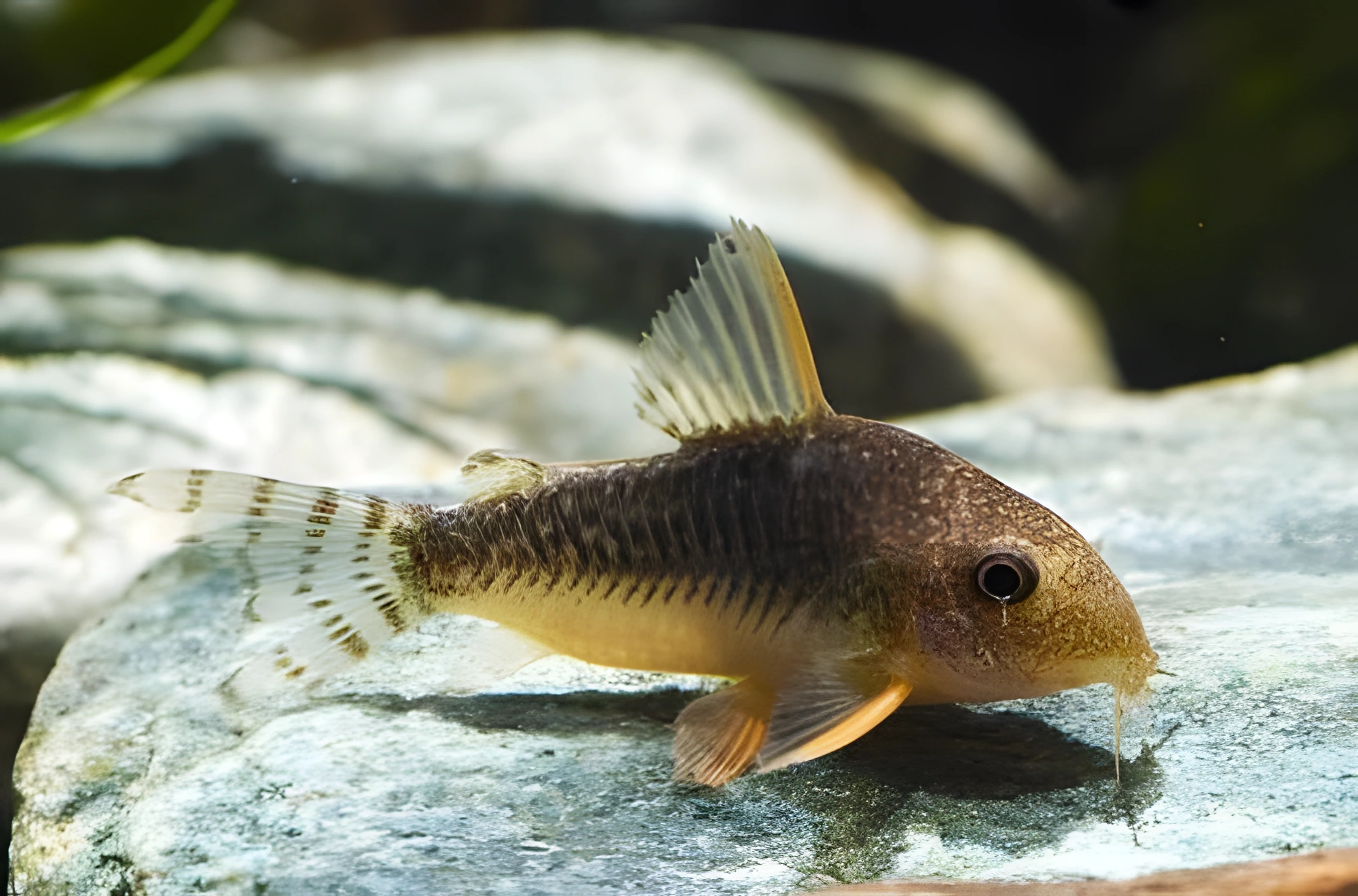
These catfish reach approximately 5 cm in length. Their bodies are brown, and their bellies have a dark yellow sheen. The pattern on their bodies is formed by numerous light spots. Their fins are translucent, and brownish stripes can be seen on the caudal fin.
Habitat
Gosse's Corydoras inhabits the Mamoré River basin, located on the border of Brazil (Rondônia state) and northeastern Bolivia. In nature, the fish live in shallow areas of rivers and streams with slow currents, sandy or silty bottoms, and dense aquatic vegetation. The water in these biotopes is typically soft and slightly acidic.
Behavior and Compatibility
This is a peaceful and sociable species, showing the most activity when kept in a group. In an aquarium, it is recommended to keep a shoal of at least 4–6 individuals, as solitary keeping causes stress in the fish. Corydoras spend most of their time near the bottom, actively exploring the substrate in search of food, and get along well with any non-aggressive fish species of comparable size.
Care and Maintenance
Gosse's Corydoras is an undemanding species, easy to keep. It coexists readily with other fish, has no special requirements for water parameters or diet, and successfully adapts to the conditions of most freshwater aquariums. These catfish are suitable for both beginner and experienced aquarists. For a group of 4–6 individuals, a tank volume of 80 liters or more will be optimal. Since they spend most of their time at the bottom, special attention should be paid to the lower tier when decorating the aquarium. It is recommended to use a substrate of sand or fine gravel. It is important that the substrate particles do not have sharp edges to avoid damaging the fish's sensitive barbels. It is also necessary to provide several shelters. Snags, dense plant thickets, and various decorative elements make excellent hiding places. The rest of the design depends on the aquarist's preferences. A key aspect of keeping them is maintaining stable hydrochemical water parameters within acceptable pH and dGH limits, as well as preventing the accumulation of organic waste. To achieve this, the aquarium should be equipped with an efficient filter, and regular maintenance should be performed: weekly partial water changes with fresh water, removal of food remnants, excrement, and decaying plant parts. Regarding feeding, Gosse's Corydoras is omnivorous, so it accepts most popular dry and freeze-dried foods (flakes, granules, tablets), as well as live and frozen foods such as daphnia, artemia, and bloodworms. To ensure a complete diet, it is desirable to combine different types of food. This species is known for its peaceful and friendly nature, coexisting perfectly with many other non-aggressive fish of comparable size. The catfish prefer to live in a group, so the group size should be at least 4–6 individuals.
Diet
The species is omnivorous. In the aquarium, fish readily accept high-quality sinking dry foods, specialized tablets for bottom-dwelling fish, as well as frozen or live foods such as bloodworms, daphnia, and brine shrimp. To maintain good health, it is recommended to diversify the diet and avoid feeding only on food scraps falling from the middle or upper layers.
Breeding and Reproduction
Breeding occurs through spawning, which is often stimulated by a large water change with cooler water, mimicking the rainy season. Females lay eggs on plant leaves, decorative elements, or the aquarium glass. It is recommended to use a group with a predominance of males. After spawning is complete, the parent fish should be removed, as they may eat the eggs. Fry hatch after a few days, after which they are fed with Artemia nauplii or specialized fry foods.
Diseases
Fish are sensitive to water quality and substrate cleanliness, as poor keeping conditions can damage their sensitive barbels, opening the way for bacterial infections. It is important to maintain low levels of organic waste through regular substrate vacuuming and water changes. With proper care, the species exhibits robust health and resistance to typical diseases.
How to choose
When purchasing, choose active individuals with clean fins, no spots on the body, and intact barbels. Avoid fish showing signs of lethargy, skin lesions, or an unnaturally sunken abdomen. Healthy corydoras should show interest in foraging in the substrate and stay in a shoal, without displaying signs of timidity or apathy.
Frequently asked questions
The essentials: size, tank volume, water parameters and care
How big does Gosse's Corydoras get?
An adult reaches 5 cm in length. Plan the tank around the maximum size: the fish quickly outgrows a cramped setup.
What size aquarium does Gosse's Corydoras need?
The minimum recommended volume is 80 L. A smaller tank speeds up nitrate build-up and raises stress levels.
What water parameters does Gosse's Corydoras need?
Temperature 24–28 °C, pH 6–7.5, hardness 1–10 dGH. Stability matters more than exact values: sudden swings are harder on the fish than a small deviation from the ideal.
How long does Gosse's Corydoras live?
Around 8 years when kept properly. Lifespan depends directly on tank volume, water quality and a varied diet.
Is Gosse's Corydoras aggressive?
Temperament: peaceful (regular). Keep this in mind when choosing tank mates.
How many Gosse's Corydoras should be kept together?
Recommended setup: small group (5–6 individuals). Ignoring this is a common cause of stress and disease.
What does Gosse's Corydoras eat?
Diet type: sinking (any). Feed small portions that are finished within a couple of minutes — overfeeding does more harm than underfeeding.
What is the scientific name of Gosse's Corydoras?
The scientific name of the species is Corydoras gossei, family Armored Catfish (Callichthyidae).