Temperature21 – 26 °C
Natural range
- Rio Negro area
- Brazil area
CorydorasConservation status: Least concern LC
Other scientific names: Corydoras robinae
The Flagtail Corydoras, also known as Robin's Corydoras (scientific name Corydoras robineae), belongs to the family Callichthyidae. These fish originate from the vast waters of the Rio Negro — a huge left tributary of the majestic Amazon. Their natural habitats are diverse: they are found in slow backwaters of the main channel, in coastal areas, as well as in smaller tributaries, streams, and lakes formed after the flooding of forest areas. In a home aquarium, soft sandy substrate combined with dense plant thickets and oxygen-rich water is vital for the successful keeping of these catfishes.
- Required aquarium volume
- 70 L
- Size in aquarium
- 7 cm
- Temperature
- 21 – 26 °C
- Temperament
- Peaceful (regular)
Parameters
Water pHNeutral (6.5) – Neutral (7.5)
Water dHVery soft (2) – Hard (12)
Water salinityno salt (freshwater)
Size in aquarium7 cm
Lifespan5 years
TemperamentPeaceful (regular)
Toward small fishnot a predator
Required aquarium volume70 L
Lightingdimmed or moderate
Substratesandy (regular, light)
Water flowweak or moderate
FeedingSinking (any)
CareMedium group (6–8 individuals)
Description
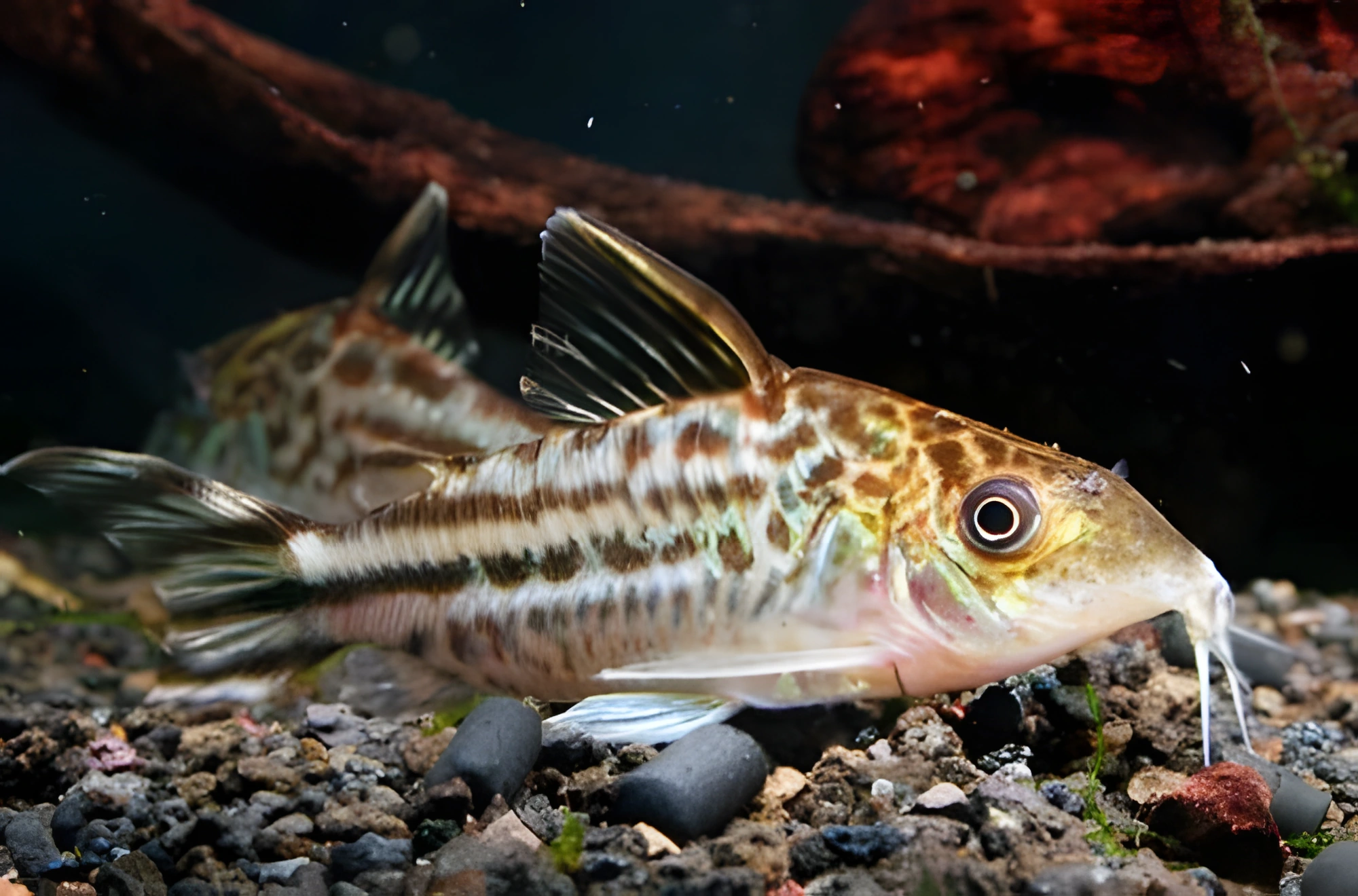
Adult specimens of this fish can grow up to 7 cm in length. Their bodies are adorned with horizontal stripes, which are particularly clear on the tail. The head is dotted with dark speckles. The coloration consists of a predominant combination of white and dark shades, with the belly typically remaining light. Differences between males and females are not pronounced, making them practically indistinguishable from each other.
Habitat
The Flagtail Corydoras is endemic to South America. In nature, the species inhabits the Rio Negro basin in Brazil. The fish prefer areas with slow currents, shallow waters with soft substrate, and an abundance of fallen leaves, snags, and aquatic vegetation, where they find shelter and food.
Behavior and Compatibility
This is a peaceful and social species that is recommended to be kept in groups of 6 or more individuals. In a group, the fish feel confident, display natural activity, and are less prone to stress. They get along well with other peaceful aquarium inhabitants, such as small characins, rasboras, or dwarf cichlids. They should not be kept with aggressive or overly large fish.
Care and Maintenance
An aquarium of at least 70 liters is required for keeping a group. It is critically important to use a soft sandy substrate or fine smooth gravel without sharp edges to avoid damaging the fish's sensitive barbels. The decor should include snags, stones, and live plants that create shaded areas. Effective filtration with moderate current and regular water changes are necessary. Water parameters: temperature 21–26 °C, pH 6.5–7.5, hardness 2–12 dGH.
Diet
An omnivorous species, feeding on small invertebrates and organic detritus in nature. In the aquarium, they accept high-quality sinking dry foods in the form of tablets or granules. The diet should be supplemented with live or frozen foods, such as bloodworms, Artemia, or tubifex. Food should sink to the bottom, as the fish feed exclusively in the bottom layer.
Breeding and Reproduction
Breeding requires a separate spawning aquarium with a soft substrate and clumps of fine-leaved plants. Frequent water changes with cooler water, simulating the rainy season, often serve as a stimulus for spawning. Eggs are laid on glass or plants. After spawning is complete, it is recommended to remove the parents to prevent them from eating the eggs. Fry are fed with Artemia nauplii or microworms.
Diseases
The species is sensitive to water quality and substrate cleanliness. If kept on dirty or sharp substrate, erosion and infections of the barbels are possible. Like other members of the family, the fish tolerate elevated nitrate concentrations poorly and are sensitive to certain medications, especially those containing salt. Prevention involves maintaining stable water parameters and regular substrate vacuuming.
How to choose
When purchasing, choose active fish without visible damage to fins or skin. It is important to ensure the integrity of the barbels — their absence or damage indicates poor keeping conditions in the store. Healthy individuals should have a rounded belly, show interest in foraging on the bottom, and have no signs of emaciation or film on their bodies.
Frequently asked questions
The essentials: size, tank volume, water parameters and care
How big does Flagtail Corydoras get?
An adult reaches 7 cm in length. Plan the tank around the maximum size: the fish quickly outgrows a cramped setup.
What size aquarium does Flagtail Corydoras need?
The minimum recommended volume is 70 L. A smaller tank speeds up nitrate build-up and raises stress levels.
What water parameters does Flagtail Corydoras need?
Temperature 21–26 °C, pH 6.5–7.5, hardness 2–12 dGH. Stability matters more than exact values: sudden swings are harder on the fish than a small deviation from the ideal.
How long does Flagtail Corydoras live?
Around 5 years when kept properly. Lifespan depends directly on tank volume, water quality and a varied diet.
Is Flagtail Corydoras aggressive?
Temperament: peaceful (regular). Keep this in mind when choosing tank mates.
How many Flagtail Corydoras should be kept together?
Recommended setup: medium group (6–8 individuals). Ignoring this is a common cause of stress and disease.
What does Flagtail Corydoras eat?
Diet type: sinking (any). Feed small portions that are finished within a couple of minutes — overfeeding does more harm than underfeeding.
What is the scientific name of Flagtail Corydoras?
The scientific name of the species is Corydoras robineae, family Callichthyidae. It also appears in the literature as: Corydoras robinae.