Temperature18 – 23 °C
Natural range
- Santa Catarina area
- Paraná area
Corydoras
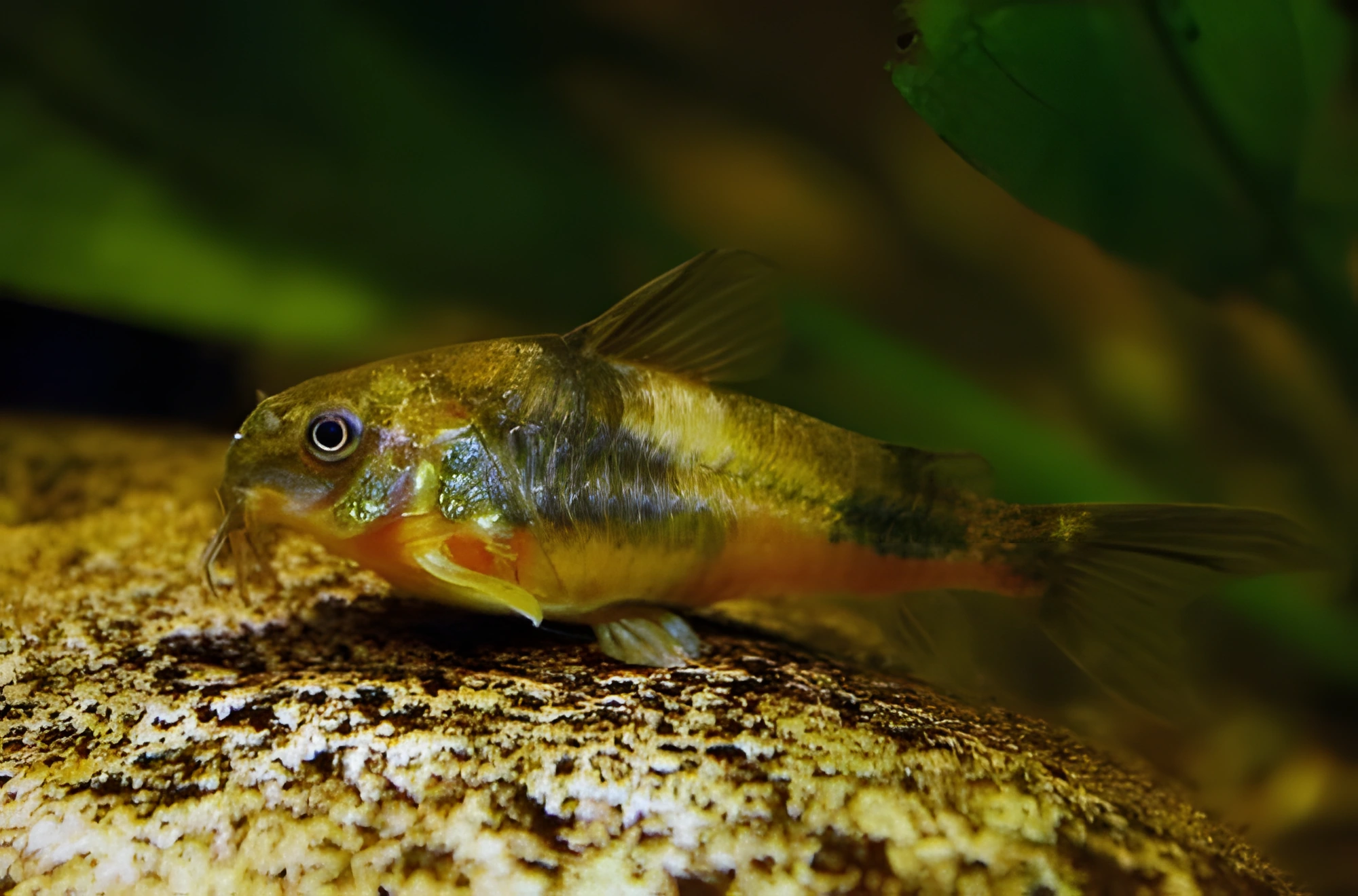
Ehrhardt's Corydoras, known by its scientific name Corydoras ehrhardti, is a member of the Armored Catfish or Callichthyidae family. This name was given to the fish in honor of the ichthyologist Mr. Willis Ehrhardt, who first discovered and described this species of catfish.
- Required aquarium volume
- 70 L
- Size in aquarium
- 4 – 5 cm
- Temperature
- 18 – 23 °C
- Temperament
- Peaceful (regular)
Parameters
Water pHNeutral (6.5) – Neutral (7.5)
Water dHVery soft (3) – Hard (15)
Water salinityno salt (freshwater)
Size in aquarium4 – 5 cm
Lifespan8 years
TemperamentPeaceful (regular)
Toward small fishnot a predator
Required aquarium volume70 L
Lightingweak (low)
Substratesandy (regular, light)
Water flowweak or moderate
FeedingSinking (any)
CareSmall group (5–6 individuals)
Description
Adults of this species grow up to 4–5 cm in length. Their body is characterized by a more slender and elongated shape, which distinguishes them from most of their Corydoras relatives, who usually appear more stocky. The main body color is grayish-yellow, with characteristic dark, large markings. The fins and tail have a translucent structure.
Habitat
The species is endemic to South America, inhabiting coastal rivers in the states of Santa Catarina and Paraná in Brazil, particularly in the Iguazu River basin. In nature, it prefers slow-flowing bodies of water with abundant vegetation and soft substrate, where it leads a benthic lifestyle.
Behavior and Compatibility
A peaceful and social fish, active both day and night. For comfortable existence, a school of 5–6 or more individuals is necessary, as solitary keeping leads to stress and timidity. It coexists well with other non-aggressive fish species that occupy the middle and upper water layers.
Care and Maintenance
This fish is undemanding and easy to keep, not requiring specific conditions. It is only important to provide it with clean, warm water, preferably with a soft substrate, and access to several shelters. Maintaining a stable habitat is achieved through regular aquarium maintenance, including partial water changes and waste removal, as well as the use of necessary equipment. Feeding. The choice of appropriate foods is of great importance. Given the benthic lifestyle of Corydoras ehrhardti, despite its omnivorous nature, it is recommended to use sinking dry or frozen foods. Live foods will also be an excellent addition to the diet. Behavior and compatibility. This is a peaceful and calm fish, preferring to stay in a group of 4–6 conspecifics. Thanks to its adaptability to a wide range of hydrochemical parameters, Corydoras ehrhardti can successfully coexist with many other freshwater fish. It gets along with almost any species, as long as they do not perceive it as potential prey.
Diet
An omnivorous species, it feeds on small invertebrates, insect larvae, and plant detritus in nature. In the aquarium, it accepts any high-quality food for bottom-dwelling fish: sinking pellets, tablets, and flakes. It is recommended to periodically include live or frozen foods, such as bloodworms, Artemia, or tubifex, in the diet to maintain health and activity.
Breeding and Reproduction
Breeding occurs through spawning, where the female lays eggs on a substrate, such as broad plant leaves or the aquarium walls. Water changes and a slight decrease in temperature stimulate spawning. The parents do not care for their offspring. Fry are fed infusoria, and as they grow, they are transitioned to Artemia nauplii and finely crushed dry foods.
Diseases
The fish has good immunity but is sensitive to water quality and substrate cleanliness. When kept in unsuitable conditions, especially with high organic levels or injury to the barbels by sharp substrate, it is susceptible to bacterial infections. An important condition for prevention is the use of soft sand and regular siphoning of the bottom.
How to choose
When purchasing, choose active fish with clean skin free of spots, ulcers, or film. It is important to pay attention to the condition of the barbels: they should be intact, without signs of erosion or damage. Avoid individuals with sunken bellies or signs of apathy, as this may indicate emaciation or hidden diseases.
Frequently asked questions
The essentials: size, tank volume, water parameters and care
How big does Ehrhardt's Corydoras get?
An adult reaches 4–5 cm in length. Plan the tank around the maximum size: the fish quickly outgrows a cramped setup.
What size aquarium does Ehrhardt's Corydoras need?
The minimum recommended volume is 70 L. A smaller tank speeds up nitrate build-up and raises stress levels.
What water parameters does Ehrhardt's Corydoras need?
Temperature 18–23 °C, pH 6.5–7.5, hardness 3–15 dGH. Stability matters more than exact values: sudden swings are harder on the fish than a small deviation from the ideal.
How long does Ehrhardt's Corydoras live?
Around 8 years when kept properly. Lifespan depends directly on tank volume, water quality and a varied diet.
Is Ehrhardt's Corydoras aggressive?
Temperament: peaceful (regular). Keep this in mind when choosing tank mates.
How many Ehrhardt's Corydoras should be kept together?
Recommended setup: small group (5–6 individuals). Ignoring this is a common cause of stress and disease.
What does Ehrhardt's Corydoras eat?
Diet type: sinking (any). Feed small portions that are finished within a couple of minutes — overfeeding does more harm than underfeeding.
What is the scientific name of Ehrhardt's Corydoras?
The scientific name of the species is Corydoras ehrhardti, family (Armored or Callichthyid Catfishes).