Temperature21 – 25 °C
Natural range
- Acre State
- Brazil area
CorydorasConservation status: Least concern LC
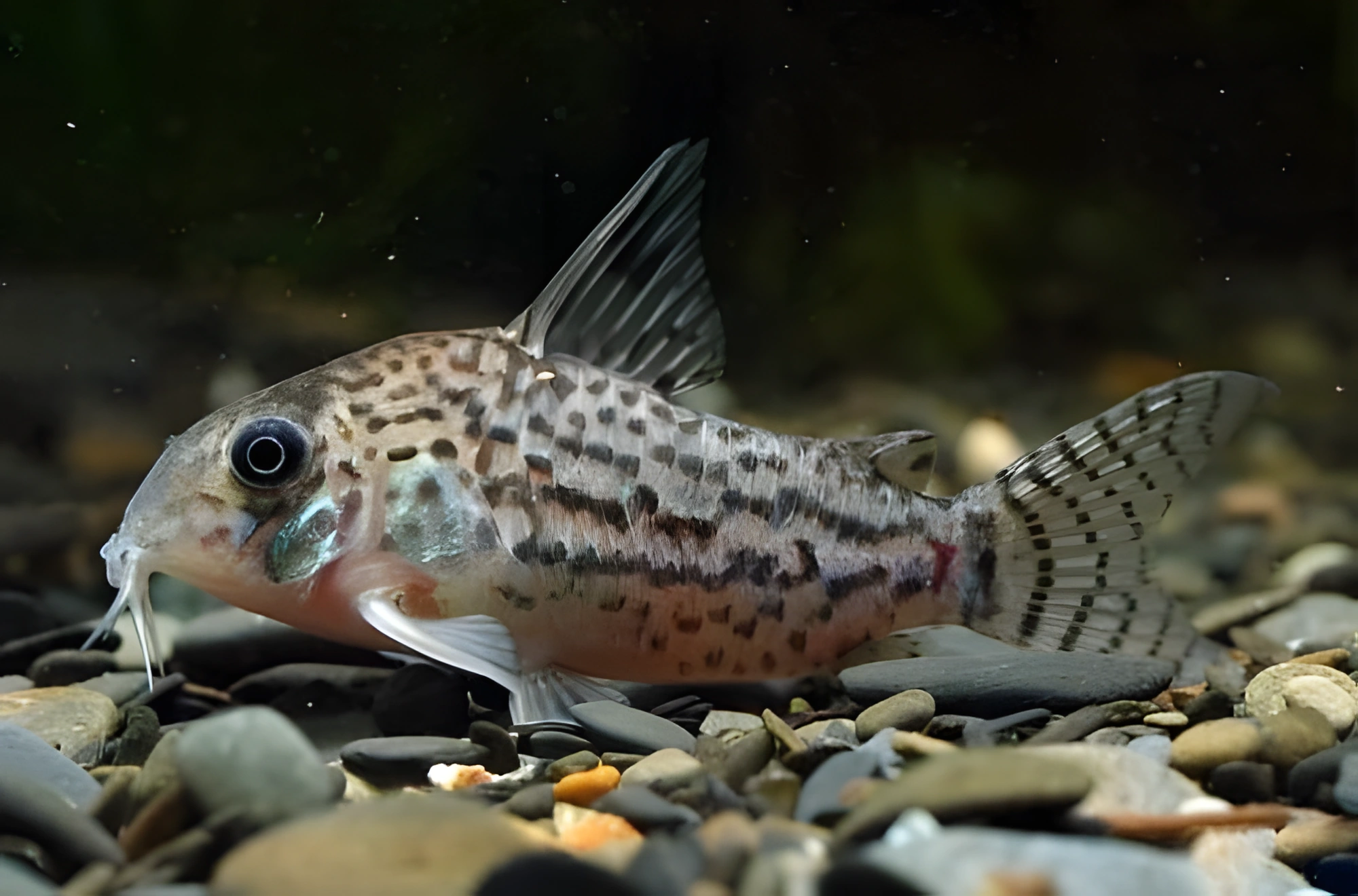
The Acre Corydoras, known as Corydoras acrensis, belongs to the armored catfish family, Callichthyidae. This fish gets its name from its discovery location – the Brazilian state of Acre, situated on the border with Peru and Bolivia. In its natural habitat, it can be found in limited areas of the Juruá River basin.
- Required aquarium volume
- 80 L
- Size in aquarium
- 6 cm
- Temperature
- 21 – 25 °C
- Temperament
- Peaceful (regular)
Parameters
Water pHSlightly acidic (6) – Neutral (7.5)
Water dHVery soft (2) – Hard (12)
Water salinityno salt (freshwater)
Size in aquarium6 cm
Lifespan5 years
TemperamentPeaceful (regular)
Toward small fishnot a predator
Required aquarium volume80 L
Lightingweak (low)
Substratesandy (regular, light)
Water flowweak or moderate
FeedingSinking (any)
CareSolitary
Description
Adults of this fish reach approximately 5 cm in length. Their body shape is typical for most corydoras: despite their modest size, they give the impression of being stocky and quite robust. The coloration of the Acre Corydoras is not unique; many Cory catfish have a similar pattern – black speckles on a grayish background. Examples of such species include the Armored Cory, Agassiz's Corydoras, and Gomez's Corydoras. The main distinguishing feature of the Acre Corydoras is its evenly distributed speckles that do not form lines, as well as a noticeable black spot on the dorsal fin. These catfish are undemanding to keep. Aquarium maintenance requires standard procedures: weekly partial water changes, regular removal of organic waste (excrement and food remnants), and prophylactic inspection of equipment. Optimal conditions for a group of 4–6 individuals are created by an aquarium of 80 liters or more, equipped with a soft substrate, several hiding places on the bottom, and filled with water with suitable pH and dGH values. Cory catfish are not picky eaters, so there are usually no problems with food selection. They readily accept any appropriately sized food, preferably sinking foods. Distinguished by their peaceful nature, Acre Corydoras get along well with most other species that do not pose a predatory threat to them.
Habitat
The species is endemic to the Juruá River basin in Acre State, Brazil [seriouslyfish.com]. It inhabits freshwater rivers and streams of South America, preferring areas with abundant vegetation and soft sandy or silty bottoms [aqua-fish.net].
Behavior and Compatibility
A peaceful and schooling fish, primarily active in the bottom layers of the water. For their comfort and to exhibit natural behavior, it is necessary to keep a group of 4–6 or more individuals [seriouslyfish.com]. It coexists well with other non-aggressive fish species suitable for a community aquarium [aqua-fish.net].
Care and Maintenance
For keeping a group, an aquarium of 40–80 liters is recommended [aqua-fish.net, aquainfo.org]. It is critically important to use fine sand or smooth gravel as substrate to avoid damaging the fish's sensitive barbels [seriouslyfish.com, aquainfo.org]. The decor should include live plants, driftwood, and rocks to create hiding places. Effective filtration and regular water changes are necessary [aqua-fish.net].
Diet
An omnivorous species that feeds on small invertebrates and organic detritus in nature. In the aquarium, it accepts high-quality sinking dry foods, as well as frozen or live foods such as bloodworms or tubifex [seriouslyfish.com]. Feeding should be done regularly, avoiding the expectation that the fish will feed exclusively on leftover food from other inhabitants [seriouslyfish.com].
Breeding and Reproduction
Breeding in captivity occurs rarely. Like other members of the genus, these fish are egg-layers [aqua-fish.net]. In nature, eggs are laid in hidden places among dense vegetation or in crevices [aqua-fish.net]. Spawning can be stimulated by imitating the rainy season through water changes with softer and cooler water [aqua-fish.net].
Diseases
The species is hardy when stable water parameters are maintained. The main danger is damage to the barbels when kept on sharp or dirty substrate, which leads to the development of bacterial infections [aquainfo.org]. Caution should also be exercised when catching them, as the stiff rays of the pectoral fins can inflict painful stings, and the secretion from glands at their base may be mildly toxic [seriouslyfish.com].
How to choose
When purchasing, choose active fish with clean skin and undamaged fins. It is important to ensure that the individuals have intact barbels, as their absence indicates improper keeping conditions in the store [aquainfo.org]. Avoid individuals showing signs of emaciation or unnatural behavior, such as constantly staying near the water surface without other apparent reasons [seriouslyfish.com].
Frequently asked questions
The essentials: size, tank volume, water parameters and care
How big does Acre Corydoras get?
An adult reaches 6 cm in length. Plan the tank around the maximum size: the fish quickly outgrows a cramped setup.
What size aquarium does Acre Corydoras need?
The minimum recommended volume is 80 L. A smaller tank speeds up nitrate build-up and raises stress levels.
What water parameters does Acre Corydoras need?
Temperature 21–25 °C, pH 6–7.5, hardness 2–12 dGH. Stability matters more than exact values: sudden swings are harder on the fish than a small deviation from the ideal.
How long does Acre Corydoras live?
Around 5 years when kept properly. Lifespan depends directly on tank volume, water quality and a varied diet.
Is Acre Corydoras aggressive?
Temperament: peaceful (regular). Keep this in mind when choosing tank mates.
How many Acre Corydoras should be kept together?
Recommended setup: solitary. Ignoring this is a common cause of stress and disease.
What does Acre Corydoras eat?
Diet type: sinking (any). Feed small portions that are finished within a couple of minutes — overfeeding does more harm than underfeeding.
What is the scientific name of Acre Corydoras?
The scientific name of the species is Corydoras acrensis, family Armored or Callichthyid Catfish (Callichthyidae).