Temperature22 – 26 °C
Natural range
- Huallaga River basin
- Madeira River upper basin
- Peru area
- Brazil area
CorydorasConservation status: Least concern LC
Other scientific names: Callichthys armatus
Corydoras armatus, also known as the Armored Corydoras, belongs to the family Callichthyidae (armored catfish), and its scientific name is Corydoras armatus. The word “armatus” itself comes from Latin and translates as “armored, armed, protected,” which accurately reflects a characteristic feature of this species – the presence of enlarged bony plates on the body, distinguishing it from other Corydoras.
- Required aquarium volume
- 80 L
- Size in aquarium
- 6 cm
- Temperature
- 22 – 26 °C
- Temperament
- Peaceful (regular)
Parameters
Water pHSlightly acidic (5.5) – Neutral (7.5)
Water dHVery soft (2) – Hard (12)
Water salinityno salt (freshwater)
Size in aquarium6 cm
Lifespan5 years
TemperamentPeaceful (regular)
Toward small fishnot a predator
Required aquarium volume80 L
Lightingweak (low)
Substratesandy (regular, light)
Water flowweak or moderate
FeedingSinking (any)
CareSmall group (5–6 individuals)
Description
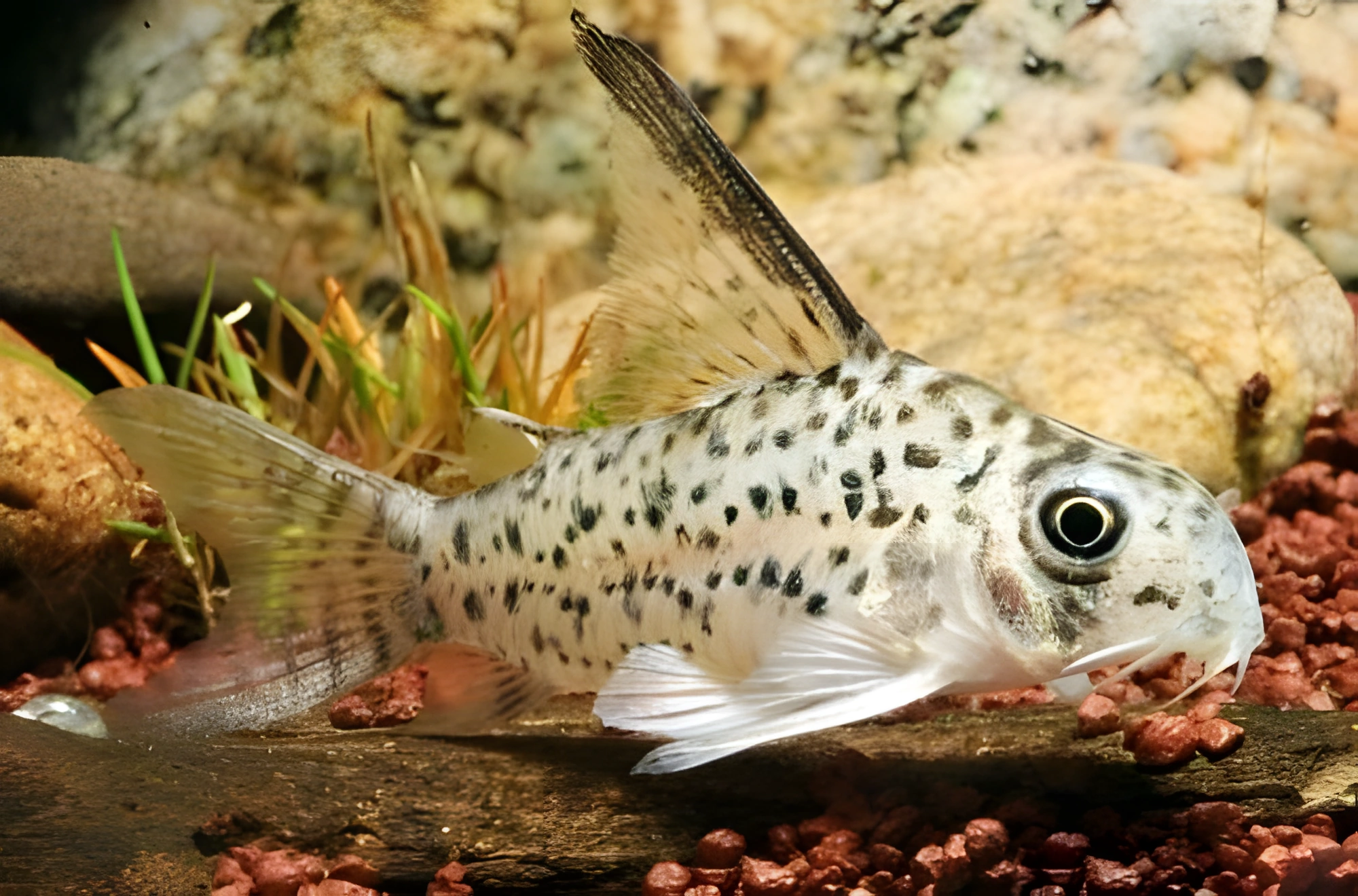
Adults of this catfish reach approximately 6 cm in length. Their body is white, adorned with a pattern of black speckles that also extends to the tail and dorsal fin. Important features include thickened first fin rays, which are sharp spines, as well as modified scales that have transformed into strong plates. These adaptations provide the catfish with reliable protection from small predators.
Habitat
The species inhabits South America, primarily the Huallaga River basin in Peru, as well as the upper reaches of the Madeira River in Brazil and Bolivia. In the wild, it lives in bodies of water with soft, slightly acidic, or neutral water. It prefers areas with sandy bottoms, where it leads a benthic lifestyle [seriouslyfish.com].
Behavior and Compatibility
A peaceful and social species, exhibiting schooling behavior. To ensure comfort and reduce stress levels, it is necessary to keep a group of at least 4–6 individuals. It coexists well with small, peaceful fish that occupy the middle and upper water layers. Avoid cohabitation with aggressive or large species that may perceive the catfish as prey [aquadiction.world].
Care and Maintenance
Corydoras are generally considered easily accessible and undemanding aquarium fish. Corydoras armatus is no exception, making it an excellent choice even for beginner aquarists. This unpretentious fish can adapt to various conditions, mimicking both flowing rivers and stagnant backwaters or swamps. Thus, the specific aquarium setup is not crucial. The main thing is to provide a soft sandy substrate or fine gravel, as well as several shelters, which can be created using driftwood or dense plant thickets. Regarding feeding, since these catfish spend most of their time at the bottom, it is preferable to give them sinking foods, as they are reluctant to rise to the surface. Their diet can include dry flakes and granules, as well as live or frozen foods such as bloodworms, brine shrimp, and daphnia, which are popular in the aquarium hobby. In terms of behavior and compatibility, these fish coexist perfectly with many non-aggressive species of comparable size. They also prefer to be in groups of their own kind, so it is recommended to acquire them in groups of 4 to 6 individuals.
Diet
An omnivorous species that readily accepts high-quality sinking dry foods in the aquarium, as well as frozen and live foods such as bloodworms or tubifex. The diet should be varied to maintain health. Do not expect the fish to feed exclusively on the leftover food of other inhabitants [seriouslyfish.com].
Breeding and Reproduction
Reproduction is typical for the genus. To stimulate spawning, water changes with cooler, fresh water are often used. It is recommended to use a separate breeding tank to avoid other fish eating the eggs. Fry require clean water and fine starter foods [aquadiction.world].
Diseases
Sensitive to water quality and substrate condition. When kept on a sharp or dirty substrate, damage to the sensitive barbels is possible, which opens the way for bacterial infections. Prevention includes using fine sand, regular gravel vacuuming, and timely water changes [akvaforum.no].
How to choose
When purchasing, active fish with clean skin without visible spots, sores, or fin damage should be chosen. It is important to ensure the integrity of the barbels, as their absence is a sign of poor keeping conditions. The fish should exhibit natural activity in the bottom layer [aquadiction.world].
Frequently asked questions
The essentials: size, tank volume, water parameters and care
How big does Armored Cory get?
An adult reaches 6 cm in length. Plan the tank around the maximum size: the fish quickly outgrows a cramped setup.
What size aquarium does Armored Cory need?
The minimum recommended volume is 80 L. A smaller tank speeds up nitrate build-up and raises stress levels.
What water parameters does Armored Cory need?
Temperature 22–26 °C, pH 5.5–7.5, hardness 2–12 dGH. Stability matters more than exact values: sudden swings are harder on the fish than a small deviation from the ideal.
How long does Armored Cory live?
Around 5 years when kept properly. Lifespan depends directly on tank volume, water quality and a varied diet.
Is Armored Cory aggressive?
Temperament: peaceful (regular). Keep this in mind when choosing tank mates.
How many Armored Cory should be kept together?
Recommended setup: small group (5–6 individuals). Ignoring this is a common cause of stress and disease.
What does Armored Cory eat?
Diet type: sinking (any). Feed small portions that are finished within a couple of minutes — overfeeding does more harm than underfeeding.
What is the scientific name of Armored Cory?
The scientific name of the species is Corydoras armatus, family Armored Catfish (Callichthyidae). It also appears in the literature as: Callichthys armatus.