Temperature20 – 28 °C
Natural range
- Brazil area
Characins
Other scientific names: Copeina callolepis, Pyrrhulina nattereri
Copella callolepis, or Copella callolepis according to its scientific name, belongs to the family Lebiasinidae. It is interesting to note that only in 2011 was this species officially recognized as distinct; before that, it was considered a variation of Copella nattereri or Copella meinkeni, depending on the intensity of its body pattern. In aquaristics, these fish are quite popular, and although they may be called by different names, this does not affect the approaches to their keeping or their compatibility with other freshwater inhabitants.
- Required aquarium volume
- 50 L
- Size in aquarium
- 4 cm
- Temperature
- 20 – 28 °C
- Temperament
- Semi-peaceful (including aggression during spawning / intraspecific conflicts)
Parameters
Water pHAcidic (4) – Neutral (7)
Water dHVery soft (1) – Medium hardness (9)
Water salinityno salt (freshwater)
Size in aquarium4 cm
Lifespan5 years
TemperamentSemi-peaceful (including aggression during spawning / intraspecific conflicts)
Toward small fishnot a predator
Required aquarium volume50 L
Lightingdimmed
Substratesandy (regular, light)
Water flowweak
FeedingMeat with plant additives (omnivores)
CareSchooling (usually from 5–6 individuals and more)
Description
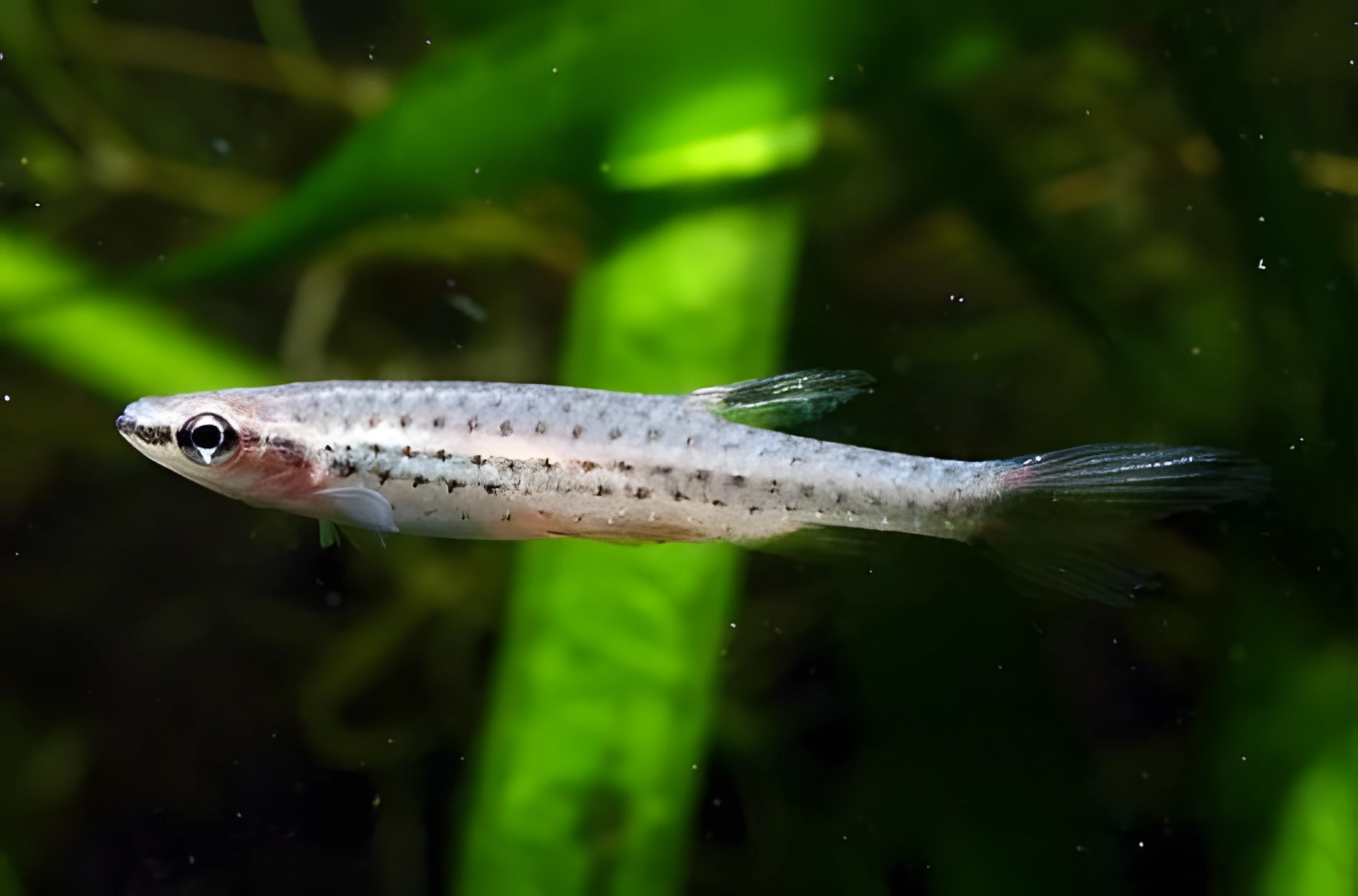
Adults grow up to 4 cm in length. Their coloration is generally silvery, with a darker back. The body is adorned with a pattern of red and black speckles arranged in rows. A large spot is noticeable on the dorsal fin. Males differ from females not only in size, being larger, but also in having a more pronounced, vibrant coloration.
Habitat
Its origin is associated with South America. Since the species was identified as distinct relatively recently, its exact distribution area has not yet been established. It is assumed that these fish inhabit the middle Amazon River basin in Brazil, where they are found in small streams and channels located among dense tropical forests.
Behavior and Compatibility
Due to its modest size, this peaceful and active fish can only coexist with a limited range of other species. It is recommended to avoid cohabitation with larger, and especially aggressive, fish. Copella prefer to live in groups of 8 to 10 individuals. During the breeding season, males become more protective of their clutch and may exhibit less-than-friendly behavior towards other aquarium inhabitants at this time.
Care and Maintenance
For a group of 8–10 fish, an aquarium of at least 50–60 L is recommended; a paludarium with a similar amount of water would also be suitable. Given the peculiarities of their reproduction (which will be discussed later), it is important to provide leaves in the decor that hang low over the water surface. In addition, the water level should be maintained so that it is 10 cm or more below the top edge of the tank. Copella callolepis looks particularly striking among lush aquatic plants and snags, provided the lighting is subdued. Placing dried leaves from certain trees on the bottom will be noticeably beneficial. They serve not only as a decorative element but also as a means to impart a chemical composition to the water that is close to the fish's natural habitat. During decomposition, such leaves release tannins into the water, which help to lower pH and dGH values. Successful long-term keeping largely depends on maintaining stable water parameters within an acceptable range of temperatures and hydrochemical values, as well as on regular aquarium maintenance procedures and the uninterrupted operation of installed equipment.
Diet
Being omnivorous, this fish easily adapts to most popular foods of appropriate size in a home aquarium. It is most preferable that its diet be enriched with proteins and also include live or frozen foods, such as daphnia, artemia, small bloodworms, and Drosophila larvae.
Breeding and Reproduction
This fish exhibits an unusual breeding strategy. At the beginning of the breeding season, males actively court females, occupying a small area near the water surface and preventing rivals from entering it. If the female accepts the courtship, the pair temporarily unites for spawning. From this moment, the most amazing thing begins: the fish lay their eggs on the surface of a leaf that is above the water! The male and female, pressing against each other, jump out of the water and cling to the leaf for a few moments, managing to attach several eggs to it. Over several such "jumps," the clutch can increase to dozens of eggs. After spawning, the female swims away, and the male takes over the care of the future offspring. With a sharp flick of his tail, he splashes water onto the eggs to prevent them from drying out.
Diseases
The main health problems in these fish most often arise due to unsuitable keeping conditions. Such conditions weaken their immune system, making them more vulnerable to various diseases. More detailed information on symptoms and treatment methods can be found in the section "Diseases of aquarium fish."
How to choose
When selecting individuals, attention should be paid to their activity and scale condition: healthy fish should be active, without visible damage, ulcers, or film on the body. It is important to ensure that the fish show no signs of emaciation and that their fins are spread and not torn. Avoid purchasing fish from aquariums where dead individuals or specimens with suspicious behavior, such as unnatural swaying or apathy, have been observed. Since the species is sensitive to sudden changes in water parameters, it is recommended to inquire about the keeping conditions at the store from the seller and, if possible, adapt the fish to the new conditions gradually.
Frequently asked questions
The essentials: size, tank volume, water parameters and care
How big does Copella callolepis get?
An adult reaches 4 cm in length. Plan the tank around the maximum size: the fish quickly outgrows a cramped setup.
What size aquarium does Copella callolepis need?
The minimum recommended volume is 50 L. A smaller tank speeds up nitrate build-up and raises stress levels.
What water parameters does Copella callolepis need?
Temperature 20–28 °C, pH 4–7, hardness 1–9 dGH. Stability matters more than exact values: sudden swings are harder on the fish than a small deviation from the ideal.
How long does Copella callolepis live?
Around 5 years when kept properly. Lifespan depends directly on tank volume, water quality and a varied diet.
Is Copella callolepis aggressive?
Temperament: semi-peaceful (including aggression during spawning / intraspecific conflicts). Keep this in mind when choosing tank mates.
How many Copella callolepis should be kept together?
Recommended setup: schooling (usually from 5–6 individuals and more). Ignoring this is a common cause of stress and disease.
What does Copella callolepis eat?
Diet type: meat with plant additives (omnivores). Feed small portions that are finished within a couple of minutes — overfeeding does more harm than underfeeding.
What is the scientific name of Copella callolepis?
The scientific name of the species is Copella callolepis, family Lebiasinidae. It also appears in the literature as: Copeina callolepis, Pyrrhulina nattereri.