Temperature25 – 29 °C
Natural range
- Lake Malawi area
- Malawi area
- Tanzania area
- Mozambique area
CichlidsConservation status: Least concern LC
Other scientific names: Cyrtocara chrysonotus, Haplochromis chrysonotus, Paratilapia chrysonota
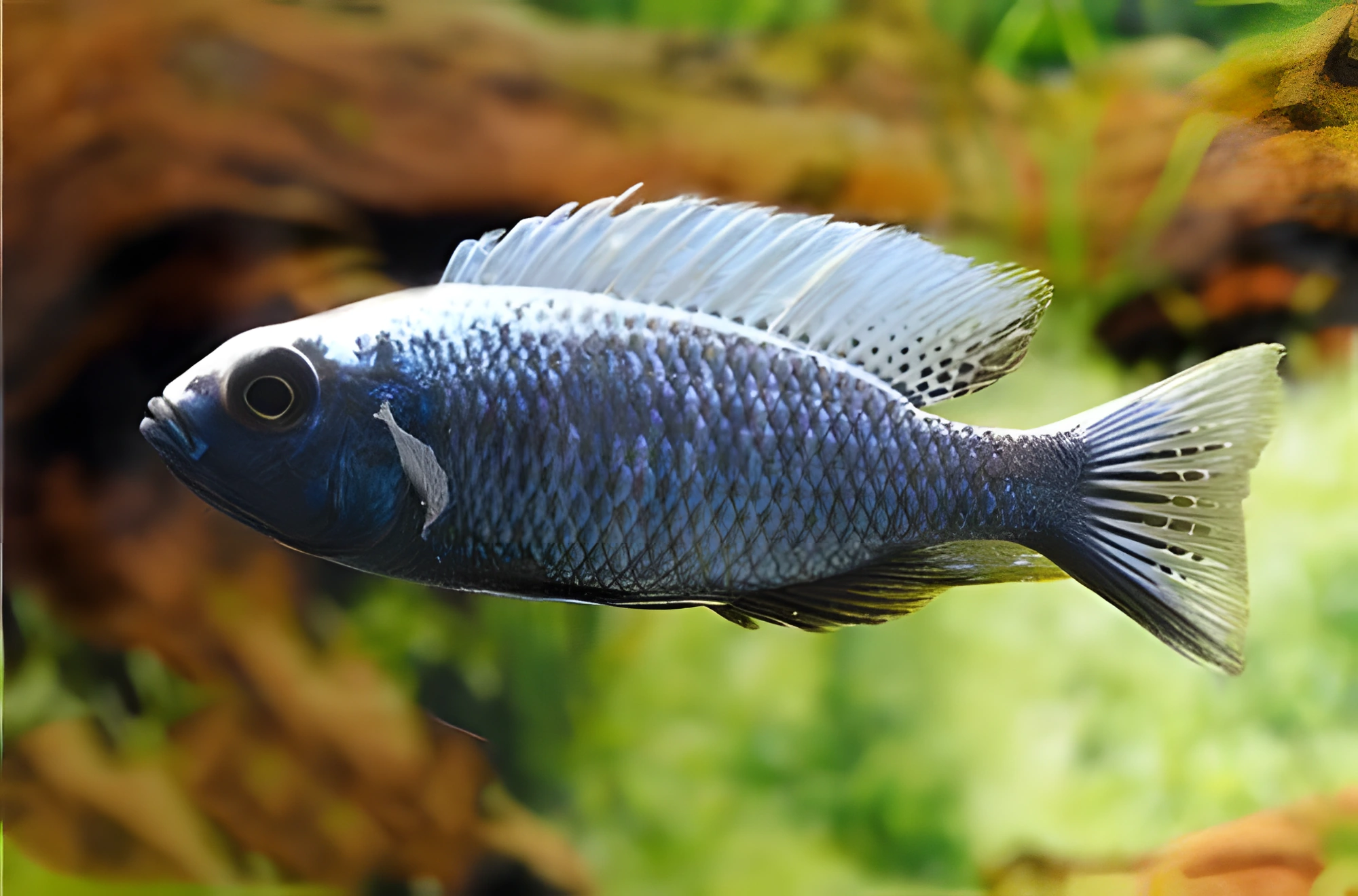
Copadichromis chrysonotus, known in biology as Copadichromis chrysonotus, belongs to the family Cichlidae. This fish is a representative of the Utaka cichlid group and stands out for its bright blue coloration and peaceful behavior. It can be an excellent addition to a community tank of fish inhabiting the Lake Nyasa biotope.
- Required aquarium volume
- 350 L
- Size in aquarium
- 16 cm
- Temperature
- 25 – 29 °C
- Temperament
- Semi-peaceful (including aggression during spawning / intraspecific conflicts)
Parameters
Water pHSlightly alkaline (7.6) – Slightly alkaline (8.5)
Water dHMedium hardness (10) – Very hard (25)
Water salinityno salt (freshwater)
Size in aquarium16 cm
Lifespan8 years
TemperamentSemi-peaceful (including aggression during spawning / intraspecific conflicts)
Toward small fishnot a predator
Required aquarium volume350 L
Lightingdimmed or moderate
Substratefine sand
Water flowweak or moderate
FeedingPlant-based (algae, vegetables)
CareHarem (1 male and several females)
Description
Adults can reach a length of about 16 cm, with females typically being somewhat smaller. Their main coloration is blue or sky blue, with barely noticeable vertical dark stripes on the sides. Outwardly, Copadichromis chrysonotus resembles Copadichromis azureus, but differs from it by its light-colored back, which formed the basis of its name.
Habitat
Being endemic to Lake Nyasa, a large African body of water located in the Rift Valley on the border of Malawi, Tanzania, and Mozambique, this species is widespread throughout its waters. The fish prefer to stay in large shoals in the upper water layers, where there is plenty of plankton.
Behavior and Compatibility
These fish are distinguished by their peaceful and calm disposition if kept in very spacious aquariums, of several thousand liters. However, in confined conditions of limited space, males may compete with each other. It is recommended to keep them in a harem-type group, where there are several females per male. They get along well with other species that can adapt to an alkaline environment with high general water hardness.
Care and Maintenance
Copadichromis azureus requires extensive open swimming areas. Therefore, for a group of 3–4 individuals, an aquarium of at least 350–400 liters with a height of 60 cm or more is recommended. Stone formations should be placed on the bottom, reaching the middle height of the tank, forming caves and grottoes within them. Any decorative elements can serve as shelters. Females can find refuge there during the incubation period, as well as fry. It is important to maintain water parameters characteristic of Lake Nyasa (extremely high pH and dGH values), as they differ significantly from other natural bodies of water and are critically important for the long-term well-being of this species. Aquarium maintenance traditionally includes weekly partial water changes, regular removal of organic waste, and prophylactic equipment care.
Diet
In their natural environment, zooplankton forms the basis of these fish's diet. In a home aquarium, they adapt well to most common dry foods, such as flakes and pellets. The diet can be enriched with live or frozen invertebrates, such as bloodworms, Artemia, or large Daphnia.
Breeding and Reproduction
Mouthbrooding of fertilized eggs is a characteristic feature of all Lake Nyasa cichlids. This evolutionarily developed mechanism for protecting offspring arose under conditions of high competition. Most species usually spawn in nests specially arranged by males on the bottom. However, Copadichromis azureus is unique in that it is the only species in the lake that spawns in the water column. During the mating ritual, the female releases eggs and immediately picks them up before they can sink to the bottom. At this moment, the male manages to fertilize them. The incubation period lasts about a month. The hatched fry are already quite large and can feed on Artemia nauplii, as well as finely crushed dry flakes and pellets.
Diseases
The main reason for most diseases often lies in unsuitable keeping conditions. At the first signs of illness, it is necessary to thoroughly check the water parameters, evaluate the fish's diet, and identify possible injuries that may have been sustained due to aggression from other aquarium inhabitants. Identifying and eliminating the root causes often leads to self-recovery, as the fish's body copes with the ailment. Nevertheless, in some cases, medication may be required; more information can be found in the "Diseases of Aquarium Fish" section.
How to choose
When selecting individuals, attention should be paid to their activity and the absence of external damage, such as ulcers, film, or fin rot. A healthy fish should show interest in its surroundings, rather than staying sluggishly at the bottom or surface. Avoid purchasing fish with sunken bellies, which may indicate emaciation or internal parasitic infections. In store aquariums, individuals often appear paler than in their natural environment, but the bright coloration of males with a characteristic golden stripe on their back is a sign of good condition and absence of severe stress. It is recommended to acquire a group of several individuals, as this species adapts better and exhibits natural behavior as part of a harem.
Frequently asked questions
The essentials: size, tank volume, water parameters and care
How big does Copadichromis chrysonotus get?
An adult reaches 16 cm in length. Plan the tank around the maximum size: the fish quickly outgrows a cramped setup.
What size aquarium does Copadichromis chrysonotus need?
The minimum recommended volume is 350 L. A smaller tank speeds up nitrate build-up and raises stress levels.
What water parameters does Copadichromis chrysonotus need?
Temperature 25–29 °C, pH 7.6–8.5, hardness 10–25 dGH. Stability matters more than exact values: sudden swings are harder on the fish than a small deviation from the ideal.
How long does Copadichromis chrysonotus live?
Around 8 years when kept properly. Lifespan depends directly on tank volume, water quality and a varied diet.
Is Copadichromis chrysonotus aggressive?
Temperament: semi-peaceful (including aggression during spawning / intraspecific conflicts). Keep this in mind when choosing tank mates.
How many Copadichromis chrysonotus should be kept together?
Recommended setup: harem (1 male and several females). Ignoring this is a common cause of stress and disease.
What does Copadichromis chrysonotus eat?
Diet type: plant-based (algae, vegetables). Feed small portions that are finished within a couple of minutes — overfeeding does more harm than underfeeding.
What is the scientific name of Copadichromis chrysonotus?
The scientific name of the species is Copadichromis chrysonotus, family Cichlids (Cichlidae). It also appears in the literature as: Cyrtocara chrysonotus, Haplochromis chrysonotus, Paratilapia chrysonota.