Temperature26 – 28 °C
Natural range
- Lake Malawi area
- Southern Lake Malawi area
- Malawi area
- Mozambique area
CichlidsConservation status: Near threatened NT
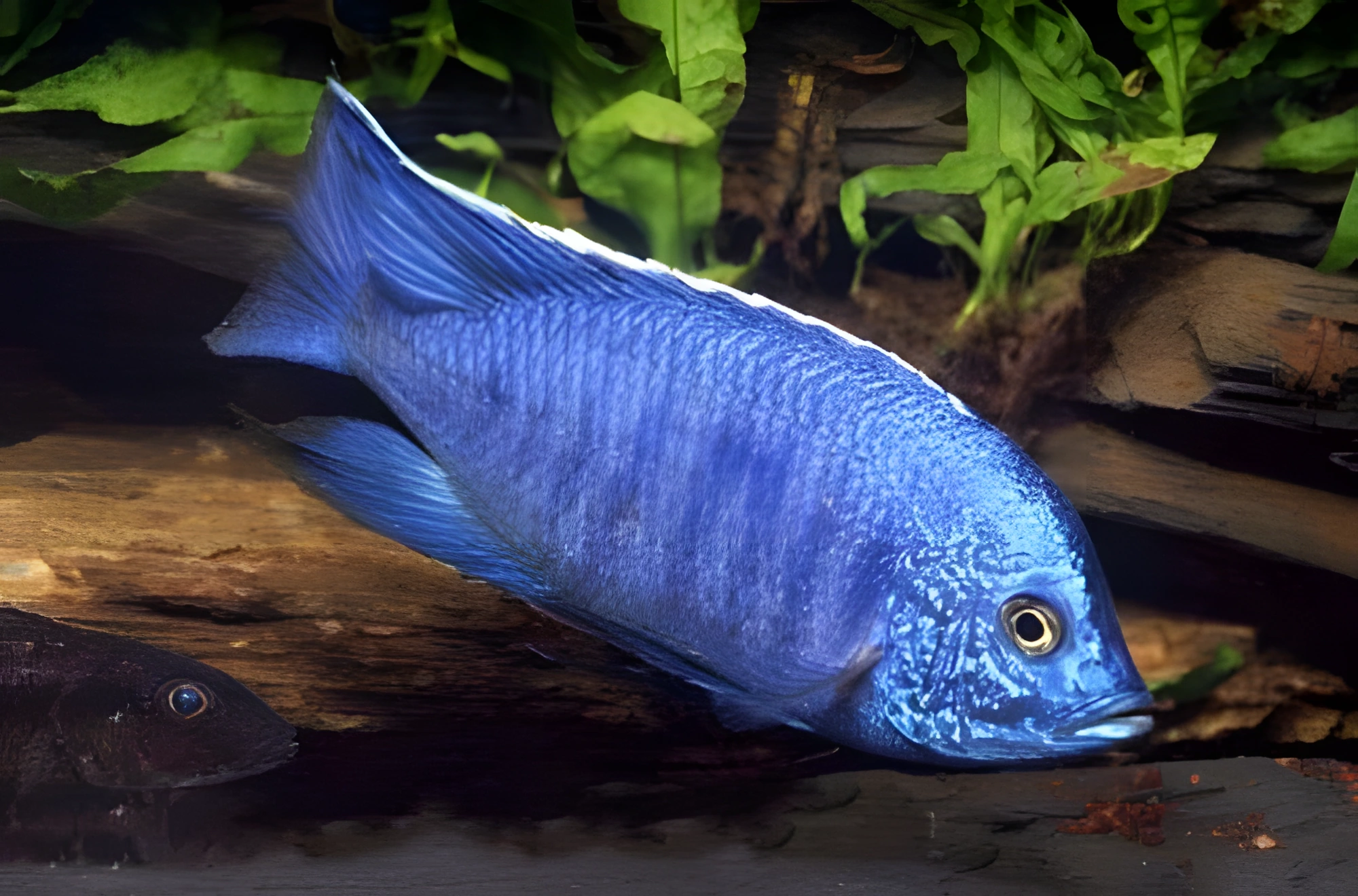
Copadichromis azureus, also known as Copadichromis azureus, is a member of the Cichlidae family. This species belongs to the group of Malawian cichlids called Utaka. The fish is known for its peaceful nature and is quite undemanding, provided suitable living conditions are created for it.
- Required aquarium volume
- 300 L
- Size in aquarium
- 14 – 16 cm
- Temperature
- 26 – 28 °C
- Temperament
- Semi-peaceful (including aggression during spawning / intraspecific conflicts)
Parameters
Water pHSlightly alkaline (7.6) – Slightly alkaline (8.5)
Water dHMedium hardness (10) – Very hard (25)
Water salinityno salt (freshwater)
Size in aquarium14 – 16 cm
Lifespan8 years
TemperamentSemi-peaceful (including aggression during spawning / intraspecific conflicts)
Toward small fishnot a predator
Required aquarium volume300 L
Lightingdimmed or moderate
Substratefine sand
Water flowweak or moderate
FeedingPlant-based (algae, vegetables)
CareHarem (1 male and several females)
Description
Adult fish typically reach a length of 14–16 cm. They are characterized by a large head and a high body. A distinctive feature of this group of fish is their large eyes. Good eyesight allows them to effectively hunt for zooplankton in the water column. Males grow slightly longer than females and have brighter coloration. Their primary color is bright blue, with dark vertical stripes along the body. Some geographical forms exhibit black spots, which are more clearly defined in the less brightly colored females. Female coloration is more subdued, with a primary gray tone. In young individuals, until they reach 3 weeks of age, males and females look identical, having a gray coloration without bright hues.
Habitat
This fish is endemic to Lake Malawi (Nyasa), one of the largest freshwater bodies of water, located in East Africa at the borders of Malawi, Mozambique, and Tanzania. Copadichromis azureus inhabits the southern part of the lake, preferring open waters near the coastline, at depths of 20 to 30 meters.
Behavior and Compatibility
As a representative of the Utaka group, Copadichromis azureus has a peaceful disposition. This fish coexists well with its own kind and with other non-aggressive species capable of adapting to alkaline conditions. However, it should be noted that in the confined space of an aquarium, rivalry and sometimes aggression can arise between males. Ideal tank mates include other inhabitants of Lake Malawi, such as Aulonocara, as well as other Copadichromis species, with the exception of Mbuna cichlids.
Care and Maintenance
For comfortable existence, Copadichromis azureus requires ample open swimming space. It is recommended to provide a water volume of at least 300 L for keeping 2–3 fish. The aquarium design should include a sandy substrate and formations of large rocks and stones. The placement of aquatic plants is not an obligatory element. However, if desired, several hardy species that thrive in hard water can be included, such as Vallisneria, some Anubias species, Sagittaria subulata, as well as various mosses and ferns. It is necessary to maintain water conditions similar to the hydrochemical composition of Lake Nyasa, which is characterized by high pH and dGH values. Water preparation may require the use of special products aimed at increasing general hardness. Aquarium maintenance should be standard, including essential procedures: weekly partial water changes with fresh water and regular removal of organic pollutants (uneaten food, excrement). These two activities are usually combined.
Diet
In their natural habitat, they feed on zooplankton, which they obtain from the water column. When kept in a home aquarium, it is recommended to offer protein-rich dry foods in the form of flakes and pellets. The diet can be successfully supplemented with live or frozen foods, such as brine shrimp, bloodworms, as well as large daphnia and similar items.
Breeding and Reproduction
The appearance of offspring in an artificial aquarium environment is not uncommon. Optimal conditions for successful spawning include a water temperature in the range of 25–27°C and pH values around 8.0–8.5. At the beginning of the breeding period, the male chooses a suitable spot on the aquarium bottom, where he creates a small pit or depression in the sand, clearing it of debris and small pebbles. After this, he begins active courtship. Sometimes these courtships can be overly persistent, so it is recommended to keep a group in a harem format with several females to distribute the male's attention. When one of the females is ready to spawn, she responds to the courtship and lays several dozen eggs in the depression, which are immediately fertilized by the male. Like many fish from Lake Nyasa, egg incubation occurs directly in the female's mouth. This period lasts 3–4 weeks. Throughout this time, the female refuses food and seeks refuge in a safe place, which emphasizes the importance of rock formations in the decor. The hatched fry are quite large and are already capable of feeding on brine shrimp nauplii, finely crushed dry foods, and other small food particles.
Diseases
Inappropriate living conditions are the main cause of most diseases in these fish. At the first signs of illness, one should first check the water parameters, assess the quality of the diet, and also rule out injuries that may have been sustained due to aggressive behavior from tank mates. Often, correct identification and elimination of external factors lead to self-healing, as the fish's body is capable of overcoming the ailment. Nevertheless, in some cases, medication may be required, which can be learned in more detail in the "Aquarium Fish Diseases" section.
How to choose
When selecting individuals, attention should be paid to their activity and the absence of visible damage to the skin or fins. A healthy fish should show interest in food, be active, and show no signs of emaciation or a bloated abdomen. Avoid purchasing fish that appear sluggish, stay near the water surface, or constantly hide in a corner of the aquarium.
- preference should be given to individuals that have already started to show their characteristic coloration, which allows for more accurate sex determination
- exclude fish with cloudy eyes or film on their scales from purchase, as this may indicate bacterial or parasitic diseases
- it is advisable to acquire a group of fish to reduce stress levels and ensure a normal social structure in the aquarium
Frequently asked questions
The essentials: size, tank volume, water parameters and care
How big does Copadichromis azureus get?
An adult reaches 14–16 cm in length. Plan the tank around the maximum size: the fish quickly outgrows a cramped setup.
What size aquarium does Copadichromis azureus need?
The minimum recommended volume is 300 L. A smaller tank speeds up nitrate build-up and raises stress levels.
What water parameters does Copadichromis azureus need?
Temperature 26–28 °C, pH 7.6–8.5, hardness 10–25 dGH. Stability matters more than exact values: sudden swings are harder on the fish than a small deviation from the ideal.
How long does Copadichromis azureus live?
Around 8 years when kept properly. Lifespan depends directly on tank volume, water quality and a varied diet.
Is Copadichromis azureus aggressive?
Temperament: semi-peaceful (including aggression during spawning / intraspecific conflicts). Keep this in mind when choosing tank mates.
How many Copadichromis azureus should be kept together?
Recommended setup: harem (1 male and several females). Ignoring this is a common cause of stress and disease.
What does Copadichromis azureus eat?
Diet type: plant-based (algae, vegetables). Feed small portions that are finished within a couple of minutes — overfeeding does more harm than underfeeding.
What is the scientific name of Copadichromis azureus?
The scientific name of the species is Copadichromis azureus, family Cichlids (Cichlidae).