Temperature24 – 27 °C
Natural range
- Gabon area
- Republic of the Congo area
- Democratic Republic of the Congo area
- Congo River Basin
CichlidsConservation status: Least concern LC
Other scientific names: Nanochromis sabinae
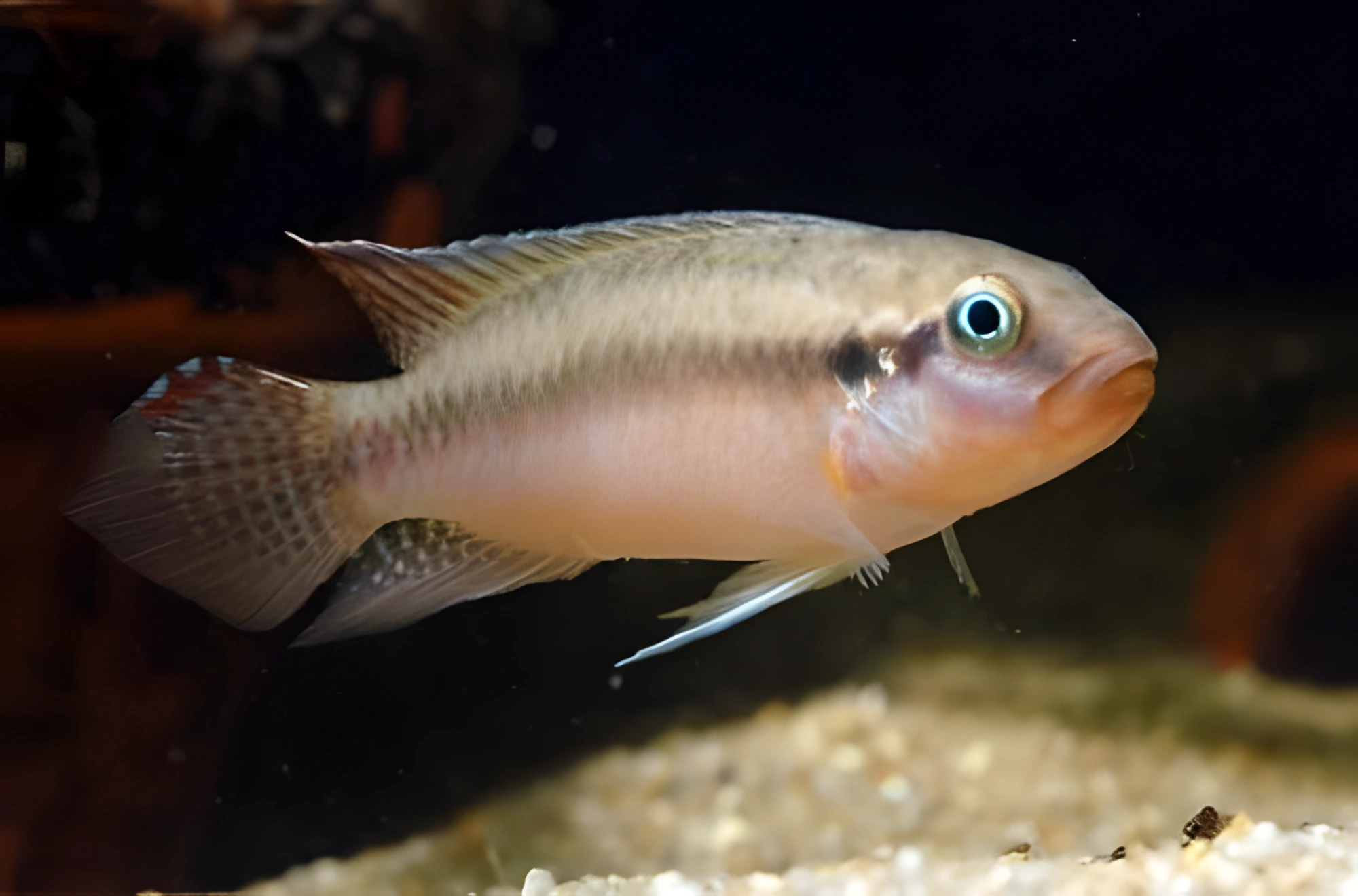
Congochromis sabinae, more commonly known as Congochromis sabinae, is a member of the Cichlidae family. Despite the scientific description of this species appearing much later, the fish actively began to inhabit aquariums as early as the 1960s. At that time, it was often called "Red Mary" — a name referring to the color of the famous cocktail, and it remains in use among aquarists to this day. This cichlid species does not present particular difficulties in keeping and breeding, provided that suitable conditions are ensured. It coexists well with many other species, making it an excellent choice for beginner aquarists.
- Required aquarium volume
- 50 L
- Size in aquarium
- 4 – 7 cm
- Temperature
- 24 – 27 °C
- Temperament
- Peaceful (regular)
Parameters
Water pHAcidic (4) – Slightly acidic (6)
Water dHVery soft (0) – Very soft (3)
Water salinityno salt (freshwater)
Size in aquarium4 – 7 cm
Lifespan5 years
TemperamentPeaceful (regular)
Toward small fishnot a predator
Required aquarium volume50 L
Lightingdimmed
Substratesandy (regular, light)
Water flowweak
FeedingPlant-based (algae, vegetables)
CareHarem (1 male and several females)
Description
Males of these fish can reach a length of 6–7 cm, while females are slightly smaller, measuring 4–5 cm. Visible differences between male and female individuals generally end there. The upper part of the fish's body is colored in gray tones, while the lower part displays pink or red iridescence. The translucent fins and tail are adorned with red-blue edging along the upper lobes and several speckles of the same shades. During the spawning period, the coloration becomes noticeably redder.
Habitat
The natural habitat of this species extends across the equatorial territories of Africa, covering Gabon, Congo, and the northern regions of the Democratic Republic of Congo. The fish inhabits the Congo River basin — one of the largest on the continent. It prefers to settle in smaller streams and rivers that are hidden under the dense canopy of tropical rainforests. In such waters, the water often acquires a brown tint, which is due to the high content of tannins released during the decomposition of plant debris – branches, fallen leaves, fruits, and tree trunks.
Behavior and Compatibility
Males are territorial and compete with each other for the best spots on the bottom. In a small aquarium, it is recommended to keep only one adult male, who can be paired with a female or a group of females. These fish coexist well with other peaceful schooling species, such as characins, cyprinids, as well as South American cichlids, Corydoras catfish, and others.
Care and Maintenance
The optimal aquarium volume for a pair of these fish starts from 50 L. If a group of 3–5 individuals is planned or they are to be combined with other species, a significantly larger tank will be required — from 200 L or more. It is desirable that the aquarium setup accurately mimics the natural habitat of these fish. It is important to create a sufficient number of shelters, which can be small caves or shaded areas formed by driftwood and dense thickets of aquarium plants. Some aquarists also use ceramic pots lying on their side or hollow pipe sections with a diameter of 4 cm or more, as they serve as potential spawning sites. Since the lighting should be subdued, shade-loving plant species should be chosen for decoration. An indispensable element of decor are dried leaves of certain trees, placed on the bottom. More detailed information can be found in the article "What Tree Leaves Can Be Used in an Aquarium". These leaves not only improve the aesthetics of the aquarium but also significantly affect the chemical composition of the water. Similar to natural water bodies, during decomposition, they gradually release tannins, giving the water a characteristic brownish tint. After setting up the aquarium, it is necessary to regularly perform its maintenance. Provided an effective filtration system and no overfeeding, aquarium care comes down to the following: weekly water changes of 15–20% of the volume with fresh water, regular removal of organic waste (food remains, excrement, old leaves, etc.) using a siphon, preventive maintenance of equipment according to manufacturers' instructions, as well as monitoring key water parameters (pH and dGH) and controlling the concentrations of nitrogen cycle products – ammonia, nitrites, and nitrates.
Diet
Since the main feeding of these fish occurs at the bottom, sinking foods should be preferred. Plant components should form the basis of their diet, for example, foods based on spirulina algae. To diversify the menu, frozen daphnia, artemia, and chopped bloodworms can be included. However, these supplements should be given no more than 2–3 times a week, serving only as an addition to the main plant-based food.
Breeding and Reproduction
Breeding these fish is not difficult, and under favorable conditions, spawning occurs regularly. It is important to note that, although Congochromis sabinae can live in water with relatively low hardness, very soft and acidic water will be required for successful egg development, which may necessitate the use of a reverse osmosis filter. The fish do not show particular requirements for partner selection; it is enough to place a male and a female together to expect offspring. The initiative in courtship comes from the female. After short "mating dances," the pair chooses a suitable spawning site — usually a cave. The female remains inside, guarding the clutch, while the male patrols the territory around her. The duration of the incubation period depends on the temperature, but in most cases, it is about 3 days. Fry begin to swim freely 8–9 days after hatching. Parents continue to care for their offspring for approximately two more months, after which the young become independent.
Diseases
The main cause of diseases often lies in the keeping conditions: if they go beyond acceptable limits, immunity decreases, making the fish vulnerable to various infections inevitably present in the environment. At the first suspicion of illness, it is important first of all to check the water parameters and ensure there are no dangerous concentrations of nitrogen cycle products. Often, restoring normal, suitable conditions promotes recovery. However, in some cases, medication may be required. Detailed information on symptoms and treatment methods is presented in the "Aquarium Fish Diseases" section.
How to choose
When selecting individuals, attention should be paid to their activity and the absence of visible damage, such as ulcers, fin rot, or whitish spots on the body. A healthy fish should show interest in its surroundings and not be apathetic or emaciated. Avoid purchasing fish that appear overly timid or constantly hide in the corners of the aquarium in the store, as this may indicate stress or hidden diseases. Given that the species often goes on sale under trade names from wild-caught locations, check with the seller about keeping conditions, as the fish requires stable water parameters and does not tolerate abrupt environmental changes.
Frequently asked questions
The essentials: size, tank volume, water parameters and care
How big does Congochromis sabinae get?
An adult reaches 4–7 cm in length. Plan the tank around the maximum size: the fish quickly outgrows a cramped setup.
What size aquarium does Congochromis sabinae need?
The minimum recommended volume is 50 L. A smaller tank speeds up nitrate build-up and raises stress levels.
What water parameters does Congochromis sabinae need?
Temperature 24–27 °C, pH 4–6, hardness 0–3 dGH. Stability matters more than exact values: sudden swings are harder on the fish than a small deviation from the ideal.
How long does Congochromis sabinae live?
Around 5 years when kept properly. Lifespan depends directly on tank volume, water quality and a varied diet.
Is Congochromis sabinae aggressive?
Temperament: peaceful (regular). Keep this in mind when choosing tank mates.
How many Congochromis sabinae should be kept together?
Recommended setup: harem (1 male and several females). Ignoring this is a common cause of stress and disease.
What does Congochromis sabinae eat?
Diet type: plant-based (algae, vegetables). Feed small portions that are finished within a couple of minutes — overfeeding does more harm than underfeeding.
What is the scientific name of Congochromis sabinae?
The scientific name of the species is Congochromis sabinae, family Cichlids (Cichlidae). It also appears in the literature as: Nanochromis sabinae.