Temperature18 – 22 °C
Natural range
- Eastern Asia area
- China area
GoldfishConservation status: Least concern LC
Other scientific names: Carasius auratus, Carassius buergeri, Carassius burgeri, Carassius carassius, Carassius chinensis, Carassius coeruleus
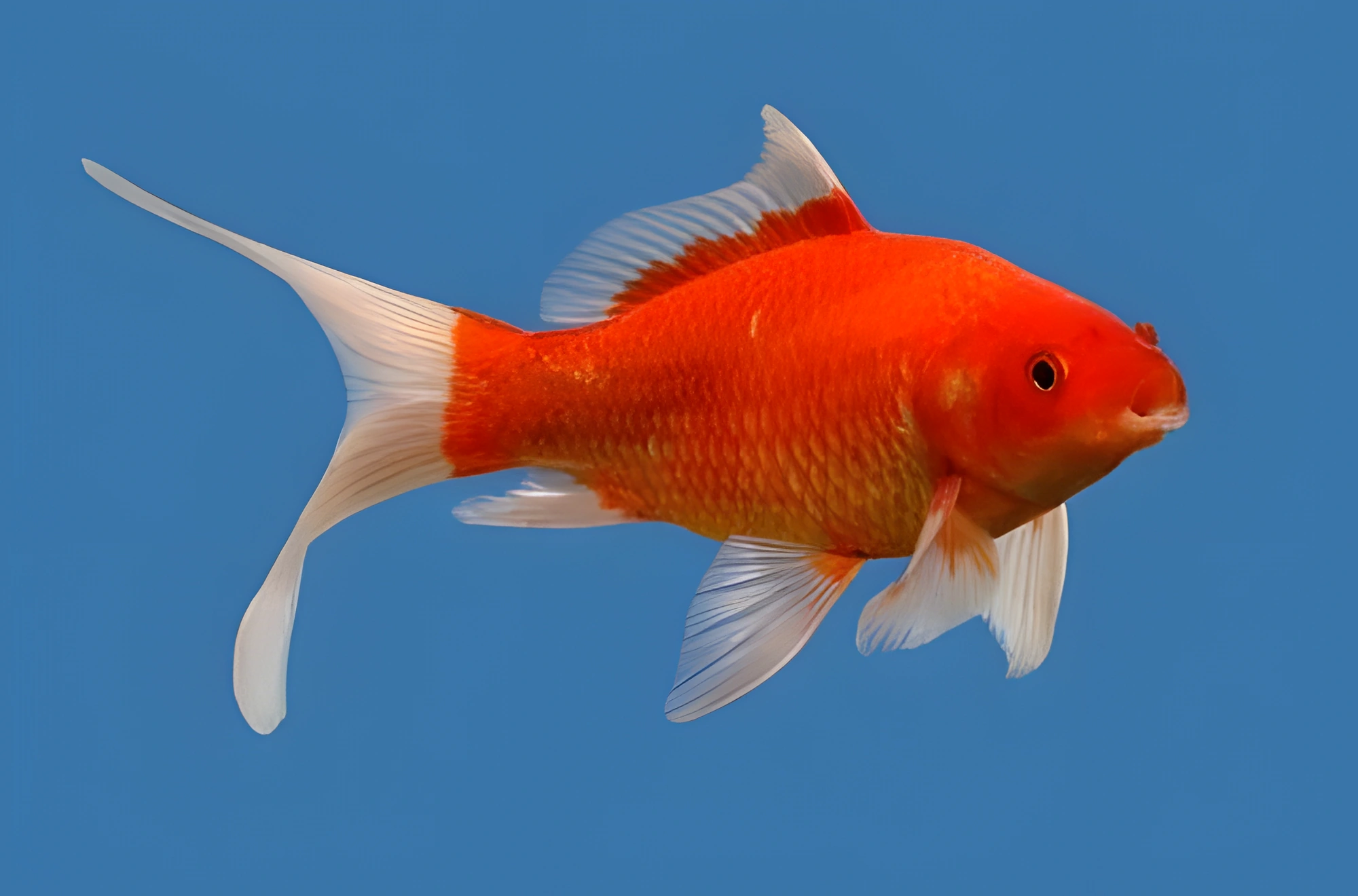
Developed in the USA in the 19th century, the Comet Goldfish is a form of the classic Goldfish. Its distinguishing features are large fins and a characteristic elongated, forked tail. This species, like its wild ancestors, is exceptionally hardy, tolerating even low temperatures approaching zero. Today, the Comet Goldfish is actively bred for keeping in home aquariums, as well as in ponds and lakes. Thanks to their unpretentiousness in care and undemanding dietary needs, these fish are an excellent choice for beginner aquarists. Although decorating the aquarium will not pose particular difficulties, it should be remembered that the Comet Goldfish is an active and fast swimmer prone to jumping, so it is advisable to equip the aquarium with a lid.
- Required aquarium volume
- 150 L
- Size in aquarium
- 10 – 30 cm
- Temperature
- 18 – 22 °C
- Temperament
- Peaceful, active/mobile
Parameters
Water pHSlightly acidic (6) – Slightly alkaline (8)
Water dHSoft (5) – Very hard (19)
Water salinityno salt (freshwater)
Size in aquarium10 – 30 cm
Lifespan14 years
TemperamentPeaceful, active/mobile
Toward small fishnot a predator
Required aquarium volume150 L
Lightingmoderate (regular)
Substratefine sand
Water flownone or stagnant (no flow)
FeedingMixed diet (meat + plant-based)
CareSchooling (usually from 5–6 individuals and more)
Description
The Comet Goldfish is a selectively bred form of goldfish, distinguished by its elongated, streamlined body and a long, deeply forked single caudal fin, resembling a fork. The fins can be significantly longer than the body. The coloration is diverse: from classic red and orange to white, lemon-yellow, or combinations of these colors with spots. Adults reach 15–20 cm in length; in pond conditions, they can grow up to 30 cm. Sexual differences become noticeable during the spawning period: males develop small white tubercles on their gill covers and serrations on their pectoral fins.
Habitat
The Comet Goldfish does not exist as a natural species in the wild; it is an artificially bred variety. Its ancestor, the Prussian carp (Carassius auratus), inhabits slow-moving or stagnant waters of East Asia (rivers, lakes, ponds), preferring areas with abundant aquatic vegetation and soft substrate. Comet Goldfish are adapted to life in temperate climates and can tolerate significant fluctuations in water temperature.
Behavior and Compatibility
Comet Goldfish are very active, swift, and mobile fish, requiring ample swimming space. They are peaceful, but due to their high speed and activity, they may compete for food with slower species, so it is best to keep them in a species-specific tank or with other active coldwater fish. They are social and prefer to stay in groups.
Care and Maintenance
For keeping a single specimen, an aquarium of at least 50 liters is recommended; for a group, significantly more. Powerful filtration and regular aeration are necessary, as the fish produce a lot of organic waste. The optimal water temperature is 18–23 °C, hardness 8–25 dGH, pH 6–8. For substrate, large, rounded pebbles without sharp edges are preferred to avoid damaging the fins. The aquarium must be covered with a lid, as the fish can jump out.
Diet
Omnivorous fish with a pronounced herbivorous tendency. The diet should consist of specialized goldfish food (pellets are preferred), supplemented with plant-based foods (blanched lettuce leaves, spinach, zucchini, cucumbers) and protein additives (brine shrimp, bloodworms). Feed 1–2 times a day in small portions that are consumed within a few minutes to avoid water pollution.
Breeding and Reproduction
Breeding is relatively straightforward. For spawning, a separate aquarium with fine-leaved plants or spawning mops is recommended. The stimulus is a gradual increase in water temperature to 20–23 °C and an extended photoperiod. After spawning, the parents should be removed, as they tend to eat the eggs. Fry are fed with infusoria, Artemia nauplii, or specialized starter foods.
Diseases
The most common problems are associated with poor water quality and the accumulation of nitrogenous compounds. Bacterial infections, fin rot, fungal infections, and swim bladder disorders (bloating, loss of balance) are common. Prevention includes regular water changes, parameter control, and avoiding overfeeding.
How to choose
When purchasing, choose active, well-fed individuals with clean scales, free of damage, ulcers, or white spots. Eyes should be clear, without cloudiness. Fins should be spread, with even edges, and no signs of deterioration. Avoid fish that lie sluggishly on the bottom or have an unnaturally bloated abdomen.
Frequently asked questions
The essentials: size, tank volume, water parameters and care
How big does Comet Goldfish get?
An adult reaches 10–30 cm in length. Plan the tank around the maximum size: the fish quickly outgrows a cramped setup.
What size aquarium does Comet Goldfish need?
The minimum recommended volume is 150 L. A smaller tank speeds up nitrate build-up and raises stress levels.
What water parameters does Comet Goldfish need?
Temperature 18–22 °C, pH 6–8, hardness 5–19 dGH. Stability matters more than exact values: sudden swings are harder on the fish than a small deviation from the ideal.
How long does Comet Goldfish live?
Around 14 years when kept properly. Lifespan depends directly on tank volume, water quality and a varied diet.
Is Comet Goldfish aggressive?
Temperament: peaceful, active/mobile. Keep this in mind when choosing tank mates.
How many Comet Goldfish should be kept together?
Recommended setup: schooling (usually from 5–6 individuals and more). Ignoring this is a common cause of stress and disease.
What does Comet Goldfish eat?
Diet type: mixed diet (meat + plant-based). Feed small portions that are finished within a couple of minutes — overfeeding does more harm than underfeeding.
What is the scientific name of Comet Goldfish?
The scientific name of the species is Carassius auratus, family Cyprinids (Cyprinidae). It also appears in the literature as: Carasius auratus, Carassius buergeri, Carassius burgeri.