Temperature23 – 26 °C
Natural range
- Southeast Asia area
- Middle East area
Predators UnusualConservation status: Least concern LC
Other scientific names: Macroganthus aculeatus, Macrograthus aculeatus, Mastacembelus aculeatus, Ophidium aculeatum, Rhynchobdella aculeata, Rhynchobdella ocellata
The Spiny Eel, also known as the Spotted Spiny Eel (scientific name Macrognathus aculeatus), belongs to the family Mastacembelidae. This species has a reclusive nature, making it one of the least conspicuous inhabitants of an aquarium. Although Macrognathus is a predator, it is peaceful and coexists well with fish of appropriate size. Its keeping is not particularly difficult: it easily adapts to various pH and dGH values.
- Required aquarium volume
- 80 L
- Size in aquarium
- 36 cm
- Temperature
- 23 – 26 °C
- Temperament
- Semi-peaceful (including aggression during spawning / intraspecific conflicts)
Parameters
Water pHSlightly acidic (6) – Slightly alkaline (8)
Water dHSoft (6) – Very hard (35)
Water salinitywide range (from ~1 to ~20 g/L)
Size in aquarium36 cm
Lifespan10 years
TemperamentSemi-peaceful (including aggression during spawning / intraspecific conflicts)
Toward small fishpredator
Required aquarium volume80 L
Lightingdimmed or moderate
Substratesandy (regular, light)
Water flowweak or moderate
FeedingMeat / protein (live, frozen, fresh)
CareSolitary
Description
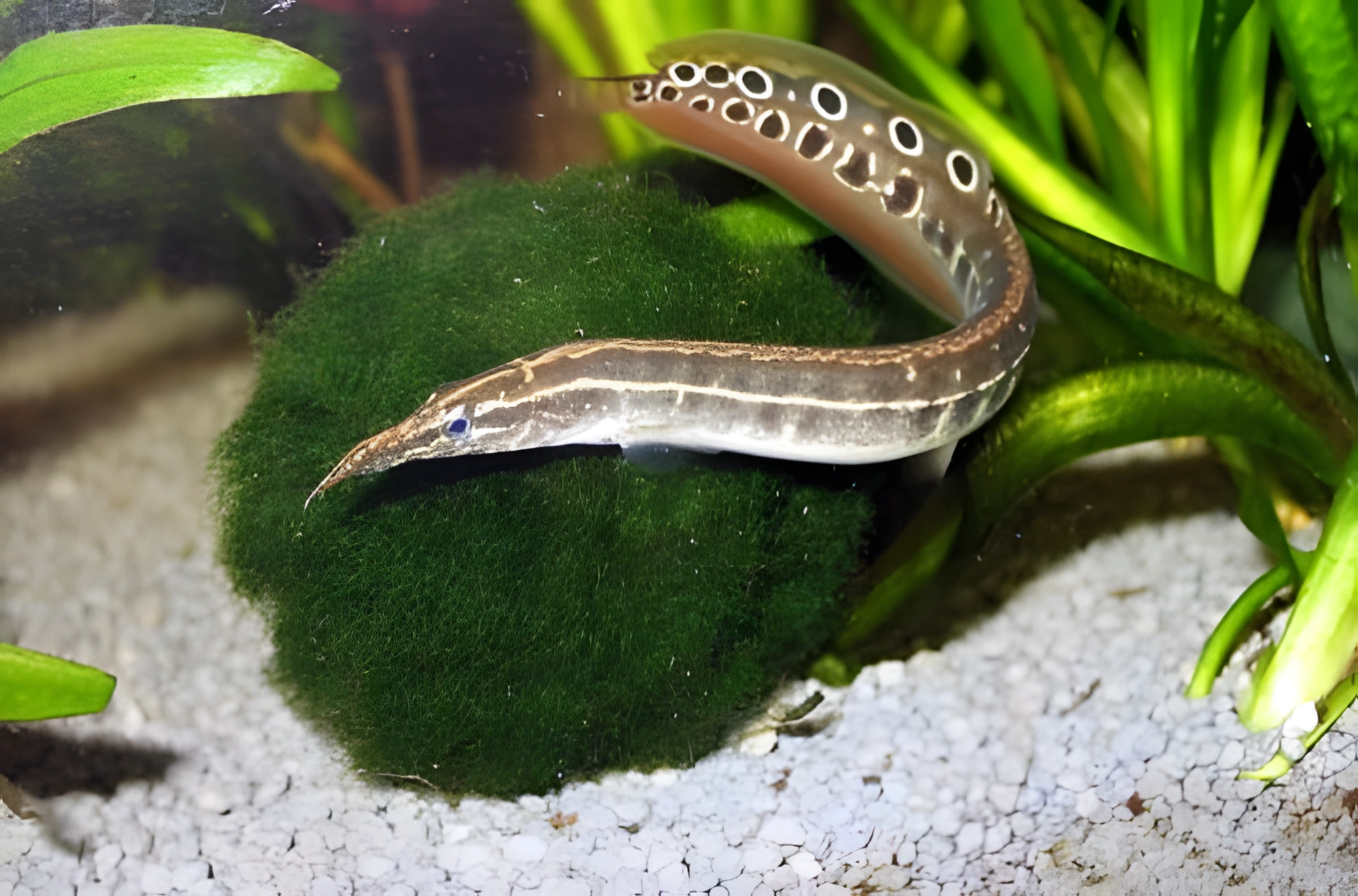
Adults can reach up to 36 cm in length in the wild, although they rarely exceed 20 cm in aquarium conditions. This fish has a long, snake-like body and an elongated, pointed head. The pelvic fins are very small and short. The dorsal and anal fins are located closer to the tail and merge with it, forming a single large plane. The coloration varies from yellow to light brown tones, sometimes with thin vertical dark stripes. A characteristic feature is a thin light stripe running from head to tail, as well as large black spots with light edgings on the posterior part of the body. The dorsal fin is equipped with sharp spines, which gave the fish its name — Spiny Eel.
Habitat
This species is widespread across vast territories of Southeast Asia, the Middle East, and Africa. It is found in both fresh and brackish waters, preferring areas with slow currents and soft substrate. In such environments, eels typically burrow into the substrate, waiting for prey to swim by.
Behavior and Compatibility
Young individuals can be kept in groups, but as they mature, they begin to exhibit territorial behavior, so it is better to keep them individually. Despite being predators, the Spiny Eel is safe for fish that are large enough not to fit into its mouth. Suitable tank mates include Gouramis, Acaras, Loaches, Armored Catfish, as well as peaceful American Cichlids and similar fish.
Care and Maintenance
Macrognathus aculeatus is not very active, preferring to remain in one place for long periods. An 80 L aquarium will be sufficient for a single specimen. When setting up the aquarium, the choice of substrate plays a key role: it is recommended to use soft, coarse sand that will not compact. Other decorative elements, including plants, are chosen according to the aquarist's preferences. Maintaining high water quality is critical for carnivorous species that produce a lot of waste. Therefore, a powerful filtration system is essential, as is weekly water changes of 20–25% and regular aquarium cleaning.
Diet
In its natural habitat, Macrognathus is an ambush predator whose diet consists of small fish and crustaceans. In a home aquarium, it readily accepts pieces of fresh or frozen fish meat, shrimp, mollusks, as well as earthworms and bloodworms. Additionally, specialized dry foods high in protein, designed for bottom-dwelling fish, such as flakes or granules, can be added to its diet.
Breeding and Reproduction
Successful attempts to breed the Spotted Spiny Eel in home aquariums have not been recorded at the time of writing this article. It is known that in their natural habitat, changes in the environment with the onset of the rainy season trigger spawning. These eels can lay up to 1000 eggs, usually at the base of aquatic plants. The incubation period is 3 days, after which the fry begin to swim freely. It is worth noting the poorly developed parental instincts of these fish, which often leads to adults preying on their own offspring.
Diseases
This fish species is extremely sensitive to water quality parameters. Deterioration of keeping conditions inevitably affects their health, making them vulnerable to various diseases. More detailed information on symptoms and treatment methods can be found in the "Aquarium Fish Diseases" section.
How to choose
When purchasing a spiny eel, it is important to carefully inspect the fish's skin. Individuals often have injuries sustained during transportation, which quickly become infected with fungus. Avoid specimens with whitish growths, open wounds, or signs of emaciation. A healthy fish should be active during twilight hours, but during the day in the store, it may be reclusive or buried in the substrate.
- check the integrity of the fins and the absence of damage on the body;
- ensure that the fish has no signs of fungal infections or white spots;
- ask the seller if the individual accepts frozen foods, as adaptation to a non-live diet can be difficult;
- prefer individuals that appear well-fed and do not have a sunken belly.
Frequently asked questions
The essentials: size, tank volume, water parameters and care
How big does Spiny Eel get?
An adult reaches 36 cm in length. Plan the tank around the maximum size: the fish quickly outgrows a cramped setup.
What size aquarium does Spiny Eel need?
The minimum recommended volume is 80 L. A smaller tank speeds up nitrate build-up and raises stress levels.
What water parameters does Spiny Eel need?
Temperature 23–26 °C, pH 6–8, hardness 6–35 dGH. Stability matters more than exact values: sudden swings are harder on the fish than a small deviation from the ideal.
How long does Spiny Eel live?
Around 10 years when kept properly. Lifespan depends directly on tank volume, water quality and a varied diet.
Is Spiny Eel aggressive?
Temperament: semi-peaceful (including aggression during spawning / intraspecific conflicts). This is a predatory species — any fish small enough to fit in its mouth will eventually be eaten.
How many Spiny Eel should be kept together?
Recommended setup: solitary. Ignoring this is a common cause of stress and disease.
What does Spiny Eel eat?
Diet type: meat / protein (live, frozen, fresh). Feed small portions that are finished within a couple of minutes — overfeeding does more harm than underfeeding.
What is the scientific name of Spiny Eel?
The scientific name of the species is Macrognathus aculeatus, family Mastacembelidae. It also appears in the literature as: Macroganthus aculeatus, Macrograthus aculeatus, Mastacembelus aculeatus.