Temperature22 – 26 °C
Natural range
- Amazon Basin
- Essequibo River Basin
- Peru area
- Colombia area
CatfishConservation status: Least concern LC
Other scientific names: Doras brunnescens, Doras spinosissimus
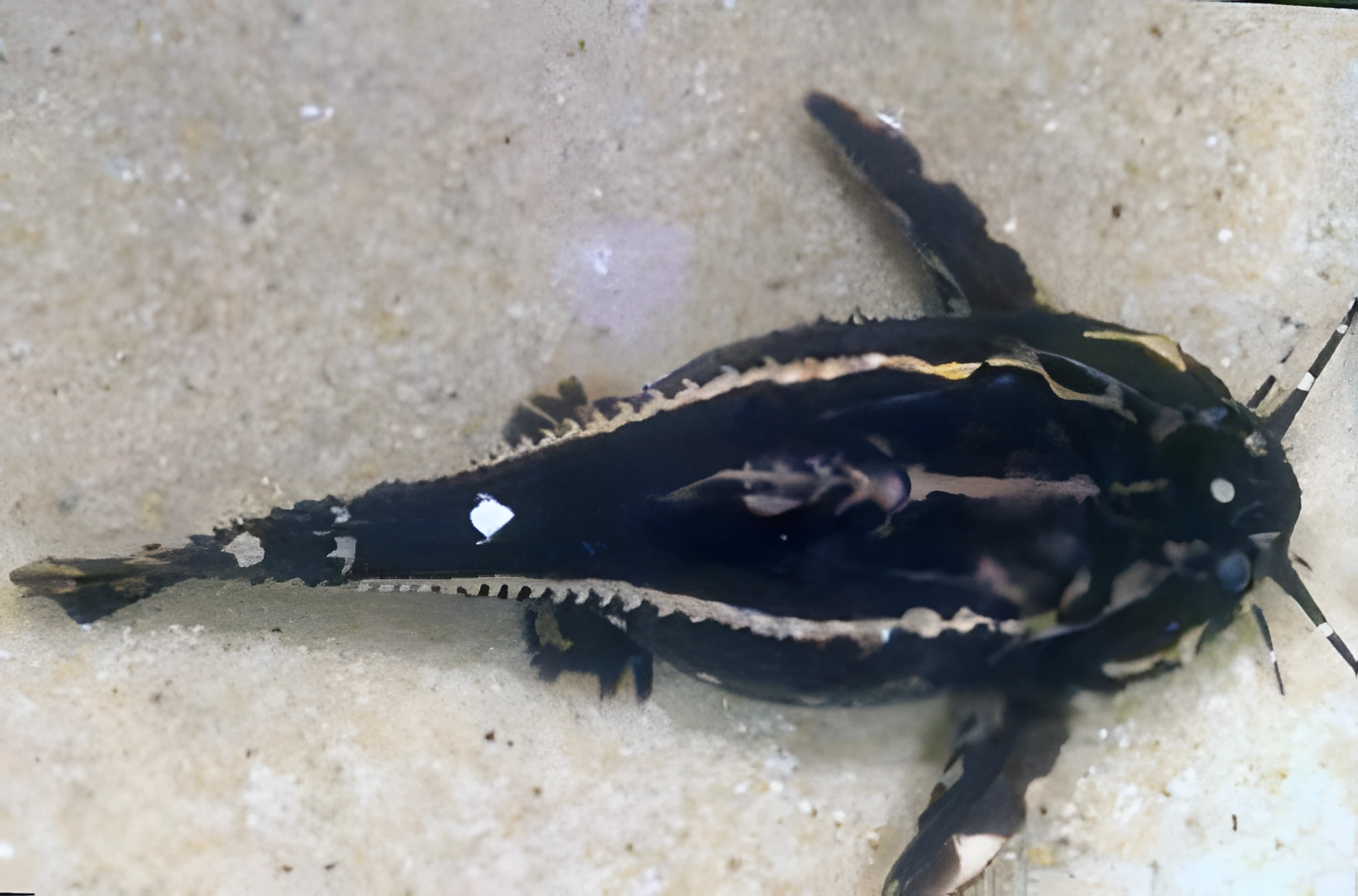
The Spiny Catfish, scientifically known as Acanthodoras spinosissimus, belongs to the family Doradidae, or Thorny Catfishes. They are also called "Talking Catfishes" due to the sounds they produce using special bony plates. This is an unpretentious and easy-to-keep species that will be a wonderful addition to a freshwater aquarium.
- Required aquarium volume
- 100 L
- Size in aquarium
- 14 cm
- Temperature
- 22 – 26 °C
- Temperament
- Peaceful (regular)
Parameters
Water pHSlightly acidic (6) – Neutral (7.5)
Water dHSoft (4) – Very hard (24)
Water salinitylow (3–5 g/L)
Size in aquarium14 cm
Lifespan10 years
TemperamentPeaceful (regular)
Toward small fishnot a predator
Required aquarium volume100 L
Lightingany
Substratesandy (regular, light)
Water flownone or stagnant (no flow)
FeedingSinking (any)
CareSmall group (5–6 individuals)
Description
Adults of this species reach a maximum length of 14 cm. Due to its bulky body and relatively short tail, the catfish gives the impression of being clumsy. Its coloration is brown, with characteristic light spots and stripes. The head and the front part of the body are covered with bony plates, while the caudal part is equipped with sharp spines. The dorsal and pectoral fins have transformed into sharp spines. These features earned it the nickname "Spiny Catfish."
Habitat
Its natural habitat is South America, where it is widely distributed in the northern part of the Amazon basin in Peru, Colombia, and Brazil, as well as in the Essequibo River basin in Guyana. These catfishes inhabit sections of rivers and streams with slow currents. They can also be found in backwaters, floodplains, freshwater swamps, and coastal mangrove thickets. During the day, catfishes prefer to hide among roots or aquatic vegetation, and at dusk, they emerge from their shelters in search of food.
Behavior and Compatibility
These catfishes are not aggressive; however, being omnivores, they may eat fry or small fish that can fit into their mouths. Thanks to their "armor" and ability to adapt to various aquatic conditions, they get along well with many other fish species, even rather feisty ones. It is preferable to keep them in groups of at least 3–4 individuals.
Care and Maintenance
The optimal aquarium volume for a group of 3–4 Spiny Catfish starts from 100 liters. When decorating, it is essential to provide as many shelters as there will be fish. These refuges can be created from driftwood and dense plant thickets, or by using decorative elements such as caves and grottoes. A soft, sandy substrate is preferred. To be able to observe the catfish's activity during the day, when they usually hide, an additional source of dim red light is often used, which is turned on after the main lighting is switched off. Keeping this species is not very difficult: the Spiny Catfish can adapt to a wide range of conditions, including brackish water. When planning to change the hydrochemical composition of the water, for example, to introduce other species, this should be done very gradually. Aquarium maintenance is standard: regular removal of organic waste, cleaning of walls and decor elements, and weekly partial water changes with fresh water are required. The installation of an efficient filtration system and other necessary equipment is important. It is necessary to remember safety precautions when cleaning the aquarium, especially when catching catfish, as their sharp spines can cause a sting.
Diet
Being an omnivorous species, the catfish will accept most dry and frozen foods intended for bottom feeding. Its diet can also include live artemia, bloodworms, and daphnia. Since feeding occurs at night, feeding should be done before turning off the lights. If a lot of uneaten food remains in the aquarium after daytime feeding, the portions should be reduced. In such conditions, the catfish will actively "clean up" leftovers from other inhabitants.
Breeding and Reproduction
At the time of preparing this article, information on successful breeding cases of Spiny Catfish in home aquariums remains scarce. At the beginning of the breeding season, the fish form temporary pairs, jointly prepare a place for future spawning by digging a pit in the substrate, and care for the clutch until the fry appear.
Diseases
Most health problems in fish often arise from unsuitable keeping conditions. Maintaining a stable and comfortable habitat is a key factor for successful keeping. If symptoms of illness appear, the first step is to check the water quality. If deviations are found, it is important to take immediate measures to eliminate them. If the symptoms do not disappear or worsen, medicinal treatment may be required. More detailed information on symptoms and treatment methods can be found in the "Diseases of Aquarium Fish" section.
How to choose
When purchasing, choose active fish without visible damage to the skin and fins. Given the presence of sharp spines, exercise caution during inspection and transportation: fish can get tangled in a regular net, so it is recommended to use a plastic container or a smooth-sided container. Avoid individuals with signs of emaciation or sunken bellies. In the store, catfish often hide, so it's worth asking the seller to gently lift decorations to assess the fish's health. Sharp spines on the pectoral and dorsal fins can be dangerous to hands, so avoid direct contact when transferring.
Frequently asked questions
The essentials: size, tank volume, water parameters and care
How big does Spiny Catfish get?
An adult reaches 14 cm in length. Plan the tank around the maximum size: the fish quickly outgrows a cramped setup.
What size aquarium does Spiny Catfish need?
The minimum recommended volume is 100 L. A smaller tank speeds up nitrate build-up and raises stress levels.
What water parameters does Spiny Catfish need?
Temperature 22–26 °C, pH 6–7.5, hardness 4–24 dGH. Stability matters more than exact values: sudden swings are harder on the fish than a small deviation from the ideal.
How long does Spiny Catfish live?
Around 10 years when kept properly. Lifespan depends directly on tank volume, water quality and a varied diet.
Is Spiny Catfish aggressive?
Temperament: peaceful (regular). Keep this in mind when choosing tank mates.
How many Spiny Catfish should be kept together?
Recommended setup: small group (5–6 individuals). Ignoring this is a common cause of stress and disease.
What does Spiny Catfish eat?
Diet type: sinking (any). Feed small portions that are finished within a couple of minutes — overfeeding does more harm than underfeeding.
What is the scientific name of Spiny Catfish?
The scientific name of the species is Acanthodoras spinosissimus, family Armored Catfishes (Doradidae). It also appears in the literature as: Doras brunnescens, Doras spinosissimus.