Temperature26 – 30 °C
Natural range
- Nauatl Valley area
- Panuco State
KillifishConservation status: Vulnerable VU
Cualac tessellatus, or the Checkered Killifish, belongs to the family Cyprinodontidae. This species is not commonly found in the aquarium hobby due to its narrow and shrinking habitat range. Nevertheless, it can be ordered from some specialized breeders or large pet stores. Acquiring such a fish can be advantageous in the future due to its uniqueness and potentially high value.
- Required aquarium volume
- 80 L
- Size in aquarium
- 7 cm
- Temperature
- 26 – 30 °C
- Temperament
- Peaceful (regular)
Parameters
Water pHNeutral (7.5) – Slightly alkaline (8.5)
Water dHVery hard (30) – Very hard (40)
Water salinityno salt (freshwater)
Size in aquarium7 cm
Lifespan3 years
TemperamentPeaceful (regular)
Toward small fishnot a predator
Required aquarium volume80 L
Lightingmoderate or bright
Substratesoft silted
Water flowweak or moderate
FeedingMixed diet (meat + plant-based)
CareMixed (solitary / pair / group)
Description
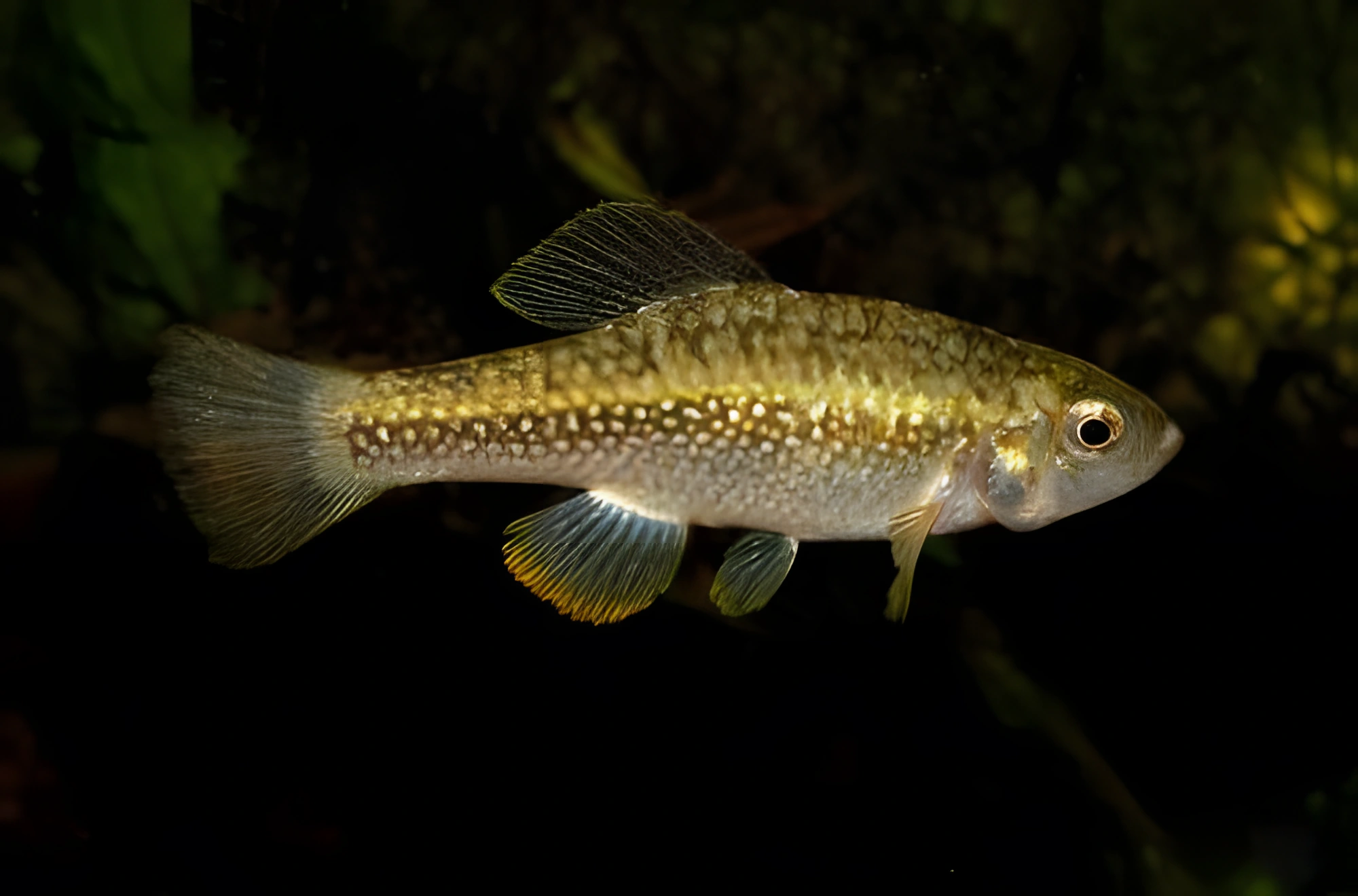
Adult males can reach up to 7 cm in length, while females remain smaller, not growing beyond 5 cm. Their coloration features a mosaic or checkered pattern of numerous small speckles, combining dark and light shades of brown and yellow. Their fins are transparent, often with striking blue or orange edging. Typically, males are distinguished by more intense and vibrant coloration.
Habitat
The natural habitat of this fish extends across the Nauatl Valley, which translates to “place where the water is good,” located in the state of Panuco, central Mexico. Scientists suggest that this valley was once the bed of a large relict lake, from which only small, scattered bodies of water remain today. The terrain, composed of calcium sulfate (gypsum), ensures the crystal clarity and high hardness of the water in these lakes, which are replenished by underground sources. Water lilies dominate among the aquatic vegetation, and filamentous algae appear in certain seasons. The bottom of these water bodies is predominantly covered with gravel and mud, with large snags found in some areas.
Behavior and Compatibility
This species has a relatively peaceful disposition, allowing it to live both in groups and in the company of other inhabitants, although there is limited experience with cohabitation. Nevertheless, it can be stated that the Checkered Killifish coexists well with many livebearers and certain carp species adapted to very hard water conditions.
Care and Maintenance
A pair of Checkered Killifish will feel comfortable in an aquarium of 60 to 80 liters. When setting up the tank, it is important to provide plenty of floating plants; rooted species are not essential. For the substrate, a stony bottom is suitable, supplemented with large boulders or pieces of marble as decor. The presence of limestone is also beneficial, as its gradual dissolution, similar to marble, helps maintain the necessary high water hardness. Special attention should be paid to the filtration system to ensure water clarity and purity. It is advisable to choose the most powerful filter appropriate for the aquarium size, provided it does not create strong currents. The brightness level of the lighting is not critical for these fish, so it should be chosen based on the needs of the plants. Essential equipment also includes an air pump and a heater. Weekly aquarium maintenance involves replacing 15–20% of the water with fresh water and regularly cleaning the substrate of organic deposits.
Diet
In natural conditions, the diet of the Checkered Killifish includes small aquatic crustaceans, worms, insect larvae, and other zooplankton, as well as algae. In a home aquarium, they usually readily accept dry foods, but for a balanced diet, it is highly desirable to include meat and plant supplements. Live or frozen foods such as Artemia, Daphnia, bloodworms, and spirulina flakes can be offered. Feeding is recommended 2–3 times a day, providing an amount of food that the fish can consume within 5 minutes. It is important to promptly remove any uneaten food to prevent contamination of the aquarium water.
Breeding and Reproduction
Breeding this species is not difficult, provided the aquarium is properly set up. The most important factor is maintaining high water hardness, which is critical for the full development of the eggs. The best results are achieved by adding pieces of gypsum to the aquarium or using a filter with marble chips as a filter medium. Spawning can occur in a community tank if only killifish are present; instances of well-fed fish eating their eggs are extremely rare. The breeding season usually begins in spring or late summer. The onset of spawning is indicated by a change in male behavior: they select a temporary territory, actively defend it from rivals, and attract females. Females lay one or several eggs, attaching them with thin threads to aquatic plants or other suitable surfaces. Fry hatch after 7–14 days, depending on water temperature, and should be fed microfoods such as Artemia nauplii, microworms, or finely ground dry flakes.
Diseases
The Checkered Killifish has high disease resistance when specific keeping conditions are met, primarily maintaining very high water hardness. The main threat to health is deviation from the environmental parameters to which the fish are adapted in nature. When kept in soft or acidic water, fish become stressed, which reduces their immunity and makes them vulnerable to bacterial and fungal infections. To prevent diseases, effective filtration without strong currents must be ensured, and partial water changes must be performed regularly to prevent the accumulation of organic waste.
How to choose
When selecting individuals, attention should be paid to the activity of the fish and the cleanliness of their skin. A healthy Checkered Killifish should have clear eyes, tightly pressed fins without signs of erosion or film, and smooth scales without damage. Avoid purchasing fish that appear sluggish, stay near the water surface, or have an unnaturally bloated belly. Since the species is rarely widely available, it is recommended to purchase specimens from reputable breeders, as this minimizes the risk of acquiring sick or emaciated fish that have undergone stressful transportation.
Frequently asked questions
The essentials: size, tank volume, water parameters and care
How big does Checkered Killifish get?
An adult reaches 7 cm in length. Plan the tank around the maximum size: the fish quickly outgrows a cramped setup.
What size aquarium does Checkered Killifish need?
The minimum recommended volume is 80 L. A smaller tank speeds up nitrate build-up and raises stress levels.
What water parameters does Checkered Killifish need?
Temperature 26–30 °C, pH 7.5–8.5, hardness 30–40 dGH. Stability matters more than exact values: sudden swings are harder on the fish than a small deviation from the ideal.
How long does Checkered Killifish live?
Around 3 years when kept properly. Lifespan depends directly on tank volume, water quality and a varied diet.
Is Checkered Killifish aggressive?
Temperament: peaceful (regular). Keep this in mind when choosing tank mates.
How many Checkered Killifish should be kept together?
Recommended setup: mixed (solitary / pair / group). Ignoring this is a common cause of stress and disease.
What does Checkered Killifish eat?
Diet type: mixed diet (meat + plant-based). Feed small portions that are finished within a couple of minutes — overfeeding does more harm than underfeeding.
What is the scientific name of Checkered Killifish?
The scientific name of the species is Cualac tessellatus, family Killifish (Cyprinodontidae).