Temperature20 – 25 °C
Natural range
- Guangxi area
- Guangdong area
LoachesConservation status: Data deficient DD
Other scientific names: Botia hexafurca, Botia robusta
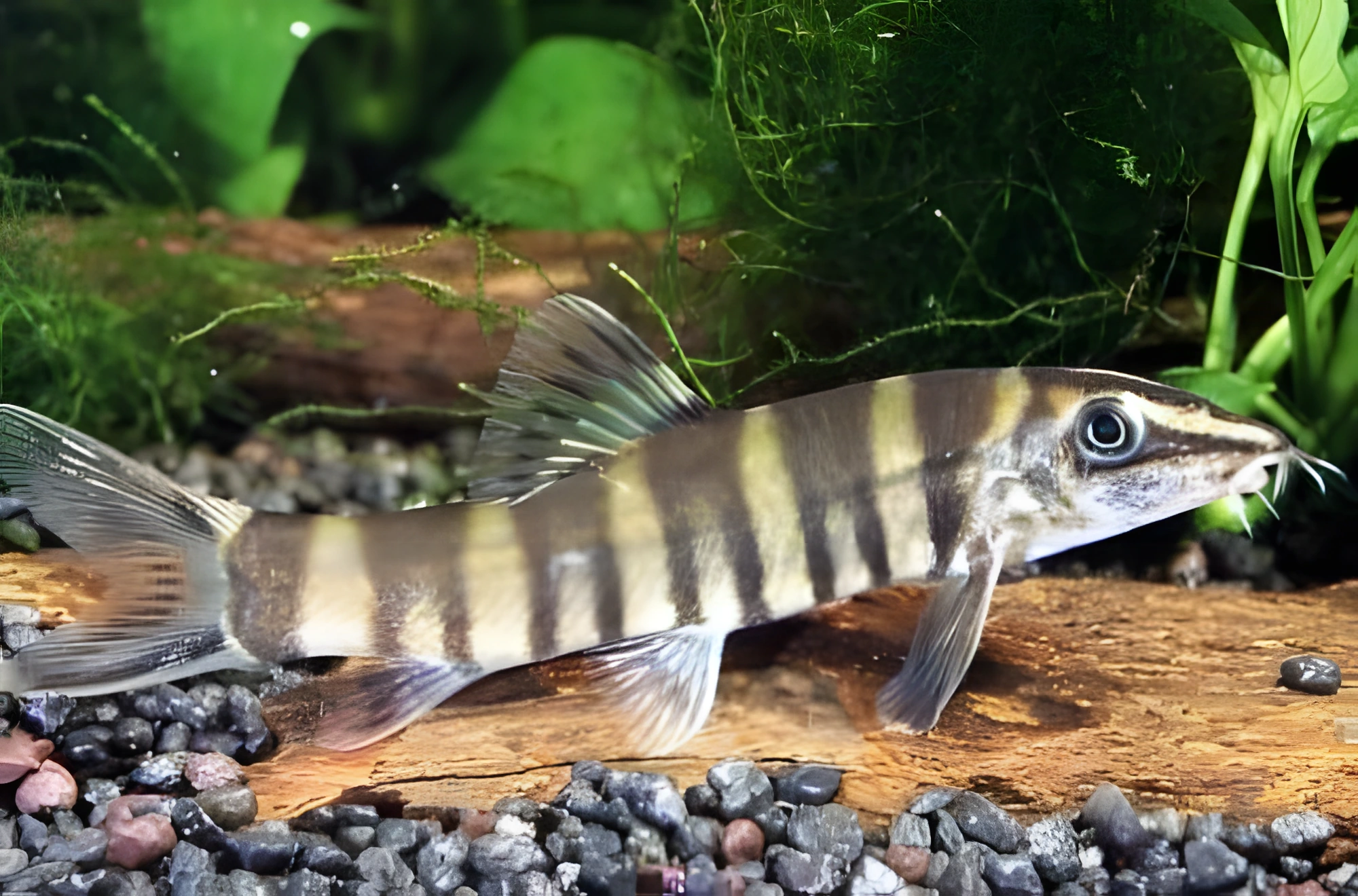
The Chinese Loach, known scientifically as Sinibotia robusta, belongs to the family Cobitidae. This fish is characterized by its ease of care and unpretentiousness, coexisting well with other species, which makes it an excellent addition to a community tank of tropical fish.
- Required aquarium volume
- 100 L
- Size in aquarium
- 9 – 10 cm
- Temperature
- 20 – 25 °C
- Temperament
- Peaceful (regular)
Parameters
Water pHNeutral (6.5) – Slightly alkaline (8)
Water dHVery soft (2) – Hard (15)
Water salinityno salt (freshwater)
Size in aquarium9 – 10 cm
Lifespan7 years
TemperamentPeaceful (regular)
Toward small fishnot a predator
Required aquarium volume100 L
Lightingdimmed
Substratefine sand
Water flowweak or moderate
FeedingSinking (any)
CareSmall group (3–4 individuals)
Description
Adults reach approximately 9–10 cm in length. Sexual dimorphism is weakly expressed: females are generally slightly larger than males. The fish's body is elongated, and its head is pointed; sensitive barbels are located around the mouth, which help it find food in the substrate. The body pattern consists of alternating yellow and brown vertical stripes.
Habitat
The natural habitat of this species extends across Southern China, encompassing the provinces of Guangxi and Guangdong, which are among the most densely populated and industrially developed regions. The fish are found in the basins of the Gunaxi and Xijiang rivers, preferring areas with moderate or weak currents, where the water is clean and the substrate is stony. River pollution has led to large wild populations of this species mainly surviving only in the headwaters.
Behavior and Compatibility
This fish is characterized by a peaceful and calm disposition, while leading a secretive lifestyle. It often spends time in the shade of plants or among shelters. It is highly compatible with many popular fish species that can exist in similar water conditions. It is recommended to keep them in a group of at least 3–4 individuals. It has been observed that with fewer numbers, the Chinese Loach may exhibit aggression towards tank mates.
Care and Maintenance
For a group of 3–4 fish, the optimal aquarium volume starts from 100 liters. The aquarium setup can be arbitrary, but several important conditions should be considered: the presence of a soft substrate and a sufficient number of shelters. Fine gravel or sand substrate is recommended. Various snags, as well as piles of stones forming crevices and grottoes, can serve as excellent shelters. Decorative objects imitating sunken ships or castles are also suitable for creating shelters. Lighting should be subdued, and plants should be selected from shade-loving species. It is recommended to plant them in pots to prevent accidental uprooting by the fish. Successful keeping of Chinese Botia largely depends on the hydrochemical composition and water quality. It is important to maintain the recommended pH and dGH parameters, ensure a high level of dissolved oxygen, regularly remove organic waste, and perform weekly water changes of 30–50% of the volume.
Diet
This species is carnivorous. In its natural habitat, its diet consists of aquatic insects and their larvae, crustaceans, mollusks, and small fish. In a home aquarium, it is not particularly picky, readily accepting all types of dry, frozen, and live foods.
Breeding and Reproduction
In natural conditions, the breeding period for these fish coincides with the rainy season, which prompts them to undertake long migrations to flooded coastal forest areas. Thus, the trigger for spawning is periodic changes in the external environment, which are extremely difficult to recreate within a home aquarium, making breeding this species challenging. Fry sold in stores are usually raised on commercial fish farms, where hormonal injections are used to stimulate loach reproduction.
Diseases
Non-ornamental fish species that have retained a close resemblance to their wild relatives usually exhibit high endurance, strong immunity, and resistance to various diseases. The occurrence of health problems most often indicates unsuitable keeping conditions. Therefore, before proceeding with treatment, it is strongly recommended to check the water quality and parameters. Only after all indicators have been brought back to normal should treatment begin, if it is still necessary. Detailed information on diseases, their symptoms, and therapy methods can be found in the “Aquarium Fish Diseases” section.
How to choose
When purchasing, choose active individuals that show curiosity and explore the bottom of the aquarium. Healthy fish should have a smooth body without visible damage, ulcers, or white film, as well as clean, untattered fins. It is important to avoid specimens that appear emaciated, have a sunken belly, or constantly hide in a corner in the absence of obvious shelters, as this may indicate stress or hidden diseases.
Since the species is schooling, it is recommended to acquire a group of 3–5 individuals, which reduces stress levels and promotes normal behavior. When inspecting in the store, pay attention to the fish's breathing: rapid gill ventilation may indicate poor water quality or illness. Keep in mind that botias have sharp suborbital spines, so thick bags should be used during transport to avoid damaging them.
Frequently asked questions
The essentials: size, tank volume, water parameters and care
How big does Chinese Botia get?
An adult reaches 9–10 cm in length. Plan the tank around the maximum size: the fish quickly outgrows a cramped setup.
What size aquarium does Chinese Botia need?
The minimum recommended volume is 100 L. A smaller tank speeds up nitrate build-up and raises stress levels.
What water parameters does Chinese Botia need?
Temperature 20–25 °C, pH 6.5–8, hardness 2–15 dGH. Stability matters more than exact values: sudden swings are harder on the fish than a small deviation from the ideal.
How long does Chinese Botia live?
Around 7 years when kept properly. Lifespan depends directly on tank volume, water quality and a varied diet.
Is Chinese Botia aggressive?
Temperament: peaceful (regular). Keep this in mind when choosing tank mates.
How many Chinese Botia should be kept together?
Recommended setup: small group (3–4 individuals). Ignoring this is a common cause of stress and disease.
What does Chinese Botia eat?
Diet type: sinking (any). Feed small portions that are finished within a couple of minutes — overfeeding does more harm than underfeeding.
What is the scientific name of Chinese Botia?
The scientific name of the species is Sinibotia robusta, family True Loaches (Cobitidae). It also appears in the literature as: Botia hexafurca, Botia robusta.