Temperature24 – 28 °C
Natural range
- Lake Tanganyika area
- Mpulungu area
Predators CichlidsConservation status: Least concern LC
Other scientific names: Haplochromis compressiceps, Lamprologus compressiceps, Neolamprologus compressiceps
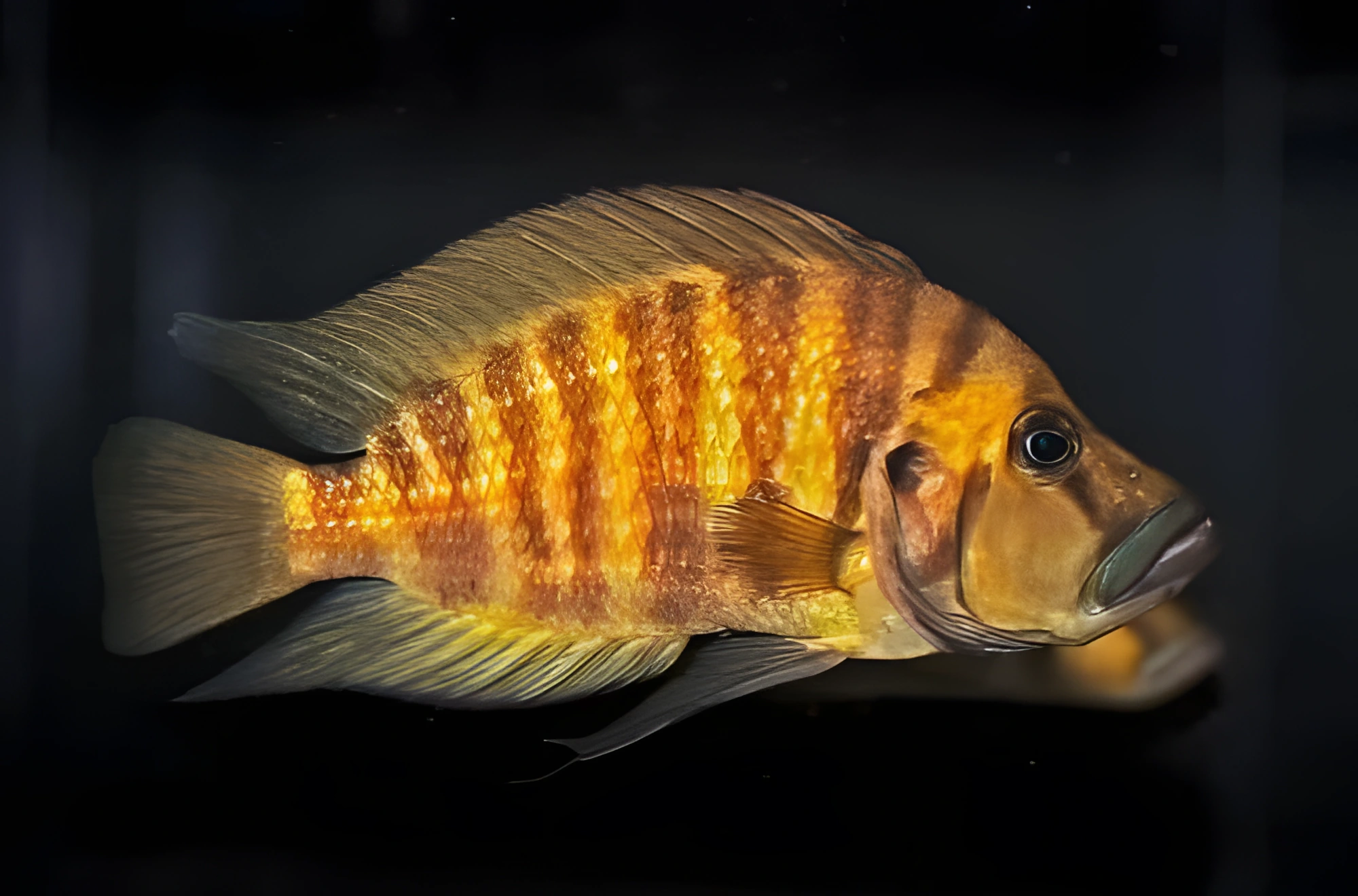
Altolamprologus compressiceps, also known as the Compressed Humphead or Kigoma Red, is a member of the Cichlidae family. It is a peaceful predator that only shows aggression towards very small fish. It coexists well with other fish species. Keeping and breeding this species is not particularly difficult if stable water conditions are provided. However, maintaining such conditions can be a challenge for beginner aquarists, so this fish is not recommended for them.
- Required aquarium volume
- 200 L
- Size in aquarium
- 10 – 12 cm
- Temperature
- 24 – 28 °C
- Temperament
- Semi-peaceful (including aggression during spawning / intraspecific conflicts)
Parameters
Water pHSlightly alkaline (8) – Alkaline (9)
Water dHMedium hardness (8) – Very hard (26)
Water salinityno salt (freshwater)
Size in aquarium10 – 12 cm
Lifespan8 years
TemperamentSemi-peaceful (including aggression during spawning / intraspecific conflicts)
Toward small fishpredator
Required aquarium volume200 L
Lightingmoderate (regular)
Substraterocky (rock formations, boulders, etc.)
Water flowweak or moderate
FeedingMeat / protein (live, frozen, fresh)
CareHarem (1 male and several females)
Description
Adult males reach up to 12 cm in length, while females are typically slightly smaller, up to 10 cm. These fish have laterally compressed bodies and an elongated, narrow head. This shape allows them to successfully hunt in crevices and grottoes. Sexual dimorphism is not pronounced; differences between males and females are mainly in size. Their coloration is characterized by a wide variety of color forms, but all of them contain yellow hues.
Habitat
This species is endemic to Lake Tanganyika in Africa. It can be found in the southern part of the lake, in the coastal waters of Zambia, near the city of Mpulungu. Its natural habitat is characterized by an abundance of rocky substrates and rocky shores. Fish typically inhabit depths of up to 10 meters, staying close to the shoreline.
Behavior and Compatibility
These fish can be kept in pairs or in a harem, where one male is kept with several females. The Kigoma Red, although territorial, is not an aggressive species. It coexists well with other fish from Lake Tanganyika, provided they are large enough not to become accidental prey.
Care and Maintenance
Optimal keeping conditions are achieved in an aquarium of 200 L or more, decorated to mimic its natural habitat. It is advisable to use rock formations and stones to create crevices and grottoes, as well as dark rocky substrates. Water quality and the stability of hydrochemical parameters play a key role in successful keeping. This can be achieved with an effective filtration system, weekly 15–20% water changes with fresh water, and regular cleaning of the aquarium from organic waste.
Diet
The Kigoma Red is a carnivorous predator. In a home aquarium, it will readily feed on fresh or frozen meaty foods such as pieces of mollusks, shrimp, as well as bloodworms and earthworms. There is no need to offer them live food, such as small fish.
Breeding and Reproduction
Breeding this species is quite possible in a community tank. During the spawning period, the female lays eggs in a small crevice where she can fit herself. After fertilization by the male, he gives way to the female, who remains to guard the clutch. Fry hatch after 3–5 days, and after some time begin to swim freely. From this moment, parental care for the offspring ends.
Diseases
The main cause of most diseases in Lake Tanganyika cichlids is unsuitable keeping conditions and poor-quality food, which often leads, for example, to African Bloat. At the first symptoms, it is necessary first to check the water parameters and ensure there are no high concentrations of dangerous substances such as ammonia, nitrites, and nitrates. If the readings deviate from the norm, they should be brought into order, and only then should treatment begin. More detailed information on symptoms and treatment methods is available in the “Aquarium Fish Diseases” section.
How to choose
When purchasing, choose individuals that show activity and have clean, undamaged fins and scales. A healthy fish should have a flat belly without signs of emaciation or unnatural bloating, clear eyes without cloudiness, and even breathing. Avoid specimens that hide in corners, constantly sway, or show signs of apathy.
Since the species is represented by many geographical morphs, it is important to purchase fish from trusted sources to exclude the risk of buying hybrids. The reputation of the seller is a key factor, as line purity is of great importance for preserving species characteristics. It is also recommended to clarify the keeping conditions in the store and the type of accustomed food to minimize stress during adaptation in a new aquarium.
Frequently asked questions
The essentials: size, tank volume, water parameters and care
How big does Kigoma Red get?
An adult reaches 10–12 cm in length. Plan the tank around the maximum size: the fish quickly outgrows a cramped setup.
What size aquarium does Kigoma Red need?
The minimum recommended volume is 200 L. A smaller tank speeds up nitrate build-up and raises stress levels.
What water parameters does Kigoma Red need?
Temperature 24–28 °C, pH 8–9, hardness 8–26 dGH. Stability matters more than exact values: sudden swings are harder on the fish than a small deviation from the ideal.
How long does Kigoma Red live?
Around 8 years when kept properly. Lifespan depends directly on tank volume, water quality and a varied diet.
Is Kigoma Red aggressive?
Temperament: semi-peaceful (including aggression during spawning / intraspecific conflicts). This is a predatory species — any fish small enough to fit in its mouth will eventually be eaten.
How many Kigoma Red should be kept together?
Recommended setup: harem (1 male and several females). Ignoring this is a common cause of stress and disease.
What does Kigoma Red eat?
Diet type: meat / protein (live, frozen, fresh). Feed small portions that are finished within a couple of minutes — overfeeding does more harm than underfeeding.
What is the scientific name of Kigoma Red?
The scientific name of the species is Altolamprologus compressiceps, family Cichlids (Cichlidae). It also appears in the literature as: Haplochromis compressiceps, Lamprologus compressiceps, Neolamprologus compressiceps.