Temperature18 – 28 °C
Natural range
- South Asia area
- Southeast Asia area
- Iran area
- Indonesia area
Predators UnusualConservation status: Least concern LC
Other scientific names: Channa gachus, Channa limbata, Ophicephalus apus, Ophicephalus coramota, Ophicephalus fuscus, Ophicephalus gachua
The Dwarf Snakehead (Channa gachua), a member of the family Channidae, inhabits a vast natural range. It extends from Afghanistan and Pakistan, across Asia, all the way to the islands of Indonesia in Southeast Asia. These fish have adapted to life in diverse biotopes, from calm backwaters in mountain rivers to tropical swamps hidden in rainforests.
- Required aquarium volume
- 150 L
- Size in aquarium
- 15 – 20 cm
- Temperature
- 18 – 28 °C
- Temperament
- Aggressive / incompatible / unfriendly
Parameters
Water pHSlightly acidic (6) – Slightly alkaline (8)
Water dHVery soft (3) – Very hard (20)
Water salinityno salt (freshwater)
Size in aquarium15 – 20 cm
Lifespan10 years
TemperamentAggressive / incompatible / unfriendly
Toward small fishpredator
Required aquarium volume150 L
Lightingdimmed
Substrateany, but dark
Water flownone or stagnant (no flow)
FeedingMeat / protein (live, frozen, fresh)
CarePair (male/female)
Description
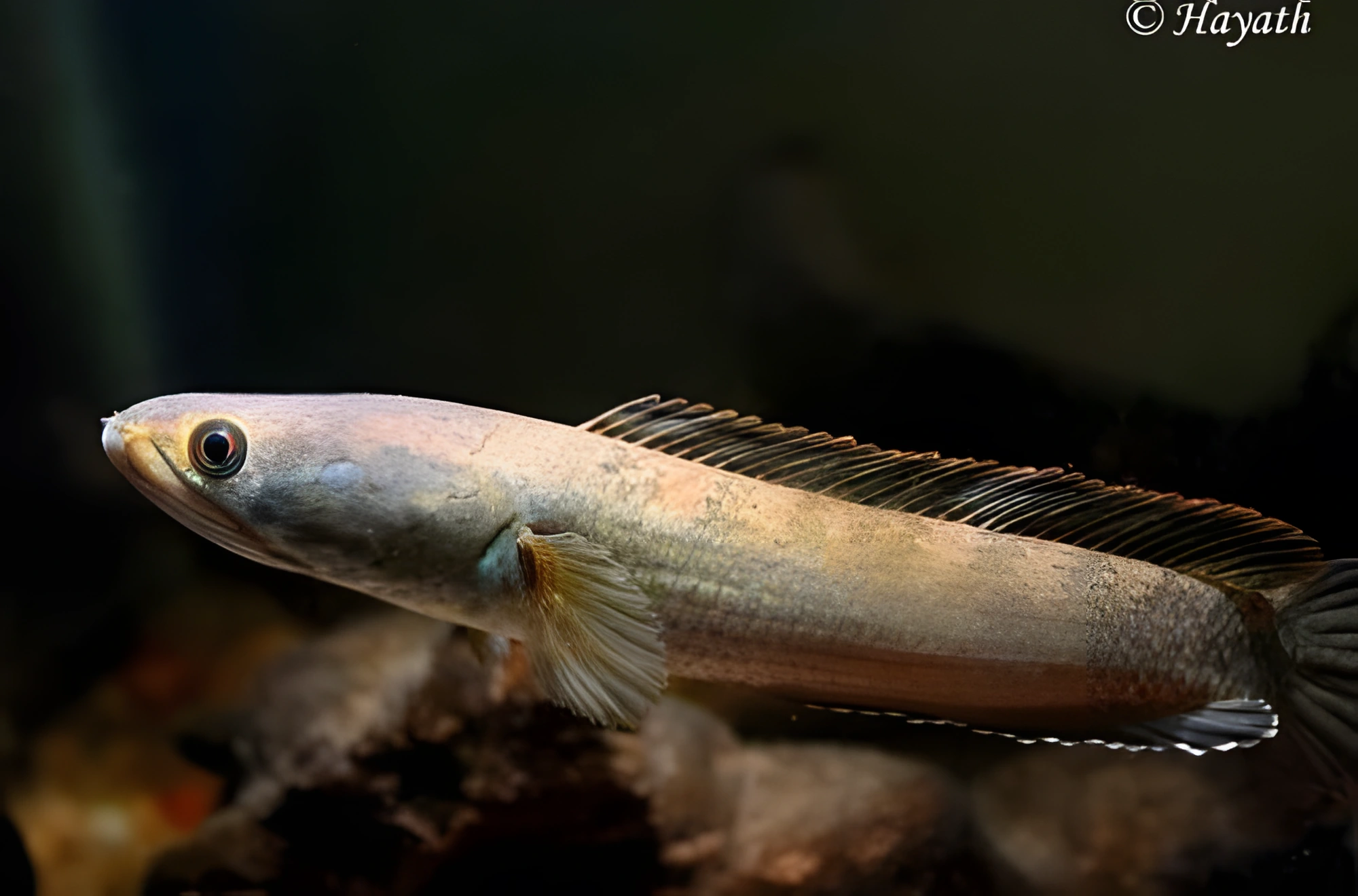
Adults of this species reach a length of 10 to 20 cm. A characteristic feature is an elongated body with a large head resembling that of a snake. The coloration of the Dwarf Snakehead can be quite varied, but specimens with solid gray, brownish, or brown hues are more common. Sometimes, patterns of darker specks can be observed on the body, as well as inclusions of blue, red, orange, or yellow colors. Typically, the dorsal and anal fins display the most vibrant color accents. An important feature of all Channa species is the presence of an additional organ for breathing atmospheric air. This adaptation allows them to survive in conditions of low oxygen content in the water or even to remain out of the aquatic environment for a significant period.
Habitat
The species is widely distributed in South and Southeast Asia, found from Iran to Indonesia. The Dwarf Snakehead inhabits various freshwater bodies, including slow-flowing and stagnant rivers, streams, canals, rice paddies, and mountain streams. The fish adapts to different conditions, often living in heavily vegetated areas with low oxygen content, as it is capable of breathing atmospheric air.
Behavior and Compatibility
When young, these fish can form large groups. However, as they reach sexual maturity, they begin to show aggression towards their conspecifics. If a male and female have grown up together in an aquarium, they may form a pair, which significantly reduces the likelihood of hostile behavior towards each other. Dwarf Snakeheads are predators. Nevertheless, they can be compatible with other fish species, provided they are large enough not to be eaten or perceived as prey. Ideal tank mates would be fish that inhabit the water column or near the surface. Bottom-dwelling species, such as catfish and loaches, on the other hand, are not recommended for cohabitation.
Care and Maintenance
For keeping one or two Dwarf Snakeheads, an aquarium of at least 150 liters is necessary. Since the fish spend a significant portion of their time in hiding spots at the bottom, the height of the aquarium is not critically important. The minimum water level for long-term keeping should be 30 cm. An important element of the setup is a lid, as these fish are capable of escaping from the tank. There must be an air gap between the lid and the water surface, which is essential for their breathing. In the aquarium decor, the creation of shaded corners where the fish can hide is encouraged, for example, using branched driftwood covered with aquatic mosses and dense plant thickets. The Dwarf Snakehead is highly adaptable and can live in a wide range of temperatures, as well as pH and GH values, even tolerating temporary deterioration of water quality. Depending on the region of origin, seasonal changes in temperature may be required. For specimens from Asia (India, Pakistan, Bangladesh), it is recommended to maintain high temperatures in summer and lower them to room temperature or even below in winter. Being a predator, this fish feeds on smaller fish, amphibians, insects, worms, and larvae, consuming almost anything that fits into its mouth. In home aquariums, they should be offered live or fresh foods, such as pieces of fish meat, shrimp, mussels, earthworms, large bloodworms, and similar products. Dry foods can also be included in the diet, but only as a supplement to the main diet, providing the fish with vitamins and trace elements. Additional information can be found in sources: FishBase, Wikipedia, Iucnredlist.
Diet
Being a predator, the Dwarf Snakehead feeds on smaller fish, amphibians, insects, worms, and larvae. Its diet includes almost anything it can swallow. In a home aquarium, it is recommended to offer live or fresh foods, such as pieces of fish meat, shrimp, mussels, earthworms, as well as large bloodworms and similar products. Dry foods are also acceptable, but they should be used exclusively as a supplement, enriching the main diet with vitamins and trace elements.
Breeding and Reproduction
Fish form stable pairs. The male is the egg incubator, carrying the eggs and hatched fry in his mouth. During parental care, the parents may show solicitude, with the female sometimes feeding the fry unfertilized eggs. In aquarium conditions, breeding is stimulated by quality nutrition and maintaining stable water parameters.
Diseases
Snakeheads are susceptible to bacterial infections, which often develop due to stress, injuries, or poor water quality. Typical symptoms include the appearance of ulcers, redness, cloudy eyes, or fin rot. Parasitic infestations, such as Ichthyophthiriasis, which manifests as white spots on the body and fins, are also possible. The main disease prevention involves maintaining water cleanliness, regular water changes, and quarantining new individuals.
How to choose
When choosing, pay attention to the fish's activity: a healthy snakehead should be curious and show interest in its surroundings. Avoid individuals with damaged fins, ulcers, body film, or cloudy eyes, as these are signs of bacterial or parasitic infections. It is important to ensure that the fish has a normal appetite and does not look emaciated.
Frequently asked questions
The essentials: size, tank volume, water parameters and care
How big does Dwarf Snakehead get?
An adult reaches 15–20 cm in length. Plan the tank around the maximum size: the fish quickly outgrows a cramped setup.
What size aquarium does Dwarf Snakehead need?
The minimum recommended volume is 150 L. A smaller tank speeds up nitrate build-up and raises stress levels.
What water parameters does Dwarf Snakehead need?
Temperature 18–28 °C, pH 6–8, hardness 3–20 dGH. Stability matters more than exact values: sudden swings are harder on the fish than a small deviation from the ideal.
How long does Dwarf Snakehead live?
Around 10 years when kept properly. Lifespan depends directly on tank volume, water quality and a varied diet.
Is Dwarf Snakehead aggressive?
Temperament: aggressive / incompatible / unfriendly. This is a predatory species — any fish small enough to fit in its mouth will eventually be eaten.
How many Dwarf Snakehead should be kept together?
Recommended setup: pair (male/female). Ignoring this is a common cause of stress and disease.
What does Dwarf Snakehead eat?
Diet type: meat / protein (live, frozen, fresh). Feed small portions that are finished within a couple of minutes — overfeeding does more harm than underfeeding.
What is the scientific name of Dwarf Snakehead?
The scientific name of the species is Channa gachua, family Snakeheads (Channidae). It also appears in the literature as: Channa gachus, Channa limbata, Ophicephalus apus.